
SHANTI Bill Passed, India & Oman Ink Free Trade Pact
India's Parliament approves the SHANTI Bill, opening nuclear energy to private firms, and signs a landmark FTA with Oman. Explore the details and implications of these major moves.

India's Parliament approves the SHANTI Bill, opening nuclear energy to private firms, and signs a landmark FTA with Oman. Explore the details and implications of these major moves.

India's Parliament has passed the landmark SHANTI Bill, permitting private sector participation in nuclear energy. This move aims to boost clean power generation and energy security. Read the full story for details.

Congress MP Shashi Tharoor strongly criticised the SHANTI Bill on nuclear energy in Lok Sabha, calling it a risky move that prioritises capital over public safety and lacks safeguards.

India's new SHANTI Bill opens the nuclear value chain to private capital, aiming for 22.5 GW by 2032 and 100 GW by 2047 to boost energy security. Read more.

The Lok Sabha has passed a landmark bill allowing private sector participation in India's nuclear energy sector, aiming to boost clean power generation and meet climate goals. Read the full story.

The Lok Sabha has passed the Nuclear Energy (Amendment) Bill, 2024, paving the way for private sector participation in India's nuclear energy sector to boost clean power generation. Read more.

Lok Sabha passes SHANTI Bill 2025, allowing private firms to build nuclear power plants and removing supplier liability. Aims for 100 GW nuclear capacity by 2047. Read more.

Lok Sabha passes the SHANTI Bill, repealing old laws to open India's nuclear sector for private investment. The bill sets an ambitious target of 100 GW nuclear capacity by 2047, boosting clean energy goals.

The Lok Sabha has passed a landmark bill allowing private sector participation in India's nuclear energy sector. Union Minister Jitendra Singh hails it as a milestone for national development. Read more.

Shashi Tharoor criticizes loopholes in the SHANTI Bill allowing private entry into atomic energy. MoS Jitendra Singh targets 100 GW nuclear capacity by 2047. Safety vs. speed debate intensifies.

Congress MP Manish Tewari criticizes SHANTI Bill for diluting supplier liability, undermining regulator autonomy, and favoring corporate interests. He demands Joint Parliamentary Committee review.
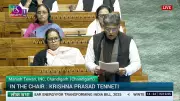
Congress tears into Modi government over 'Shanti Bill' nuclear liability clause, accusing it of protecting foreign suppliers over Indian citizens' rights. Read the full story.

The Modi government is set to pass the SHANTI Bill and VB-G RAM G Bill in Lok Sabha today, ignoring Opposition calls for scrutiny. Congress mandates MP presence for 3 days. Follow for live updates.

As India revives its nuclear expansion with the Shanti Bill, aiming for 100GW by 2047, experts call for super-strict safety protocols and real-time data to prevent Chernobyl or Fukushima-like disasters. Read more.

The Indian government introduced the SHANTI and VB-G RAM G Bills in Lok Sabha this week, facing immediate objections from the Opposition. Get the latest details on the parliamentary proceedings.

The Shanti Bill 2025 was introduced in Lok Sabha on December 16. Learn about its objectives, key provisions, and the government's plan to promote peace and harmony in India.

India plans major changes to its civil nuclear law to boost capacity to 100 GW, aiming for clean energy dominance. Explore the key amendments and their impact.

Union Minister Piyush Goyal states the new nuclear energy bill will enable a continuous, reliable supply of clean energy, crucial for India's booming data centre industry. Discover how solar, wind, and nuclear will combine.

The SHANTI Bill 2025, tabled in Lok Sabha, repeals old atomic laws, paving the way for private investment to boost India's nuclear energy capacity to 100GW by 2047. Read the full analysis.
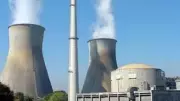
India's new SHANTI Bill 2025 replaces old atomic laws, permits private sector in nuclear energy, and sets liability caps to attract investment for a 100 GW target by 2047. Read the full analysis.

India's new SHANTI Bill 2025 allows private companies to build and operate nuclear plants, removes liability for global suppliers, aiming for 100GW nuclear capacity by 2047. Read more.

India and Russia agree to expand Kudankulam cooperation and explore a new site, accelerating India's nuclear power ambitions to achieve 100 GW capacity by 2047. Read the full analysis.

India will build next-generation BSMR-200 and SMR-55 nuclear reactors at Tarapur, Maharashtra, by 2033 with private sector participation. Read about this major energy milestone.

Russia has formally proposed constructing a floating nuclear power plant for India, modeled on its 'Akademik Lomonosov' facility. This offer, made in December 2025, aims to boost India's energy security.

Russia will construct India's biggest nuclear power plant in Tamil Nadu, with Putin backing full-scale Kudankulam expansion. A landmark deal for clean energy.

Russian President Vladimir Putin reaffirms Russia as India's most reliable energy partner, promising stable fuel supplies and expanding nuclear cooperation, including small modular reactors.

Russia's Rosatom has delivered a fresh batch of nuclear fuel to the Kudankulam Nuclear Power Plant in Tamil Nadu, ensuring uninterrupted power generation. Read more about this crucial energy partnership.

PM Modi announces nuclear sector privatization for energy security, but experts question SMR viability and funding challenges. Will India achieve 100GW nuclear capacity by 2047?

PM Modi announces nuclear sector reforms allowing private investment, similar to space sector. Bill listed for Winter Session to enable 100 GW nuclear energy by 2047.

PM Modi announces private sector participation in India's nuclear energy to boost advanced reactor development and clean energy expansion. Read more about this historic move.