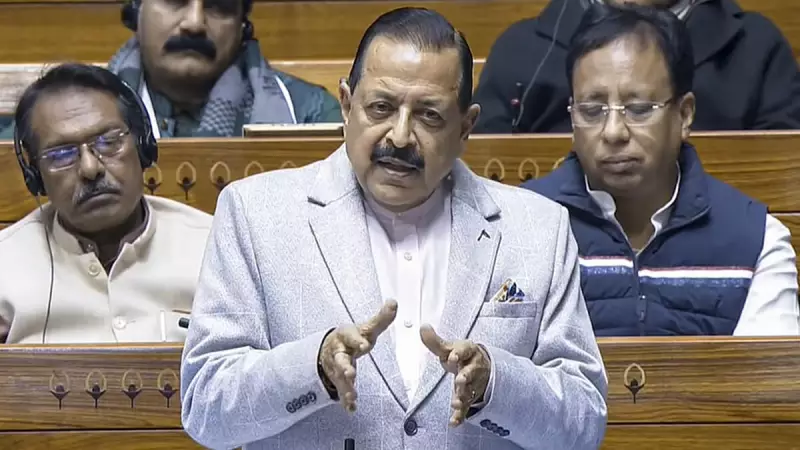
In a landmark move aimed at transforming India's energy landscape, the Lok Sabha has passed a significant piece of legislation. The bill, known as the SHANTI Bill (The Harnessing of Atomic Energy for National Progress and Technological Innovation Bill, 2025), was approved on December 17, 2025. This pivotal decision opens the country's nuclear power sector to private investment, repeals several outdated laws, and sets an ambitious national target.
Key Provisions and Objectives of the SHANTI Bill
The core objective of the SHANTI Bill is to unlock the full potential of nuclear energy for India's development. It seeks to achieve this by creating a new, streamlined legal framework. A major highlight is the establishment of a bold target to increase India's nuclear power generation capacity to 100 gigawatts (GW) by the year 2047. This aligns with the nation's centenary of independence and its commitments to clean energy.
To facilitate this growth, the bill dismantles long-standing barriers. It formally repeals two key, but aging, acts: The Atomic Energy Act of 1962 and The Radiation Protection Act of 1971. In their place, the SHANTI Bill introduces modern regulations designed to attract private players into the nuclear energy domain. This strategic opening is expected to bring in crucial capital, advanced technology, and efficiency to accelerate project development.

Streamlining Regulation and Boosting Indigenous Technology
The legislation goes beyond just opening doors for investment. It aims to strengthen the entire nuclear ecosystem. The bill empowers the existing regulatory body, the Atomic Energy Regulatory Board (AERB), providing it with enhanced authority to oversee the expanded sector safely and effectively. Furthermore, it places a strong emphasis on promoting indigenous technology and research.
A significant focus is on supporting India's home-grown Pressurised Heavy Water Reactors (PHWRs) and fostering the development of next-generation technologies like Small Modular Reactors (SMRs). The government envisions the bill as a catalyst for making India a global leader in nuclear technology, potentially leading to exports and greater international collaboration.
Implications for India's Energy Future and Global Standing
The passage of the SHANTI Bill marks a paradigm shift in India's atomic energy policy. For decades, the sector was the exclusive domain of government-owned entities like the Nuclear Power Corporation of India Limited (NPCIL). By allowing private sector participation, the government aims to massively scale up capacity addition, which is critical for meeting the country's soaring electricity demand while transitioning away from fossil fuels.
This move is strategically vital for India's energy security and its climate goals. Nuclear power provides a stable, low-carbon baseload electricity source, complementing intermittent renewables like solar and wind. Achieving the 100 GW target would position nuclear energy as a cornerstone of India's clean energy mix, significantly reducing the carbon intensity of its economic growth.
The bill's passage in the Lok Sabha is just the first legislative step. It will now move to the Rajya Sabha for approval. Once enacted, it is expected to unlock a new era of innovation, investment, and energy security, propelling India towards its vision of a developed nation by 2047 with a strong, self-reliant, and sustainable power sector.