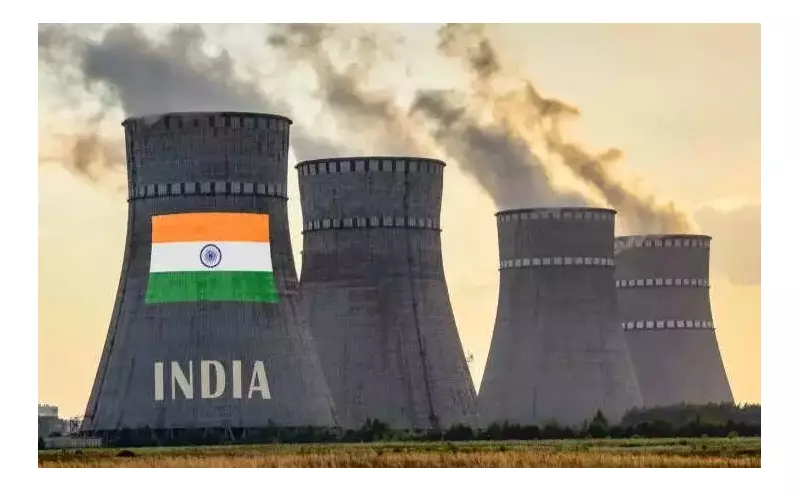
In a landmark move poised to transform India's energy landscape, the government on Monday tabled a revolutionary atomic energy bill in the Lok Sabha. The proposed legislation seeks to dismantle a decades-old state monopoly, inviting private investment to accelerate the country's civil nuclear energy production.
A Historic Policy Shift for India's Nuclear Ambitions
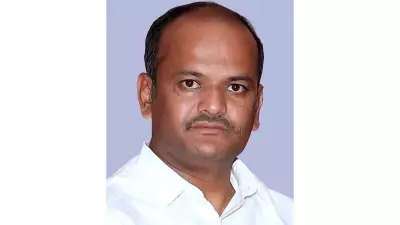
The Sustainable Harnessing and Advancement of Nuclear Energy for Transforming India (SHANTI) Bill, 2025 was introduced by Minister of State for the Department of Atomic Energy, Dr. Jitendra Singh. This ambitious bill aims to repeal two foundational laws: the Atomic Energy Act of 1962 and the Civil Liability for Nuclear Damage Act (CLNDA) of 2010. For the first time since independence, the nuclear power sector, long the exclusive preserve of government enterprises, will be opened to private companies and their joint ventures.
Dr. Singh stated that the bill provides for a "pragmatic civil liability regime for nuclear damage" and grants statutory status to the Atomic Energy Regulatory Board (AERB). The core objective is to fuel a large-scale expansion of nuclear energy and its applications, which is central to India's goal of achieving a staggering 100 Gigawatts (GW) of nuclear power capacity by the year 2047.

New Framework: Safety, Investment, and Controlled Access
The SHANTI Bill proposes a comprehensive new legal architecture designed to modernize the sector while attracting crucial capital. Key features of this framework include:
- Modern Safety Regulations: Updated protocols to govern the expanding sector.
- Dedicated Nuclear Tribunal: A specialized body for swift dispute resolution.
- Reformed Liability Regime: Measures to cap risks and provide clarity for investors, a move expected to finally unlock the stalled Indo-US nuclear agreement and enable the construction of US-designed reactors in India.
While private entities will be allowed to apply for licenses to set up and operate nuclear power plants and transport nuclear fuel, the government will retain exclusive control over strategic and sensitive areas. These include:
- Uranium enrichment
- Spent fuel management
- Heavy water production
- Control over radioactive substances and radiation-generating equipment
Beyond Power: A Boost for Healthcare, Agriculture, and AI
The legislation's vision extends far beyond electricity generation. According to Dr. Singh, the bill is aligned with the goal of increasing nuclear energy's share in the national energy mix and facilitating innovation in nuclear science and technology.
The expanded use of radiation technology is envisioned in diverse non-power applications, including:
Healthcare, food preservation, water treatment, agriculture, industry, environmental protection, and research. Notably, the bill also aims to propel innovation in emerging fields like Artificial Intelligence (AI). The Minister assured that this expansion would continue to honour India's international obligations on nuclear safety, security, and safeguards.
This historic policy shift, initiated in the Lok Sabha, marks the beginning of a new chapter for India's atomic energy program. By combining private sector efficiency and investment with stringent government control over core strategic functions, the SHANTI Bill 2025 aims to position nuclear power as a cornerstone of India's sustainable and secure energy future.