

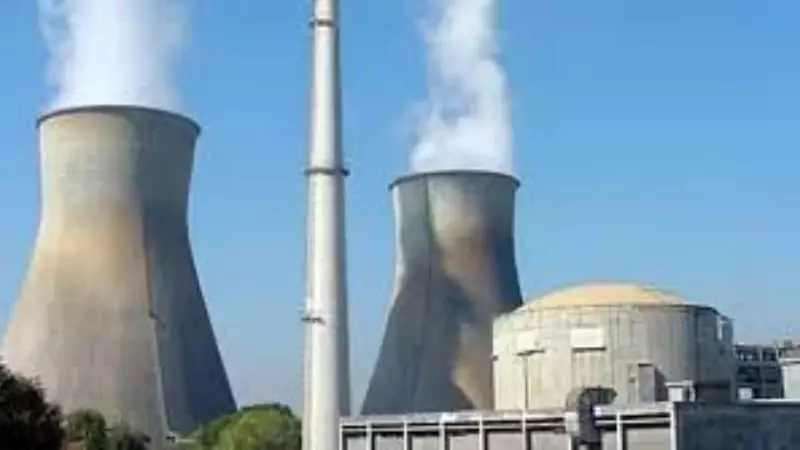
In a landmark move to overhaul its atomic energy framework, the Indian government on Monday introduced a transformative bill in the Lok Sabha. The Sustainable Harnessing and Advancement of Nuclear Energy for Transforming India (SHANTI) Bill, 2025, seeks to open the nation's highly restricted nuclear power sector to private participation, marking a decisive shift from the state-controlled model in place since 1962.
A New Legal Framework for Ambitious Energy Goals
The government has positioned the SHANTI Bill as a critical legislative step towards achieving an ambitious national target: 100 gigawatts of nuclear power capacity by the year 2047. The bill will replace two existing laws—the Atomic Energy Act of 1962 and the Civil Liability for Nuclear Damage Act of 2010. The stated objective is to harness India's full nuclear energy potential and indigenous resources by actively involving both public and private enterprises.
The preamble of the Bill highlights that the accelerated growth of technologies like Artificial Intelligence, quantum computing, and semiconductor fabrication demands a stable, reliable, and clean power supply available round-the-clock. It argues that expanded nuclear energy deployment, facilitated by a new legal framework promoting private-sector research and innovation, is essential to meet this future demand.

Key Provisions: Opening Doors and Defining Liability
The legislation introduces several groundbreaking changes. Most significantly, it will allow public companies, private companies, and their joint ventures to undertake activities such as setting up nuclear power plants, transporting or storing nuclear fuel, and importing or exporting nuclear fuel, technology, and equipment. This ends the Central government's long-held monopoly over the sector.
A pivotal change addresses a long-standing concern for foreign and domestic suppliers. The new Bill removes the contentious 'right of recourse' provision from the 2010 Act, which had allowed plant operators to seek compensation from suppliers in case of an accident caused by defective equipment or services. This provision was widely seen as a major deterrent to investment, exposing suppliers to open-ended liability risks. Its removal is expected to make the Indian nuclear market more attractive to global technology vendors.
However, the Bill mandates strict regulatory oversight. All entities must obtain safety authorisation from the Atomic Energy Regulatory Board (AERB) for any activity involving radioactive substances or radiation facilities, from manufacture and transport to decommissioning.
Liability Caps, Government Control, and New Institutions
The SHANTI Bill establishes a clear, graded system for liability caps on nuclear plant operators, based on the thermal power capacity of their reactors:
- Reactors above 3,600 MWe: Rs 3,000 crore liability limit.
- Reactors between 1,501 MWe and 3,600 MWe: Rs 1,500 crore.
- Reactors between 751 MWe and 1,500 MWe: Rs 750 crore.
- Reactors between 151 MWe and 750 MWe: Rs 300 crore.
- Small reactors up to 150 MWe and fuel cycle facilities: Rs 100 crore.
While opening the sector, the Bill retains exclusive government control over sensitive areas like enrichment of radioactive substances, reprocessing of spent fuel, and production of heavy water. It also creates new institutional bodies, including an Atomic Energy Redressal Advisory Council, Claims Commissioners, and a Nuclear Damage Claims Commission for severe incidents. Furthermore, it empowers the Centre to establish a Nuclear Liability Fund to meet liabilities in case of a nuclear incident.
This legislative overhaul represents India's strategic bet on nuclear energy as a cornerstone of its future clean energy mix, aiming to balance energy security, technological advancement, and global investment appeal.






