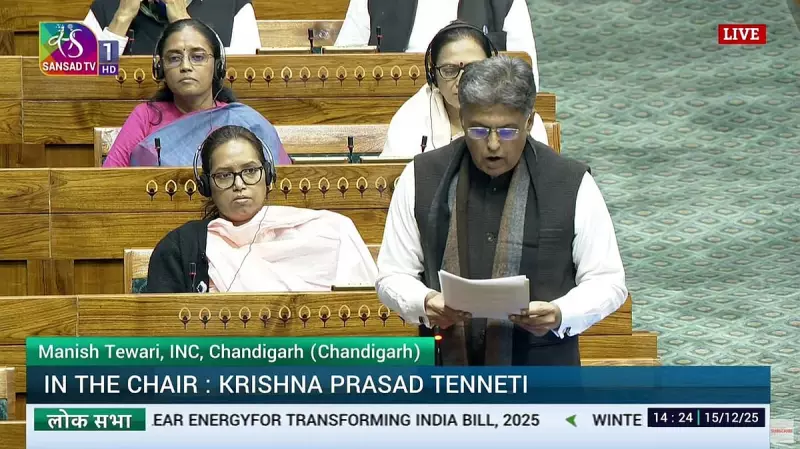
The Indian National Congress has launched a fierce attack on the Narendra Modi-led government over a proposed amendment to the nation's nuclear liability law, which the opposition party has derisively dubbed the "Shanti Bill." The controversy centers on a clause that the Congress alleges will let foreign nuclear suppliers off the hook in the event of a nuclear accident, undermining the rights of Indian citizens.
The Core of the Controversy: Section 17(b)
At the heart of the political storm is a specific provision in India's Civil Liability for Nuclear Damage Act (CLNDA) of 2010. The contentious clause is Section 17(b), which grants the operator of a nuclear plant (like the state-owned Nuclear Power Corporation of India Ltd) the right of recourse. This means the operator can sue the supplier for compensation if an accident results from faulty equipment or sub-standard services.
The Congress party, which was in power when the original law was passed, accuses the Modi government of attempting to dilute this crucial liability clause through a proposed amendment. Senior Congress leader and Rajya Sabha MP, Jairam Ramesh, spearheaded the criticism. He stated that the government is pushing a "supplier-friendly amendment" that would effectively nullify the right of recourse against foreign suppliers, a move he claims prioritizes corporate interests over public safety.

Congress Alleges Betrayal of National Interest
In a detailed statement, Jairam Ramesh framed the issue as a direct conflict between the welfare of the Indian people and the interests of foreign nuclear corporations. He argued that the original 2010 law was crafted with great care to balance the need for nuclear energy with the paramount importance of accountability and justice for citizens.
The proposed change, according to the Congress, would make it nearly impossible for the Indian operator to claim compensation from suppliers, especially foreign ones, by introducing restrictive conditions or time limits on such legal recourse. The party alleges this is being done under pressure from countries like the United States and France, whose companies are involved in India's nuclear energy projects, such as the planned reactors in Kovvada (Andhra Pradesh) and Jaitapur (Maharashtra).
"The Modi government is trying to sneak in this 'Shanti Bill' to provide a blanket exemption to foreign suppliers," Ramesh claimed. He emphasized that the clause was a hard-won victory for ensuring that suppliers could not escape responsibility, and its dilution would be a grave injustice.
Political Repercussions and the Road Ahead
The attack from the Congress is set to escalate the political debate around India's nuclear policy and its strategic agreements. The party has vowed to oppose the amendment vigorously in Parliament, setting the stage for a potential legislative battle. This issue also taps into the broader nationalist narrative, with the Congress positioning itself as the defender of Indian citizens' rights against a government it accuses of being subservient to foreign powers.
The controversy has significant implications for India's nuclear energy expansion plans. A clear and robust liability framework is essential for attracting international technology and investment while safeguarding national interests. The government, on its part, has previously argued that certain interpretations of the liability law have created obstacles in finalizing contracts with foreign suppliers, thereby delaying projects crucial to India's energy security.
As the war of words intensifies, the focus will now be on the official text of the proposed amendment when it is tabled in Parliament. The debate will likely revolve around finding a precarious balance: creating a conducive environment for international nuclear cooperation without compromising on the fundamental principle of supplier accountability enshrined in the original 2010 law.