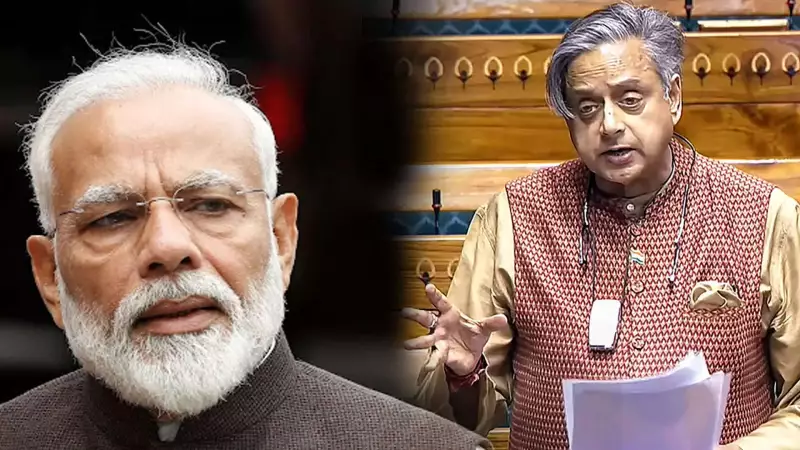
Congress Member of Parliament Shashi Tharoor launched a sharp critique of the government's proposed nuclear energy legislation on Wednesday, labelling the SHANTI Bill a "cruel irony" and a dangerous step towards privatisation without proper safety nets. The veteran parliamentarian raised serious concerns about public safety, environmental risks, and accountability during a debate in the Lok Sabha.
Core Concerns: Safety, Accountability, and Private Players
Speaking in Parliament on December 18, 2025, Tharoor argued that the pursuit of financial capital must not override fundamental concerns for citizen welfare. He asserted that the bill is fraught with legal loopholes, grants the central government excessive discretionary power, and significantly weakens mechanisms for holding entities accountable.
Tharoor specifically challenged the classification of nuclear energy as "clean," highlighting the unresolved and perpetual issue of radioactive waste management. He pointed to the risks of catastrophic accidents and expressed deep apprehension over the bill's provisions to allow private sector participation across the entire nuclear supply chain—from fuel sourcing to power generation—without what he deemed as robust regulatory oversight.

Outdated Liability Cap and Call for Revision
A major point of contention raised by the Congress MP was the existing cap on nuclear liability. Tharoor described the current liability framework as outdated and grossly inadequate for compensating potential victims in the event of a nuclear incident. He emphasised that the financial protection offered is insufficient given the scale of devastation a nuclear accident can cause.
Concluding his arguments, Tharoor urged the government to undertake a comprehensive reworking of the SHANTI Bill. He insisted that any legislation governing nuclear power must place public safety, environmental protection, and justice for potential victims at its core, rather than focusing primarily on facilitating private investment and expansion.
The criticism puts the spotlight back on India's ambitious nuclear energy plans and the ongoing debate about balancing development with stringent safety protocols and ethical responsibility.