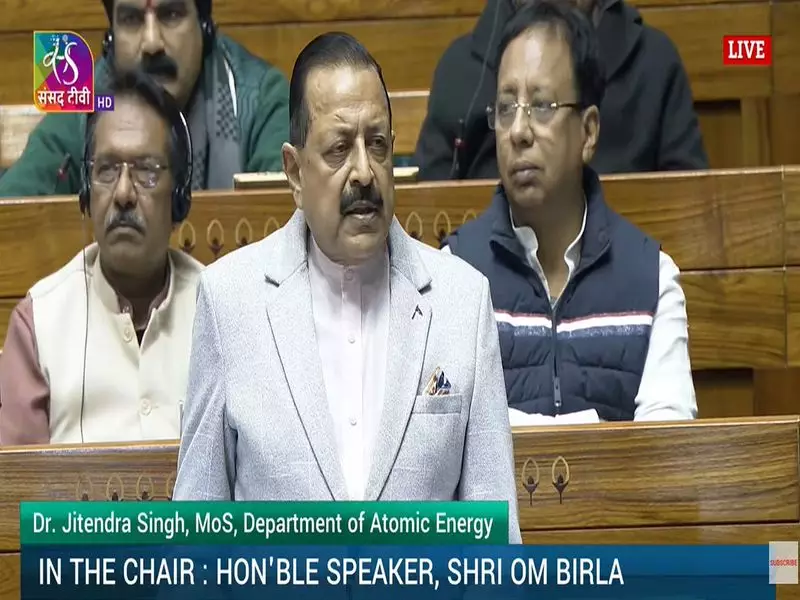
In a landmark move aimed at modernizing India's energy infrastructure, the Lok Sabha on Wednesday passed a crucial bill to open the nation's nuclear power sector for private participation. The Nuclear Energy (Amendment) Bill, 2024, seeks to amend the six-decade-old Atomic Energy Act of 1962, marking a significant shift in policy to attract investment and accelerate the development of clean energy.
Key Provisions of the Amended Bill
The primary objective of the bill is to amend Section 2 of the Atomic Energy Act, 1962. The original act restricted the operation of nuclear power plants to government-owned entities or corporations where the central government holds at least 51% of the paid-up share capital. The new amendment removes this restriction, explicitly allowing the central government to permit private sector companies to set up and operate nuclear power projects.
Piloting the bill in the House, Minister of State for Science and Technology and Department of Atomic Energy, Dr. Jitendra Singh, emphasized that the amendment is essential to meet India's rapidly growing energy demands and its commitment to clean energy. He stated that the move would help the country triple its nuclear power generation capacity by 2030, a goal set by Prime Minister Narendra Modi.

Government Retains Strategic Control and Safety Oversight
Importantly, the government has clarified that the amendment does not mean a wholesale privatization of the nuclear sector. The central government will retain full and firm control over all strategic aspects. This includes:
- Ownership of nuclear fuel and radioactive waste.
- Overall responsibility for nuclear safety and security.
- Oversight of operations and regulatory control through the Atomic Energy Regulatory Board (AERB).
The bill is designed to create a framework where private companies can invest in and operate nuclear power plants, but the government remains the ultimate authority on fuel supply, decommissioning, and all safety protocols. The model is expected to be similar to partnerships seen in other infrastructure sectors.
Driving India's Clean Energy and Economic Goals
The passage of this bill is seen as a strategic step with multiple long-term benefits. First and foremost, it aligns with India's ambitious target of achieving net-zero carbon emissions by 2070. Nuclear energy, being a clean and reliable baseload power source, is critical for reducing dependence on fossil fuels.
Secondly, it aims to address the massive capital requirements for expanding nuclear capacity. By allowing private investment, the sector can access new funding streams, advanced technologies, and managerial efficiencies. This can significantly speed up the commissioning of new projects, which have historically faced long gestation periods due to funding and technological constraints.
Dr. Jitendra Singh highlighted that India's current nuclear power capacity stands at around 7,480 Megawatts. With this policy change, the government aims to see this capacity grow substantially, contributing to energy security and independence.
Parliamentary Debate and Future Steps
The bill was passed after a debate in the Lok Sabha, where it received support from the treasury benches. The legislation will now move to the Rajya Sabha for approval. Once passed by both Houses of Parliament and receiving the President's assent, it will become law, formally establishing the new regulatory framework for private participation.
This reform is expected to send a strong signal to both domestic and global investors interested in the energy sector. It positions nuclear power as a viable and attractive component of India's future energy mix, alongside solar and wind power. The success of this initiative will depend on the subsequent detailed policies, tariff structures, and clear safety guidelines that the government will need to formulate to attract serious private players.
The move is a decisive step towards modernizing a strategic sector, unlocking its potential for economic growth, job creation, and sustainable development, while firmly keeping national security interests under state control.