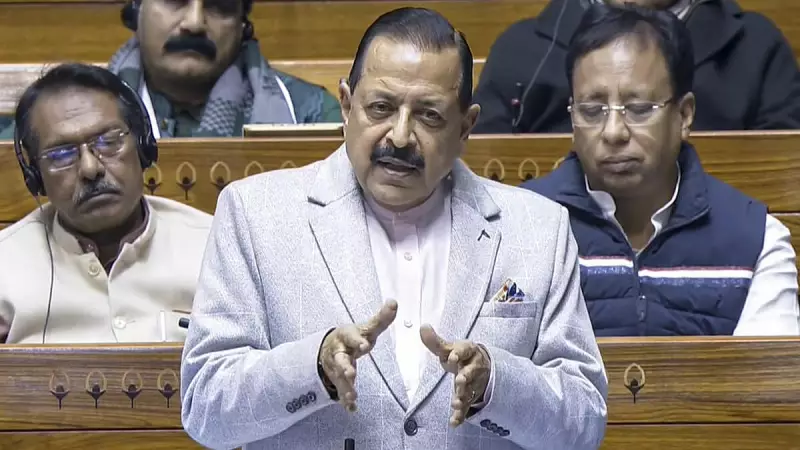
In a significant move aimed at accelerating India's clean energy transition, the Lok Sabha has passed a pivotal bill to open the country's nuclear energy sector for private participation. The development, which occurred on 17 December 2025, marks a historic shift in India's atomic energy policy, which has traditionally been under government control.
A "Milestone Legislation" for India's Development
Union Minister of State for Science and Technology, Dr. Jitendra Singh, championed the bill in the lower house of Parliament. He described the legislation as a "milestone" that is set to provide a new direction to the nation's developmental journey. According to the minister, this reform will unlock massive potential for growth, innovation, and meeting the country's escalating energy demands through a low-carbon source.
The bill essentially amends existing atomic energy laws to facilitate the entry of private companies into the nuclear power sector. This participation is expected to bring in much-needed capital, advanced technological expertise, and efficiency in project execution. The move aligns with the government's broader vision of boosting the share of clean energy in India's overall power mix and achieving energy security.

Implications for India's Energy Future
The opening of the nuclear sector to private players is anticipated to have far-reaching consequences. It can lead to faster commissioning of nuclear power plants, which are crucial for providing stable, baseload electricity without greenhouse gas emissions. This is particularly important for a rapidly industrializing economy like India, which is striving to balance growth with climate commitments.
While the government will retain oversight, regulatory control, and responsibilities concerning radioactive materials and safety, the private sector can engage in areas such as:
- Construction and operation of nuclear power plants.
- Manufacturing of components and equipment.
- Collaboration in research and development projects.
This public-private partnership model is seen as a game-changer, potentially reducing the financial burden on the government and accelerating the pace of nuclear energy expansion across the country.
Charting a New Path Forward
The passage of this bill in the Lok Sabha is just the first legislative step. It will now move to the Rajya Sabha for approval. However, its clearance in the lower house signals a strong political consensus on modernizing India's nuclear energy framework.
Experts believe that this reform could position India as a major hub for nuclear technology and attract significant foreign and domestic investment. By inviting private participation, India is not just addressing its own energy needs but also fostering an ecosystem for cutting-edge nuclear technology development. As noted by Minister Singh, this legislation is poised to redefine India's developmental trajectory, making the nuclear sector a cornerstone of its sustainable and self-reliant energy future.