
Fungal Pellets Boost Tree Survival to 97% in Forest Restoration
Rhizocore Technologies uses mycorrhizal fungi pellets to improve tree survival and growth, achieving 97% survival in trials and securing £4.5M funding for US expansion.


Rhizocore Technologies uses mycorrhizal fungi pellets to improve tree survival and growth, achieving 97% survival in trials and securing £4.5M funding for US expansion.
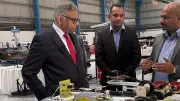
N Chandrasekaran reviews TASL’s new defence MRO facility in Bengaluru, which houses India’s strategic UAV programme with indigenously designed platforms.

Japan is pioneering space-based solar power, using satellites to capture cosmic sunlight and beam it to Earth via microwaves, promising constant, carbon-free energy and energy independence.

Lamborghini has delivered the first Temerario hybrid supercar in India, marking a key step in its electrification strategy. The 907 bhp V8 hybrid replaces the Huracan, priced at Rs 6 crore.

Shared lists with real-time sync. No signup needed — just open and shop together.
Recommended
Bihar's Jal-Jeevan-Hariyali mission solarises over 12,800 government buildings, creating 115 MW capacity. The state now targets 500 MW rooftop solar via Resco model, alongside floating, ground-mounted, and storage projects.

In 1830s Paris, Louis Daguerre discovered that mercury vapor could develop latent images on silver plates, creating the first practical photographic process: the daguerreotype.

Scientists discovered that Mount Fuji's ground expands up to 2 cm during heavy rainfall due to porous rock layers absorbing water, not magma. This helps distinguish rain-induced deformation from volcanic activity.

Discover how old shower curtains can be repurposed as effective weed barriers in flower beds, offering a sustainable and cost-effective gardening solution.
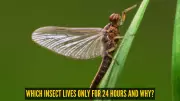
Mayflies live only hours as adults, but their life cycle includes up to two years as aquatic nymphs. Learn about their unique biology and fascinating facts.
Shared lists with real-time sync. No signup needed — just open and shop together.
Recommended
A viral video showing a cobra and viper hiding in bedding materials has alarmed social media users. Experts advise caution and professional removal.

NIOT conceptualizes a 20-40 passenger submersible for tourism at 500m depth, offering views of submerged ancient settlements and marine life by 2047.

A pilot project applying reflective cool roof paint to two Bengaluru PHCs reduced indoor temperatures by over 3°C, improving comfort for patients and staff. Expansion to 50 more buildings is planned.

Tamil Nadu's Project Nilgiri Tahr shows population increase from 1,031 to 1,303 in 2025, with expanded surveys and habitat restoration efforts underway.

DRDO successfully tested a high-calibre bomb at its Terminal Ballistics Research Laboratory in Panchkula, enhancing India's precision strike and battlefield capabilities.
Shared lists with real-time sync. No signup needed — just open and shop together.
Recommended
Ranchi Municipal Corporation plans to develop 20 more unused plots into green patches, following success of 20 earlier projects. Benches will be installed, but no pathways for walkers.
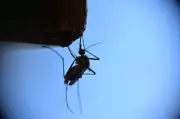
Google's Debug project requests US EPA approval to release 32 million Wolbachia-infected male mosquitoes in California and Florida to combat diseases like West Nile virus without pesticides.

DRDO's strides in missiles, armoured warfare, and space tech are boosting India's self-reliance. From Agni to Gaganyaan, discover how the agency is shaping national security and space ambitions.

A leather saddle discovered in a tomb in northwest China, dated between 727 and 396 BCE, proves structured horse riding existed much earlier than previously believed, reshaping equestrian history.
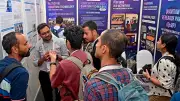
Karnataka has established a Quantum Task Force to guide the implementation of its quantum technology roadmap, aiming to position the state as a leader in quantum research and applications.
Shared lists with real-time sync. No signup needed — just open and shop together.
Recommended
India's alternative fuel push gains momentum as Maruti Suzuki and Hero MotoCorp prepare to launch their first flex-fuel vehicles, capable of running on 100% ethanol (E100), this week.

Duke University's Argus robot, with 20 telescoping legs and omnidirectional movement, challenges traditional robot designs. It achieves near-perfect dynamic isotropy, enabling it to walk, roll, and climb in any direction without reorienting.

Nvidia has announced its entry into the PC market with the launch of RTX Spark superchips, aiming to bring AI capabilities to personal computers and challenge existing players.

June 2026 brings exciting new vehicle launches in India including Mercedes-Benz S-Class facelift, BMW X6 M60i, BYD's new PHEV, and Tata Sierra EV. Details on specs, pricing, and rivals.
Discover Nigersaurus, a prehistoric herbivore with over 500 teeth and a vacuum-like mouth. Learn about its rapid tooth replacement and unique skull.
Shared lists with real-time sync. No signup needed — just open and shop together.
Recommended
Discover the surprising science behind why snakes have forked tongues, from detecting smells to finding mates. Five amazing facts about this unique feature.

IIT Madras is opening international centres in the US, UK, UAE, and more to help deep-tech startups access new markets, funding, and corporate partnerships.

The term 'sir' is increasingly used as a tool of power dynamics, often to assert dominance or undermine authority in professional and social settings.

Explore how the Japanese concept of Mottainai can transform waste into value, promoting sustainability and reducing environmental impact through mindful consumption.

Uttar Pradesh CM Yogi Adityanath praised the rescue of a Gangetic dolphin stranded in a Gonda canal, after PM Modi highlighted the operation on Mann Ki Baat.
Shared lists with real-time sync. No signup needed — just open and shop together.
Recommended
Madras High Court stays Tamil Nadu Green Energy Corporation's order to keep 226 solar and 7 wind projects in abeyance, citing irregularities in approvals.
