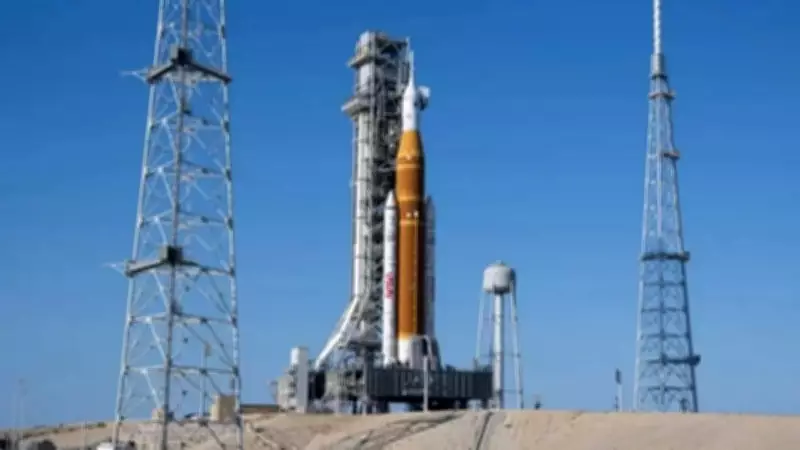
Artemis II Launch: A New Chapter in Lunar Exploration Begins
Space exploration has surged in popularity following the recent launch of Artemis II, a groundbreaking mission that is propelling humanity back to the Moon. This event represents a significant milestone for NASA, occurring on April 1, 2026, at 6:35 p.m. EDT from the Kennedy Space Center in Florida. The primary objective of this flight is to conduct extensive studies of the Moon and lay the groundwork for future crewed landings, marking a pivotal moment after decades of limited human spaceflight beyond Earth's orbit.
Artemis II Successfully Launches with Advanced Technology
The launch of the Artemis II space mission was executed flawlessly, utilizing the powerful Space Launch System (SLS) rocket. This mission stands as NASA's most critical endeavor in over half a century, demonstrating the agency's innovation in developing new technologies for long-duration astronaut travel. The successful ignition and ascent underscore NASA's commitment to advancing space exploration capabilities, with the SLS recognized as one of the most formidable rockets ever constructed.
Meet the Astronauts: A Diverse Crew Embarking on a Historic Journey
Four highly skilled astronauts are aboard this mission, representing a collaboration between NASA and the Canadian Space Agency. Reid Wiseman serves as the commander, leading the team with expertise and precision. Victor Glover acts as the pilot, responsible for controlling the spacecraft's navigation and systems. Additionally, Christina Koch and Jeremy Hansen fulfill roles as mission specialists, providing crucial support in operations and scientific tasks. This diverse crew exemplifies international cooperation in space exploration.

Exploring the Moon: A Preparatory Mission for Future Landings
It is important to note that while the astronauts are journeying to the Moon and returning to Earth, they will not be landing on its surface during this expedition. Instead, the purpose is to gather vital data on how humans can safely visit and potentially inhabit the lunar environment. This mission serves as a preparatory stage, testing systems and procedures essential for subsequent Artemis program missions aimed at establishing a sustained human presence on the Moon.
The Orion Spacecraft and SLS Rocket: Engineering Marvels Enabling Exploration
The spacecraft utilized for this flight is the Orion capsule, specifically designed to ensure astronaut survival in the harsh conditions of space. Coupled with the SLS rocket, these innovations have empowered NASA to enhance its space exploration efforts significantly. Orion's advanced life support and navigation systems, combined with the SLS's immense thrust, facilitate deep-space missions that were once considered unattainable.
The Importance of the Artemis II Mission: Testing Human Capabilities in Space
This space expedition holds immense value as it rigorously tests astronauts' survival abilities, teamwork dynamics, and proficiency in executing NASA-assigned tasks. Such experiments are crucial for validating technologies and protocols that will support future lunar missions under the Artemis program. By simulating long-duration space travel, Artemis II contributes to our understanding of human endurance and operational efficiency in extraterrestrial environments.