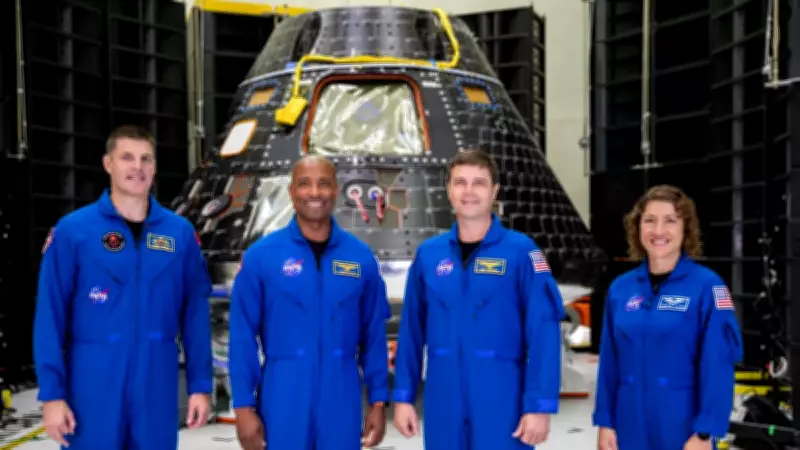
Artemis II Mission Achieves Historic Break from Earth Orbit
In a monumental leap for space exploration, NASA's Artemis II mission has successfully broken free from Earth's orbit, propelling a crew of astronauts toward the Moon for the first time in over 50 years. This critical milestone, achieved on April 3, 2026, marks a pivotal step in humanity's return to lunar exploration, with the spacecraft now en route for a planned lunar flyby.
A Return to Lunar Exploration After Five Decades
The last time astronauts ventured beyond Earth's orbit was during NASA's Apollo 17 mission in 1972. Since then, human spaceflight has been confined to low-Earth orbit, primarily focused on the International Space Station. The Artemis II mission shatters this long hiatus, reigniting ambitions for sustained lunar presence and future Mars missions.
The crew, consisting of four NASA astronauts, is aboard the Orion spacecraft, which launched atop the powerful Space Launch System (SLS) rocket. After achieving orbit around Earth, the spacecraft executed a precise trans-lunar injection burn, breaking the gravitational hold of our planet and setting course for the Moon.

Mission Objectives and Lunar Flyby Plans
The primary goal of Artemis II is to test the Orion spacecraft's systems with a crew on board in deep space. The mission will not land on the lunar surface but will perform a close flyby of the Moon, allowing the astronauts to conduct scientific observations and demonstrate operational capabilities.
- Validate life support and communication systems in the harsh environment of deep space.
- Assess crew health and performance during the multi-day journey beyond Earth's orbit.
- Gather critical data for future Artemis missions, including the planned Artemis III lunar landing.
This flyby is scheduled to occur in 2026, with the spacecraft traveling approximately 230,000 miles from Earth at its farthest point. The mission duration is expected to be around 10 days, culminating in a splashdown in the Pacific Ocean.
Technological Advancements and Safety Measures
Artemis II leverages decades of technological advancements since the Apollo era. The Orion spacecraft features enhanced radiation protection, advanced navigation systems, and improved life support to ensure crew safety during the journey. NASA has implemented rigorous testing protocols, including previous uncrewed missions like Artemis I, to mitigate risks associated with deep space travel.
This mission serves as a crucial precursor to Artemis III, which aims to land astronauts on the lunar surface, including the first woman and the first person of color. Success in Artemis II will pave the way for establishing a sustainable human presence on the Moon, supporting scientific research and resource utilization.
Global Implications and Future Prospects
The Artemis program represents a collaborative effort involving international partners and commercial entities, fostering global cooperation in space exploration. Breaking Earth orbit with a crew after 50 years underscores NASA's commitment to pushing the boundaries of human exploration and inspiring future generations.
As Artemis II continues its journey, the world watches with anticipation, marking a new chapter in space history that promises to expand our understanding of the cosmos and humanity's place within it.