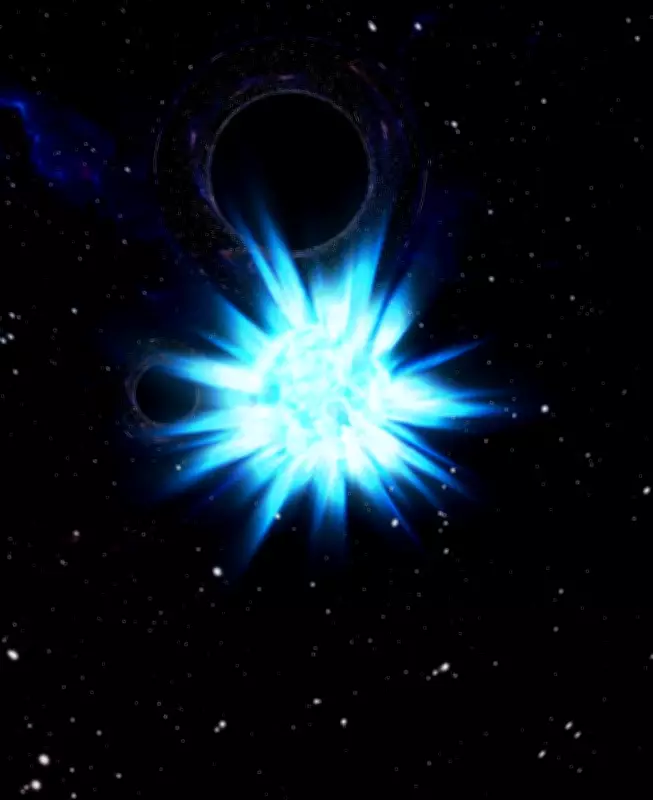
Astronomical Breakthrough: Evidence for Gargantuan Star Explosions Uncovered
In a landmark discovery that could rewrite the history of the cosmos, astronomers have found compelling evidence for the existence of gargantuan star explosions, known as pair-instability supernovae. These colossal events, long theorised but never conclusively observed, are believed to have occurred in the early universe and played a crucial role in seeding it with heavy elements.
The Hunt for Cosmic Giants
For decades, astrophysicists have hypothesised that the first stars in the universe, often called Population III stars, were behemoths hundreds of times more massive than our Sun. When such stars reached the end of their lives, they were predicted to undergo pair-instability supernovae—cataclysmic explosions so powerful that they would completely obliterate the star, leaving no remnant like a black hole or neutron star. This process is distinct from typical supernovae and involves the production of electron-positron pairs in the stellar core, leading to a runaway thermonuclear reaction.
The recent breakthrough came from analysing ancient stellar populations in distant galaxies. Using advanced telescopes and spectroscopic techniques, researchers detected unusual chemical signatures, particularly an overabundance of elements like iron and nickel, which align with predictions for pair-instability supernovae. These findings, published in a leading scientific journal, provide the first tangible clues that these monumental explosions indeed occurred, offering a window into the violent infancy of the universe.

Implications for Cosmic Evolution
The discovery has profound implications for our understanding of cosmic evolution. Pair-instability supernovae are thought to have been key drivers in enriching the early universe with heavy metals, which are essential for forming planets and, ultimately, life. By confirming their existence, scientists can now refine models of star formation and galactic development, shedding light on how the first structures in the cosmos emerged from primordial gas.
Key aspects of this research include:
- Chemical Fingerprints: The detection of specific elemental ratios in old stars that match theoretical simulations of pair-instability supernovae.
- Timing and Scale: Evidence suggests these explosions occurred within the first billion years after the Big Bang, involving stars with masses between 150 and 250 times that of the Sun.
- Observational Challenges: Studying such distant events required cutting-edge technology, as the light from these explosions has traveled for billions of years to reach Earth.
This finding not only validates long-standing theories but also opens new avenues for exploration. Astronomers plan to use upcoming observatories, such as the James Webb Space Telescope, to search for direct signs of these explosions in even earlier cosmic epochs. As research progresses, it may reveal more about the mysterious first stars and their role in shaping the universe we see today.
In summary, the evidence for gargantuan star explosions marks a pivotal moment in astrophysics, bridging theory and observation to illuminate the dramatic processes that forged the early cosmos. This discovery underscores the dynamic nature of the universe and our ongoing quest to unravel its deepest secrets.