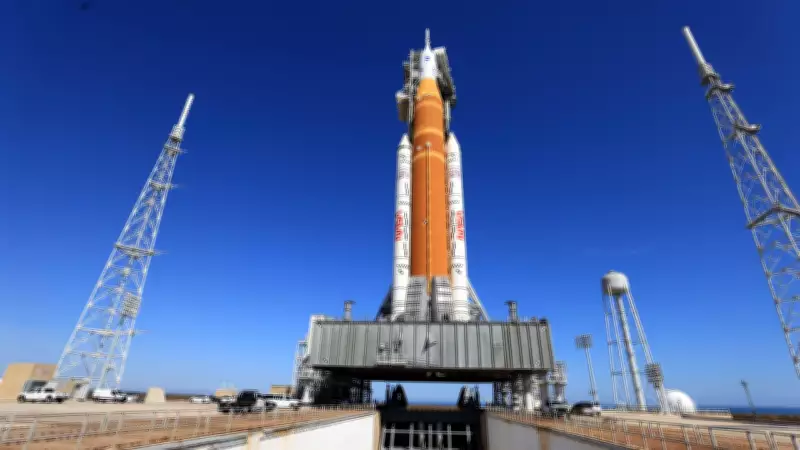
NASA's Artemis II Mission: A Technological Odyssey to Document Lunar Return
When NASA's Artemis II spacecraft embarked on its historic journey, it carried far more than just four astronauts and decades of engineering ambition. The mission features an extraordinary arsenal of cameras, smartphones, and cutting-edge communications technology designed to document humanity's return to lunar orbit with unprecedented detail. This technological payload represents a significant evolution from previous space missions, blending proven equipment with innovative new devices.
The Camera Array: 28 Eyes on the Mission
Artemis II launched with at least 28 cameras strategically positioned throughout the spacecraft. These imaging devices are mounted to the spacecraft's exterior, installed inside the cabin, and carried as handheld devices by the crew members. Together, this comprehensive camera network will capture every conceivable angle of the mission, from the fiery spectacle of launch to the profound silence of deep space. The visual documentation will provide both scientific data and public engagement material of exceptional quality.
Nikon's Dual Role: Proven Reliability Meets Next-Generation Innovation
Among the most discussed equipment are the Nikon cameras selected for this mission. NASA astronauts have received extensive training with the Nikon D5, a DSLR camera that, despite being over a decade old, brings crucial proven reliability to space operations. The reason for including this older model is straightforward: the Nikon D5 has already demonstrated its capability to withstand the punishing radiation levels and zero-gravity conditions of deep space flight during previous missions, giving engineers confidence in its performance.

However, the crew has also managed to incorporate something significantly newer. The Nikon Z9, Nikon's flagship mirrorless full-frame camera, makes its space debut on Artemis II. This inclusion serves as critical preparation for an even more important role on Artemis III, the subsequent mission that will return astronauts to the Moon's surface for the first time since 1972.
For Artemis III, the Z9 will undergo extensive modifications under a formal Space Act Agreement between Nikon and NASA. Engineers are redesigning circuits to withstand cosmic radiation, developing custom firmware optimized for moonwalk conditions, and building specialized grips that allow astronauts to operate the camera while wearing thick spacesuit gloves. Additionally, a thermal blanket similar to those used during International Space Station spacewalks will protect the camera on the lunar surface. Selected NIKKOR Z lenses will also be modified to survive the Moon's extreme temperature fluctuations and harsh radiation environment.
GoPro's Extreme Environment Expansion: From Earth to Deep Space
GoPro cameras are also participating in this historic journey. Four specially-modified GoPro devices are mounted directly onto the solar array wings of the Orion spacecraft, where they will record high-resolution views of the spacecraft itself, Earth, and the Moon from external perspectives. Beyond their documentary function, these cameras will serve as inspection tools during critical mission moments, enabling ground control to visually assess the spacecraft's condition from Earth with remarkable clarity.
For GoPro, selection for the Artemis II mission validates the company's longstanding belief that their cameras deliver exceptional reliability, image quality, and adaptability when these attributes matter most—whether on Earth or more than 240,000 miles away in deep space. The company emphasizes that their small, ruggedized, adaptable cameras are engineered to deliver reliable performance in the most extreme conditions imaginable, from ocean depths to mountain peaks to the vacuum of space.

Personal Technology Makes History: iPhones in Space
NASA has approved the use of personal smartphones aboard Artemis II, marking one of the first missions where astronauts have brought their own handsets into space. This authorization means both iPhones and Android devices have traveled beyond Earth's orbit on a NASA mission for the very first time. The crew has already begun experimenting with these devices in the unique environment, with clips shared on social media platforms showing an iPhone being tossed between crew members in zero gravity, demonstrating both the novelty and practical applications of personal technology in space.
Revolutionary Communications: Beaming 4K Footage from Lunar Orbit
Perhaps the most technically stunning element of Artemis II's communications infrastructure is the Orion Artemis II Optical Communications system, known as O2O. Unlike traditional radio-based communications systems, O2O utilizes advanced laser technology to transmit data between the spacecraft and Earth at remarkable speeds reaching up to 260 Mbps. This bandwidth is sufficient to stream live 4K video footage directly from the Moon's vicinity, representing a quantum leap in space communication capabilities.
The O2O system will also facilitate rapid transmission of flight plans, procedures, photographs, and other mission-critical data between the crew and ground control teams. This enhanced communication capability not only improves operational efficiency but also enables richer scientific data collection and more immersive public engagement through high-quality visual content.
The technological payload aboard Artemis II represents a sophisticated integration of proven reliability and cutting-edge innovation. From the 28 cameras documenting every moment to the personal smartphones capturing zero-gravity experiments, and from the laser communications beaming 4K footage to the specially-modified equipment preparing for future lunar surface missions, these devices collectively ensure that humanity's return to the Moon will be documented with unprecedented clarity and shared with audiences worldwide.