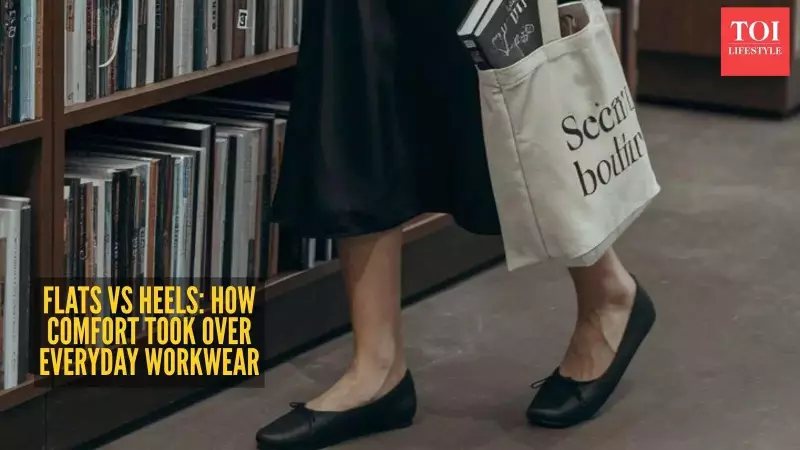
There is a silent revolution happening on the crowded platforms of Mumbai's local trains and in the gleaming corridors of Gurgaon's corporate parks. It is a shift felt in the soles of the feet: the once-unquestionable reign of the stiletto heel is over. In its place, a new era of power dressing, built on the foundation of comfort and practicality, is taking hold in 2026.
The End of the Heel's Unwritten Contract
For decades, high heels were more than footwear; they were the uniform of ambition and authority. They promised entry into glass-paneled boardrooms and commanded respect. However, the social contract that demanded this sacrifice began to fracture between 2020 and the present day. The global pandemic confined professionals to their homes, making slippers the daily norm. The subsequent rise of hybrid work models made the prospect of enduring 90-minute video calls in painful shoes seem absurd. Meanwhile, the relentless pace of Indian cities, from marathon commutes to long walks between meetings, never ceased.
This cultural shift is now receiving official ratification from the world's runways. Flats now dominate global fashion shows, featuring ballet flats, sophisticated loafers, and elegant mesh sneakers that offer couture style with cloud-like comfort. Heels have not disappeared, but they have become optional—reserved for special evenings where dressing up is a genuine choice, not a mandated punishment.

Data and Daily Life Confirm the Trend
Retail statistics provide concrete evidence of this movement. According to market analysis, the share of flats in the global footwear market climbed from 6% to 8% between 2023 and 2025. During the same period, the dominance of sneakers, which peaked during the pandemic, saw a slight dip. Indian consumers are driving demand for walkable, durable styles priced under ₹20,000, seeking out ballet flats with proper arch support and loafers built to survive 12-hour days.
The change is visible on the ground. Walk into any bustling co-working space in Bandra or a corporate office park in Gurgaon. The colleague whose steps were once announced by the confident clack of four-inch pumps now moves silently in sleek leather loafers. Social media influencers are prioritizing stories of 10K runs over leg-lengthening photoshoots. The transformation is so widespread that even kitty party attendees are swapping their dressy heels for comfortable kolhapuris.
This is not a shift toward laziness, but a conscious recalibration. The physical relief is immediate: no more dull throbbing in the arches during crucial presentations, no need to calculate wedding dance moves based on pain tolerance. It is movement reclaimed, offering grace without a ledger of suffering.
Redefining Power and Embracing Comfort
This new paradigm represents a subtle but significant reclamation. Choosing comfort in public spaces, especially for women, carries its own weight. It is an unapologetic decision to occupy space without the literal and figurative architecture of heels. It eliminates the constant bodily negotiation that painful footwear demands, allowing for a more authentic and grounded presence.
Yet, a faint nostalgia lingers for the ceremonial aspect of heels—the silver strappy pair worn for a college farewell that later led to a pavement-sitting sob session. That old pact stated clearly that beauty demanded sacrifice. Today's advanced flats, with their built-in padding and slight stacked heels, rewrite that script. They offer a subtle elevation without the punishment.
As the local train lurches towards Churchgate station and the platform crowds swell, the practical superiority of flats is undeniable. They hug the feet like trusted friends. But when the distant, familiar clack of heels echoes past, it prompts a reflective question for this new era: Is the widespread embrace of comfort the ultimate victory, or are we simply trading one set of compromises for another?
The Comfort File: Making the Smart Switch

- Work Ballet Flats: Opt for styles with arch support and a slight 0.5-1 inch lift. Brands like Vionic offer medical-grade comfort disguised in stylish designs.
- Office Loafers: Leather or suede penny loafers are universally versatile. A pointed toe can nod to the sharp energy of heels without any of the associated pain.
- Evening Mary Janes: Metallic or embellished versions can elegantly dress up jeans or a saree while remaining perfectly walkable for any event.