
Sensex, Nifty Recover in Early Trade After STT Proposal
Indian benchmark indices Sensex and Nifty show recovery in early trade, climbing 302 points and 59.25 points respectively, following sharp declines after Finance Minister's STT proposal.

Indian benchmark indices Sensex and Nifty show recovery in early trade, climbing 302 points and 59.25 points respectively, following sharp declines after Finance Minister's STT proposal.

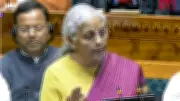
Finance Minister Nirmala Sitharaman explains the STT increase targets high-risk F&O speculation, while outlining gradual fiscal deficit reduction and banking reforms for steady economic growth.

Comprehensive analysis of renting versus buying property in India post-Budget 2026. Compare HRA exemptions, home loan deductions, tax regimes, and financial implications for informed housing decisions.

Silver price in India today, February 2, 2026, is ₹300 per gram and ₹3,00,000 per kg, marking a significant decline after the Union Budget. Check rates across major cities like Delhi, Mumbai, and Hyderabad.

The implementation of New Labour Codes from November 2025 reshapes salary discussions. Learn how the revised wage definition impacts gratuity payouts and why PF contributions remain largely unchanged for most employees.

Finance Minister Nirmala Sitharaman explains STT increase to curb retail speculation in F&O markets, sets fiscal deficit at 4.3% for FY27, and outlines disinvestment plans.

The Indian rupee appreciated by 18 paise to 91.75 against the US dollar in early trade on Wednesday, driven by positive domestic equity trends and foreign fund inflows.

Bitcoin price today fell sharply to $74,683.63, dropping below $75,000 for the first time since April 2025. The cryptocurrency market faces a selloff due to lack of momentum and trade tensions.

Union Budget 2026-27 proposes major taxation changes for share buybacks, moving them from dividend taxation to capital gains. Promoters face higher taxes while retail shareholders may benefit with lower or nil tax burdens.

Union Budget 2026 introduces retrospective clarifications on tax reassessment notices and DIN requirements, addressing court conflicts but raising equity concerns among taxpayers and experts.

Finance Minister Nirmala Sitharaman presented her ninth consecutive Budget for FY27 in Parliament, emphasizing capital expenditure to sustain growth, boost manufacturing, and stabilize the rupee through capital inflows, while avoiding major tax reforms an

Gold rates on the Multi Commodity Exchange (MCX) witnessed a decline, driven by profit booking activities and weak global market cues, alongside increased margins for precious metals on CME.

Global investment bank Morgan Stanley expresses optimism on Indian equities following the Union Budget, recommending overweight positions in financials, consumer discretionary, and industrial sectors.

Silver prices on MCX extended losses, falling over 39% from record highs, while global spot silver jumped 8%. Gold also declined on MCX but recovered internationally. Analysts advise caution amid high volatility.

The Union Budget 2026-27 reveals a constrained fiscal landscape following 2025's tax cuts. With modest GDP growth projections and shrinking GST revenues, the government faces challenges in deficit reduction and debt management while maintaining capital ex

Finance Minister announces India Semiconductor Mission 2.0 to build domestic capabilities in semiconductor equipment, chemicals, and gases, targeting a $400 billion market by 2030 amid global AI-driven supply bottlenecks.

Indian stock market faces pressure following Union Budget 2026-27's surprise STT increase on derivatives. Expert Vaishali Parekh analyzes Nifty 50 and Bank Nifty outlook with key support levels and intraday stock recommendations.

Oracle is reportedly planning to lay off up to 30,000 employees to finance its AI data center ambitions, with US banks pulling back from lending and the company exploring asset sales.

Union Budget 2026 proposes restructuring Power Finance Corporation and Rural Electrification Corporation to enhance scale and efficiency, fueling merger speculation as government pushes public NBFCs to meet credit and tech targets.

Finance Minister Nirmala Sitharaman's Union Budget 2026-27 focuses on infrastructure with dedicated freight corridors, 20 new national waterways, tax incentives, and sectoral schemes for Viksit Bharat.

Finance Minister Nirmala Sitharaman presents Union Budget 2026-27 with focus on infrastructure, manufacturing, healthcare, and financial sector reforms including dedicated freight corridors and 20 new national waterways.

The Q3 earnings season continues with around 680 companies set to report results today, including Hyundai Motor and Indus Towers. Analysts expect corporate earnings to drive market direction despite recent volatility.

Analysis reveals gold and silver outperform stocks in short-term returns, but perspective shifts when examining longer timelines and different measurement approaches.

The Centre aims to reduce fiscal deficit to 4.3% of GDP in 2026-27 from 4.4% in 2025-26, with debt-to-GDP ratio estimated at 55.6%. FM Sitharaman highlights fiscal consolidation progress.

Finance Minister Nirmala Sitharaman's Union Budget 2026 emphasizes fiscal prudence, job creation, and economic growth, anchored by the Atma Nirbharta theme to boost exports and attract long-term investments.

Union Budget 2026-27 pivots from announcing job creation targets to building sustainable employment through skilling, services sector growth, and sector-led ecosystems like healthcare and orange economy.

Motilal Oswal Financial Services recommends ICICI Bank and APL Apollo Tubes as top buys for the trading week starting February 2, 2026, citing strong fundamentals and growth potential.
Union Budget 2026 introduces key tax reforms for IT services, including safe harbour margin of 15.5%, automated approvals, and fast-track APA process to enhance certainty for cross-border operations.

Indian stock market may open steady on Monday with Gift Nifty signaling a marginally higher start. Investors remain cautious after Sunday's crash due to STT hike proposals in Union Budget.

Starting April 1, the new income tax regime will be the default option for taxpayers, with no changes to existing tax rates. The government aims to simplify tax filing and encourage adoption of the streamlined system.