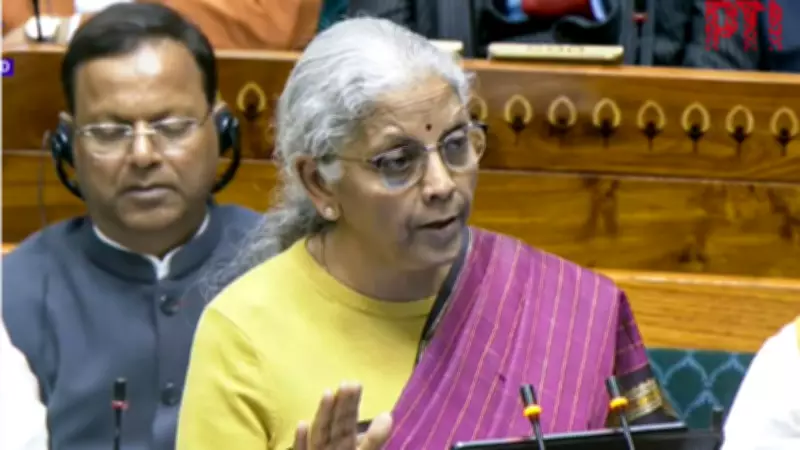
In a significant move to bolster India's technology sector, Union Finance Minister Nirmala Sitharaman announced comprehensive tax reforms in the Budget 2026, aimed at providing greater certainty and easing compliance for IT services companies. The proposals come at a crucial time as the industry navigates challenges posed by the rapid proliferation of artificial intelligence (AI) and global economic shifts.
Key Reforms for IT Services Sector
The Budget proposes to consolidate various service categories under a unified framework for IT services. This includes software development services, IT-enabled services (ITES), knowledge process outsourcing services, and contract research and development services related to software development. All these will now fall under a single category with a common safe harbour margin set at 15.5%.
Enhanced Threshold and Automated Approvals
Further simplifying the process, the threshold for availing safe harbour benefits has been substantially increased from Rs 300 crore to Rs 2,000 crore. This expansion is expected to benefit a larger number of companies within the sector. Additionally, safe harbour approvals for IT services will transition to an automated, rule-driven process, eliminating the need for manual examination by tax officers.

Once an IT services firm applies and receives approval under this new system, the same safe harbour can be maintained continuously for a period of five years. This long-term certainty is designed to reduce administrative burdens and provide stability for business planning.
Industry Response and Implications
Nasscom, the premier lobby group representing the IT services industry, has warmly welcomed these changes. The organization stated that the reforms will "materially expand access to certainty mechanisms for routine cross-border IT service models."
In a detailed response, Nasscom highlighted the transformative potential of the automated approval process. "Importantly, the proposal to move safe harbour approvals to an automated, rule-driven process without examination by tax officers, along with the option to apply the same safe harbour for a continuous five-year period, represents a decisive shift away from process-heavy compliance towards clarity, predictability and trust-based governance," the group noted.
This shift is anticipated to significantly reduce recurring transfer pricing disputes, benefiting Global Capability Centres (GCC) as well as other Indian IT and IT-enabled services providers engaged in eligible related-party arrangements.
Fast-Track Advanced Pricing Agreements
Complementing the safe harbour reforms, the Budget also introduces measures to expedite the Advanced Pricing Agreement (APA) process for IT services. A unilateral APA process is proposed to be fast-tracked, with efforts to conclude agreements within two years. This timeline can be extended by an additional six months upon request by the taxpayer, providing flexibility in complex cases.
Context and Broader Impact
These proposals arrive against the backdrop of recent Economic Surveys that have issued cautionary advice to the IT services sector, emphasizing the need for adaptive policies in a rapidly evolving technological landscape. By offering tax certainty and streamlined procedures, the government aims to reinforce the sector's role as a key driver in India's developmental journey.
Safe harbour taxation, which involves provisions allowing taxpayers to follow simplified, pre-defined rules with assurance of acceptance by tax authorities without further audit or dispute, is now set to become more accessible and efficient for IT companies. This move is expected to enhance India's competitiveness as a global hub for IT services, fostering growth and innovation in the face of emerging challenges like AI integration and international market pressures.