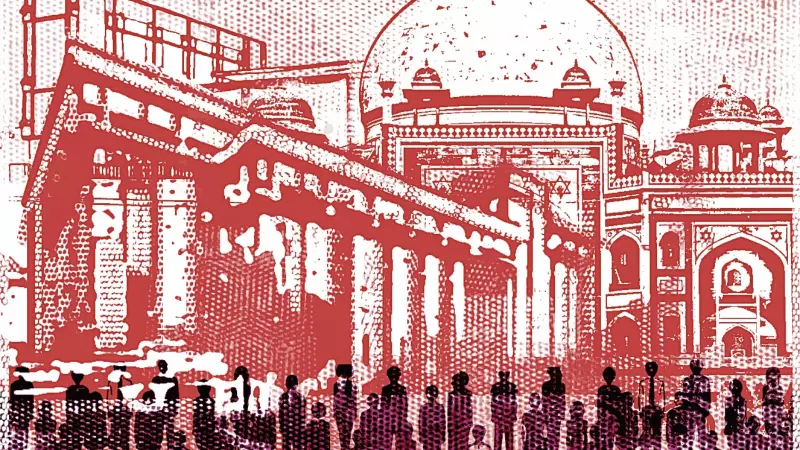
In the heart of New Delhi, a new architectural landmark is inviting residents and global visitors to engage with India's rich history while contemplating its future. The Humayun's Tomb Site Museum, inaugurated recently at the UNESCO World Heritage Site, stands as a profound testament to sustainable design and cultural continuity. Conceived by architects Pankaj Vir Gupta and Christine Mueller of Virmueller Architects, the project was developed in collaboration with the Ministry of Culture, the Ministry of Tourism, the Archaeological Survey of India, and the Aga Khan Trust for Culture.
Rooted in Ecology and Heritage: The Design Philosophy
The design philosophy for the museum was deeply influenced by the late architect Joseph Stein, known for iconic Delhi structures like the Triveni Kala Sangam and India International Centre. Stein's fundamental belief—that a building for people is incomplete without a garden—became a guiding principle. This ethos of integrating architecture with landscape is vividly realized at the museum, which serves as a vital urban connector between Humayun's Tomb, the restored Sunder Nursery, and the bustling Nizamuddin Basti.
The late Aga Khan, Prince Karim, provided a clear mandate: to create a structure that bridges past and present, unifying the natural and built environments to foster a deeper understanding of built heritage. The museum responds to this challenge by being organized into two interlinked zones: a welcoming entrance plaza and a series of subterranean galleries.

Building with History: The Façade of Reclaimed Stone
A key innovative feature of the museum is its striking façade, born from conservation itself. Following the extensive restoration of Humayun's Tomb, several thousand kilograms of leftover red sandstone remnants were salvaged. Instead of discarding this material, the architects used it to create the museum's exterior, stacking the stone in horizontal courses. This act of reuse gives the new building an immediate historical and material connection to the 16th-century monument it celebrates.
As visitors process from the entry plaza into the museum courtyard, the red sandstone transforms into a delicately carved white marble screen, echoing the historic jaalis (perforated screens) of Mughal architecture. This design choice not only evokes memory but also sustains traditional stone craftsmanship, allowing artisans to employ centuries-old techniques in a contemporary project.
A Journey into the Past: The Subterranean Experience
The visitor's journey is carefully choreographed as a measured descent via a gentle stone ramp, reminiscent of ancient citadels. This path leads from the present-day horizon down into the subterranean galleries, symbolically entering the realm of the past. The underground galleries are inspired by the form of baolis (stepped wells), offering high-ceilinged, skylit spaces arranged as a sequence of intersecting squares.
Remarkably, the entire underground structure was built around the roots of existing trees, minimizing its impact on the horticultural fabric of the site. A central sunken garden courtyard, patterned with marble chinikhana fountains and plants, allows natural light to wash over marble-clad columns. Skylit niches within the galleries house full-scale reconstructions of architectural details from Humayun's Tomb, educating visitors on historic construction techniques.
The museum's roof is designed as a terrace plaza, inspired by garden motifs found in Persian carpets. Paved and dotted with planters, it reveals only subtle hints of the museum below through glowing skylights, making the roof itself a welcoming public space animated by shifting patterns of light and shadow.
By creating a space that fosters an emotive connection, the Humayun's Tomb Site Museum demonstrates how modern architectural interventions can respectfully engage with India's historic legacy. It provides a vital public arena where people can gather, reflect on the past, and imagine the future, setting a precedent for heritage-sensitive development worldwide.