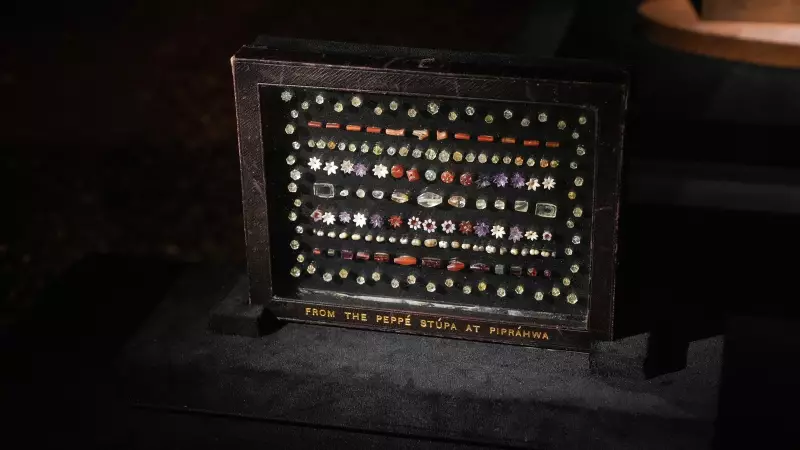
In a high-stakes diplomatic and legal operation that unfolded over three tense months, the Indian government successfully halted a multi-million dollar auction and secured the return of 349 sacred gemstones, originally excavated alongside the corporeal relics of the Buddha over a century ago. The precious artifacts, known as the Piprahwa gems, made a quiet journey home in July 2025, nearly 127 years after they were taken from Indian soil.
The Digital Discovery That Sparked a Mission
The saga began in February 2025, when Soheb Wahab, a former JNU student pursuing his PhD in Philadelphia, was browsing the internet from his home in Thiruvananthapuram. He stumbled upon a listing on Sotheby's Hong Kong website advertising "rare gems from India" for auction. The description explicitly linked them to the 1898 discovery by British estate manager William Claxton Peppé at Piprahwa in Uttar Pradesh, found buried with the Buddha's relics. Alarmed, Wahab immediately alerted his former professor, Dr. Naman Ahuja of Jawaharlal Nehru University.
Recognizing the immense cultural and spiritual significance, Professor Ahuja sprang into action. By March 2025, he had compiled a detailed dossier, which he hand-delivered and emailed to the Prime Minister's Office on April 7, 2025. The dossier outlined the historical context and argued against the commercial sale of sacred sarira-dhatu (mortal remains). The PMO acknowledged the grievance and swiftly forwarded the file to the Union Ministry of Culture.

A Race Against Time to Stop the Auction
The challenge was formidable. The auction was scheduled for 10 AM Hong Kong time on May 7, 2025, with an estimated value of $100 million. The relics were outside Indian jurisdiction, part of a private collection owned by Peppé's great-grandson, Chris Peppé, and time was critically short. The newly appointed Culture Secretary, IAS officer Vivek Aggarwal, who took charge on April 21, was tasked by Culture Minister Gajendra Singh Shekhawat with stopping the sale.
Aggarwal's team explored every avenue. Diplomatic pressure was applied through the UK, but Secretary of State Lisa Nandy expressed inability to intervene. On May 5, 2025, just two days before the auction, the Culture Ministry served a legal notice to Sotheby's and the Peppé family, demanding an immediate halt. Leveraging international protocols, a notice was also sent via the Egmont Group to the Financial Intelligence Unit in Hong Kong. The Ministry of External Affairs activated its missions in the UK and Hong Kong.
The pressure culminated in a tense meeting with Sotheby's on May 6, where Indian officials emphasized the relics' sacred nature and hinted at repercussions for the auction house's business interests in India. The efforts paid off. In the early hours of May 7, Aggarwal received an email from Sotheby's confirming the auction's postponement.
The Secret Repatriation and a New Home
With the auction stopped, the mission shifted to repatriation. Legal routes were complex, and government purchase was difficult. The solution emerged as a unique public-private partnership. Mumbai-based industrialist and philanthropist Pirojsha Godrej stepped forward to acquire the relics on India's behalf. A three-member expert team was dispatched to Hong Kong on May 21, 2025 to authenticate the 349 gems.
The final transport was executed with discreet precision. Fearing interception by Chinese authorities in Hong Kong, the government opted against sending an Air Force plane. Instead, Godrej personally carried the relics on a commercial flight from Hong Kong to Mumbai on July 29, 2025. The next day, they were flown to Delhi on a chartered flight.
At Delhi's Indira Gandhi International Airport, the relics were received with solemn ceremony by Minister Shekhawat, with monks chanting and playing traditional instruments. An agreement ensured the gems would remain inalienable government property, displayed first at a state museum. Today, these priceless artifacts, along with other relics from the 1898 excavation, are exhibited for the public at Delhi's historic Qila Rai Pithora monument.

This successful repatriation marks a significant victory for India's cultural diplomacy, ensuring that a vital piece of the nation's spiritual heritage, once nearly lost to the highest bidder, is now preserved for future generations on the land of the Buddha's origin.