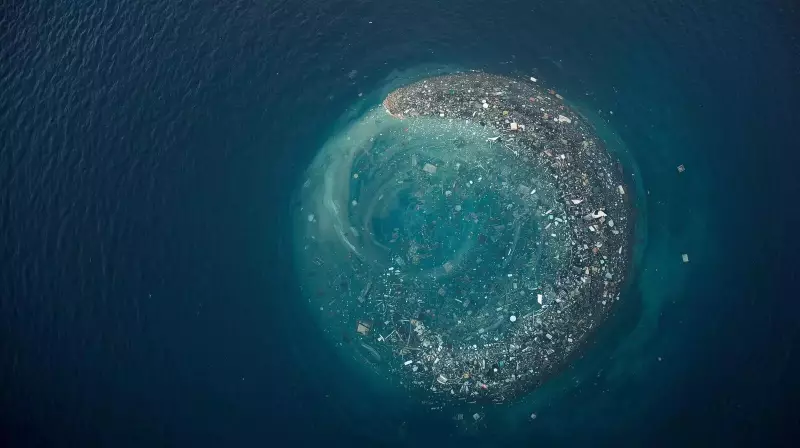
In a startling discovery that rewrites our understanding of ocean life, scientists have found a thriving community of coastal marine animals living and reproducing on floating plastic garbage in the heart of the Pacific Ocean. Published in the journal Nature, the research reveals that the vast garbage patches are not just polluted dead zones but have become inhabited ecosystems.
An Unexpected Floating Habitat
The study was based on a detailed analysis of 105 large pieces of plastic hauled from the North Pacific Subtropical Gyre. This is a slow-moving system of currents, often called the Great Pacific Garbage Patch, where floating debris from across the ocean converges. Contrary to expectations, nearly every piece of plastic examined was hosting life.
Researchers identified 46 different kinds of animals making their home on the waste. Common inhabitants included barnacles, crabs, amphipods, and sea anemones. The most shocking finding was that many of these species are coastal creatures, adapted to living on rocks or harbour walls, not the open ocean. They were found thousands of kilometres from any shore, surviving on a surface never meant to exist in the deep sea.

Plastic Rafts Enable Survival and Breeding
For decades, marine biologists assumed the open ocean was a hostile desert for coastal species. The lack of a solid surface to anchor to, unpredictable food sources, and constant exposure to waves and predators were seen as insurmountable barriers. This new research suggests a simpler truth: the problem was never the water itself, but the absence of a stable surface.
Plastic debris, especially old fishing nets and ropes with twisted shapes that provide grip and shelter, has solved that problem. These items act as permanent rafts. The study found that life was not just clinging on; it was establishing permanent colonies. Scientists found evidence of breeding, including females carrying eggs and multiple growth stages of the same species living together on a single piece of plastic.
"This suggests more than just chance arrival. It points to persistence and established populations," the findings indicate. Species that can reproduce alone or have young that settle quickly have a particular advantage on these long, drifting journeys.
Long-Distance Travel and Ecological Consequences
Genetic tracing shows that many of these coastal stowaways originate from the Western Pacific, with several species linked to the coast of Japan. While some debris may be linked to past tsunamis, the broader implication is clear: plastic is a durable vehicle for long-distance species movement.
This has created a novel ecosystem, now termed "neopelagic" (new open-ocean). It does not replace natural systems but alters them by forcing coastal and open-ocean species to interact in entirely new ways. The long-term effects on food webs, competition, and the spread of invasive species remain unknown and are a major concern for scientists.
The research delivers a complex message. The plastic pollution crisis is undiminished and devastating. Yet, it has also inadvertently demonstrated a profound biological shift. The high seas are no longer the empty wilderness we imagined. They are being silently reshaped, species by species, on a foundation of our own enduring waste.