The dramatic removal of Venezuelan leader Nicolás Maduro by the US military has sent shockwaves through Havana, plunging Cuba into its most severe economic and political crisis in decades. Cuban President Miguel Díaz-Canel's call for his people to be ready to defend Venezuela "with blood and lives" underscores the existential threat now facing the communist island, which has lost its principal global benefactor.
The End of a Vital Lifeline
For over two decades, Venezuela served as Cuba's economic godfather, providing the bulk of its fuel and critical financing. In return, Cuba exported thousands of doctors, teachers, and security advisors to Caracas. This symbiotic relationship is now in tatters. With Maduro awaiting trial in New York, the flow of Venezuelan crude oil—a lifeline for Cuba's energy-starved economy—has been critically disrupted.
According to Jorge Piñon, a researcher at the University of Texas Energy Institute who monitors fuel shipments, Cuba requires roughly 100,000 barrels of oil per day to function but produces only about 40,000 barrels domestically. A decade ago, Venezuela comfortably met this entire demand. However, shipments had already dwindled to just 35,000 barrels daily before the Trump administration began seizing oil tankers last month.

An Economy on the Brink of Collapse
The consequences of this fuel cutoff are catastrophic and widespread. Massive, economy-crushing blackouts have become commonplace. Agricultural production and tourism, key sources of revenue, have hit their lowest levels in years. More than 2 million Cubans—approximately one-fifth of the population—lack reliable access to drinking water.
The social fabric is unraveling. Garbage piles up uncollected, store shelves are barren, and mosquito-borne diseases are soaring in a country once celebrated for its healthcare system. The population has already shrunk by 15% in the last decade, and the government projects a further 20% decline by 2050.
Emilio Morales, president of the Havana Consulting Group, stated bluntly, "They've been left without a godfather... and they're totally bankrupt. How are they going to survive?" He believes the Cuban leadership has never suffered a blow this devastating, impacting not just fuel but money, influence, and control.
International Isolation and a Narrowing Path
Washington, led by Secretary of State Marco Rubio, is actively working to ensure no other nation fills the void left by Venezuela. While Mexico, Russia, and Iran have provided some fuel in the past, their contributions are insufficient and fraught with political risk.
Ricardo Herrero of the Cuba Study Group notes that Díaz-Canel has "no allies in the hemisphere that will risk fragile ties with Washington over Cuba," and it is unlikely Russia or China will mount a full-scale rescue. Any new partner would have to treat Cuba as a major credit risk and directly challenge US policy.
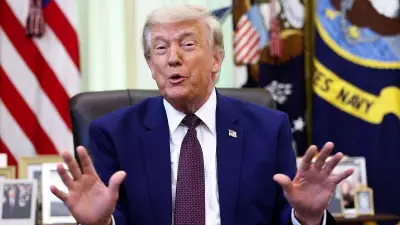
President Donald Trump has suggested that military force may not be needed, predicting "Cuba is going to fall of its own volition." The future of Cuba-Venezuela ties now hinges on the post-Maduro government in Caracas, potentially led by Vice President Delcy Rodriguez, who is seen as less sympathetic to Havana than her predecessor.
Some analysts, like historian Andres Pertierra, caution against viewing Venezuela as a make-or-break ally, suggesting Cuba could theoretically find other global partners. However, Piñon questions who would barter with Havana now and wonders if the US might allow some oil flow to prevent a complete state failure, noting, "Nobody wants a failed Cuban state."
Despite a history of defying odds—from surviving the Soviet Union's collapse to resisting decades of US pressure—Cuba's path forward is perilously narrow. As Herrero concluded, the island is in its darkest period since the 1959 revolution, and there is no telling how it will emerge from this crisis.