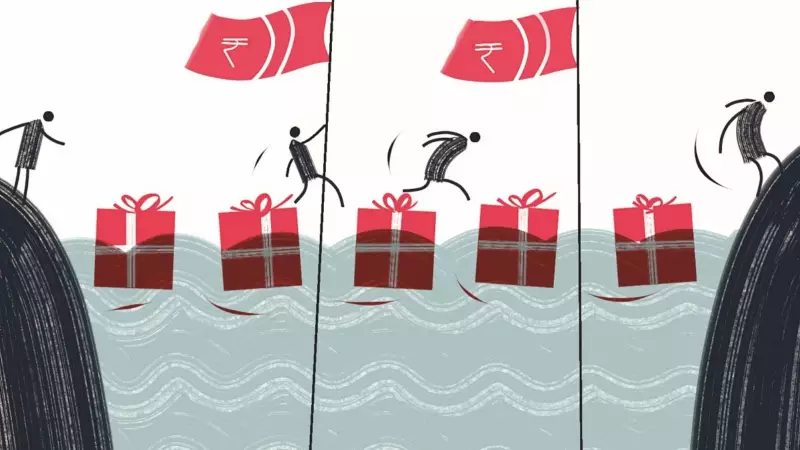
India's approach to welfare schemes stands at a critical crossroads, caught between political populism and the harsh reality of fiscal sustainability. A growing trend of states aggressively expanding entitlements to win votes is now posing a significant threat to the nation's overall economic health, raising urgent questions about stability and future growth.
The State-Level Fiscal Strain: A Pattern of Promises and Arrears
A clear and worrying pattern has emerged across several Indian states. Governments frequently announce new welfare benefits or enhance existing ones, particularly in the run-up to elections, to broaden their electoral appeal. However, this expansion often comes at a steep cost to fiscal prudence. The immediate consequence is visible fiscal stress, manifesting as delayed payments to contractors, vendors, hospitals, and even the intended beneficiaries of these very schemes.
States like Telangana, Andhra Pradesh, Karnataka, Himachal Pradesh, and Punjab each reflect different facets of this strain. In Bihar, the impact of pre-election direct benefit transfers on polls remains a hot topic, even as state debt grows. The common thread is that welfare expansion frequently results in mounting arrears rather than sustained support, with little attention paid to legacy debt or concrete repayment plans. This effectively pushes the financial burden onto future administrations.

The scale of indebtedness is stark when viewed against economic output. Punjab and Himachal Pradesh carry a debt-to-GSDP (Gross State Domestic Product) ratio of 45-47 per cent, a dangerously high level. In contrast, fiscally disciplined states such as Odisha and Gujarat find themselves in a much more secure position.
From State Debt to National Risk: The Ripple Effect
The fiscal decisions of individual states do not exist in a vacuum; they directly impact India's sovereign financial credibility. In 2023, India's combined government debt (Centre plus states) stood at around 81 per cent of GDP. States alone account for roughly 28–30 per cent of their combined GSDP, a figure that excludes off-budget borrowings.
When states finance welfare programmes through instruments like State Development Loans (SDLs), they increase the supply of government bonds in the market. This higher supply pushes up yields, raising borrowing costs not just for the states themselves but potentially for the central government as well. Credit-rating agencies and global investors assess India's public debt as one integrated balance sheet. Persistent arrears and unchecked liability accumulation signal distress, which can deteriorate the country's overall risk profile and squeeze fiscal room for crucial development spending.
The Path Forward: A National Framework for Sustainable Welfare
The solution, therefore, lies in moving beyond fragmented, politically-driven welfare expansion. The situation demands a cohesive national strategy similar to interventions in education policy, like the Right to Education Act and the National Education Policy 2020, which created a baseline framework while preserving state-level innovation.
What India urgently requires is a National Welfare Policy grounded in shared, non-negotiable principles of fiscal discipline, transparency, and continuity. Such a framework would mandate a clear assessment of how new schemes impact state debt, whether that debt is avoidable, and its long-term implications. It must protect existing welfare entitlements from being disrupted simply to manage debt or finance new, politically convenient promises before elections.
The choice is now clear for the nation: continue down the path of fragmented welfare populism that erodes fiscal health, or adopt a prudent national framework that balances compassion with economic responsibility, ensuring true equity, stability, and sustainability for future generations.