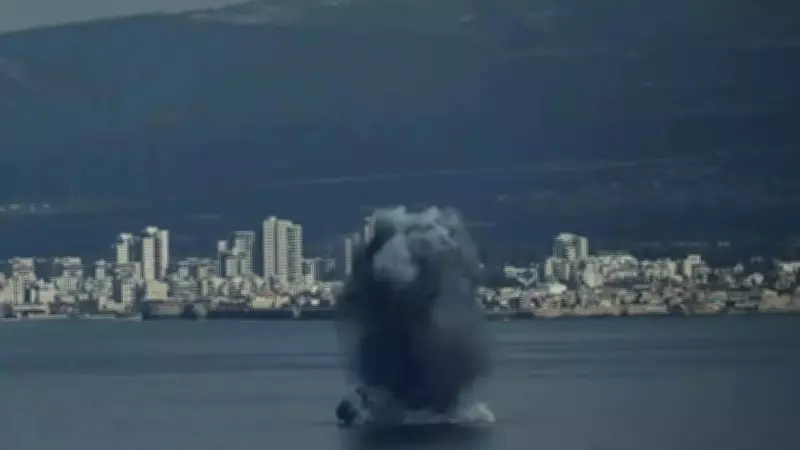
Israel and United States Launch Joint Preemptive Military Operation Against Iran
In a major escalation of regional tensions, Israel and the United States have executed a coordinated preemptive military strike against Iran. The operation involved advanced air, naval, and missile systems targeting Iranian military and nuclear-linked facilities across multiple cities.
Operation Details and Targeted Locations
The joint offensive, codenamed Operation Roaring Lion by Israel and Operation Epic Fury by the US, focused on key sites in Tehran, Isfahan, and Shiraz. This action marks a significant increase in direct US military involvement amid ongoing disputes over Iran's nuclear program and internal political unrest.
Iran responded swiftly with a sweeping retaliation across the region. The Islamic Republic launched missile and drone barrages toward Israel, followed by strikes on US military installations in Bahrain, Kuwait, and Qatar. These counterattacks signal that the conflict has expanded beyond the initial two adversaries, potentially drawing in other nations.

Weapon Systems Deployed by Israel and the United States
The allied forces utilized a sophisticated arsenal of long-range and precision-guided weaponry:
- Tomahawk Cruise Missiles: Deployed by the US Navy from warships and submarines, these subsonic weapons fly at extremely low altitudes of 30 to 50 meters to evade radar detection. With a range exceeding 1,600 kilometers, they provide all-weather strike capability.
- F-35I "Adir" Stealth Fighters: Israel's customized version of the F-35A Lightning II, uniquely permitted to integrate indigenous software and hardware. Their stealth design and advanced sensor fusion enable penetration of heavily defended airspace for precision strikes.
- F-15I Ra'am Strike Fighters: Developed after the 1991 Gulf War to provide deep-strike capability, these aircraft carry heavy payloads over long distances.
- Stand-off Cruise Missiles: Including Israel's Delilah (which can loiter over targets for confirmation) and Rampage (optimized for hardened, time-sensitive targets).
- Precision-Guided Munitions: Featuring SPICE kits that convert unguided bombs into autonomous weapons operable in GPS-denied environments, and Joint Direct Attack Munition kits for all-weather smart bombing.
- GBU-28 Bunker-Buster Bombs: 5,000-pound laser-guided penetrator weapons designed to destroy deeply buried command centers and hardened nuclear facilities.
- Unmanned Systems: Long-endurance Heron and Eitan drones employed for surveillance, intelligence gathering, and precision strike missions.
Iranian Retaliatory Weapons and Strategy
Iran's response demonstrated its growing missile capabilities:
- Shahab-3 Medium-Range Ballistic Missiles: Liquid-fueled, road-mobile systems derived from North Korea's Nodong-1. As Iran's first missile capable of striking all of Israel, it remains central to Tehran's long-range deterrent strategy.
- Emad Precision-Guided Ballistic Missiles: Unveiled in 2015 with terminal guidance for improved accuracy over earlier variants.
- Ghadr Medium-Range Missiles: Upgraded versions of the Shahab-3 with extended range, enhanced mobility, and improved precision, enabling targeting across much of the Middle East while complicating interception efforts.
Political Context and Anticipation
The attack had been widely anticipated following US President Donald Trump's order for the largest American military deployment to the Middle East in years. However, lawmakers have questioned why Trump has not addressed the US public or Congress to explain the necessity of military action.
The regional conflict now threatens to destabilize the entire Middle East, with potential implications for global energy markets and international security arrangements.