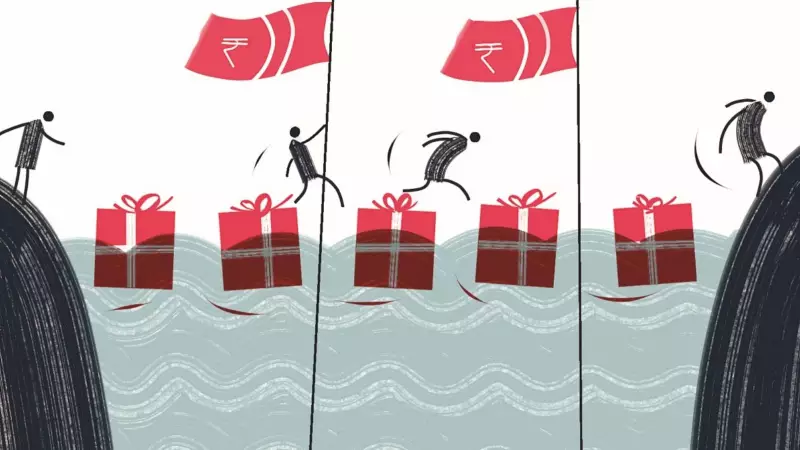
India's approach to welfare schemes is creating a dangerous paradox that threatens the nation's long-term economic stability. While state governments aggressively announce new benefits to win political favor, this populist expansion is eroding fiscal health, creating mounting debts, and delaying payments to beneficiaries and contractors.
The Three Alarming Patterns of State-Level Welfare Politics
An analysis of state finances reveals three consistent and troubling patterns. First, governments frequently launch or enhance welfare schemes during election cycles to broaden their electoral appeal. Second, this spending leads to severe fiscal stress, manifesting in delayed payments to hospitals, vendors, and the intended beneficiaries of the schemes themselves. Third, state debt continues to balloon, with fiscal deficits widening and debt-to-GSDP ratios deteriorating.
These trends, often hidden from public discourse due to their lack of immediate political reward, paint a more accurate picture of state finances than official messaging. The burden of unpaid pensions, subsidies, and salaries grows even as new promises are made.

Case Studies: From Punjab to Bihar, Fiscal Strain is Evident
Several states exemplify this deepening crisis. Punjab and Himachal Pradesh are shouldering an enormous debt burden, with debt-to-GSDP ratios reaching 45-47%. States like Telangana, Andhra Pradesh, Karnataka, and Punjab show clear signs of strain through delayed reimbursements and mounting arrears.
In Bihar, the impact of pre-election direct benefit transfers on polls remains a hot topic, highlighting the political calculus behind welfare spending. These expansions often result in legacy debts and arrears rather than sustained support, with future governments forced to manage the fallout, sometimes through distressed asset sales.
In contrast, fiscally disciplined states such as Odisha and Gujarat find themselves in a much stronger position, underscoring that alternative models exist.
A National Problem: How State Debt Impacts India's Sovereign Credit
The consequences extend far beyond individual state borders. In 2023, India's combined government debt (Centre and states) stood at around 81% of GDP. States alone carry debt worth roughly 28–30% of their combined Gross State Domestic Product (GSDP).
When states finance welfare programs through instruments like State Development Loans (SDLs), they increase the supply of government bonds. This pushes up yields and raises borrowing costs not just for themselves but for the central government as well, squeezing the fiscal space available for crucial national development spending.
Credit rating agencies and global investors assess India's public debt as a single sovereign balance sheet. Persistent arrears and unfunded welfare liabilities signal national distress, deteriorating the country's overall risk profile and potentially increasing the cost of borrowing on the global stage.
The Path Forward: Learning from Education, Crafting a National Welfare Policy
The solution, experts argue, lies in moving away from fragmented, populist-driven expansion. The experience with education policy, also a concurrent subject, offers a blueprint. Interventions like the Right to Education Act and the National Education Policy 2020 created a coherent national framework while preserving state autonomy.
What India urgently needs is a National Welfare Policy grounded in shared principles of fiscal discipline, transparency, and continuity. Such a framework would mandate clarity on the debt generated by new schemes, its long-term implications, and protect existing entitlements from being disrupted for new political promises.
The choice for India is stark: continue down the path of fiscally erosive welfare populism or adopt a prudent national framework that balances compassion with economic responsibility, ensuring equity, stability, and sustainability for future generations.