Supreme Court Rejects Sympathy, Upholds Law in Govt Job Termination Case
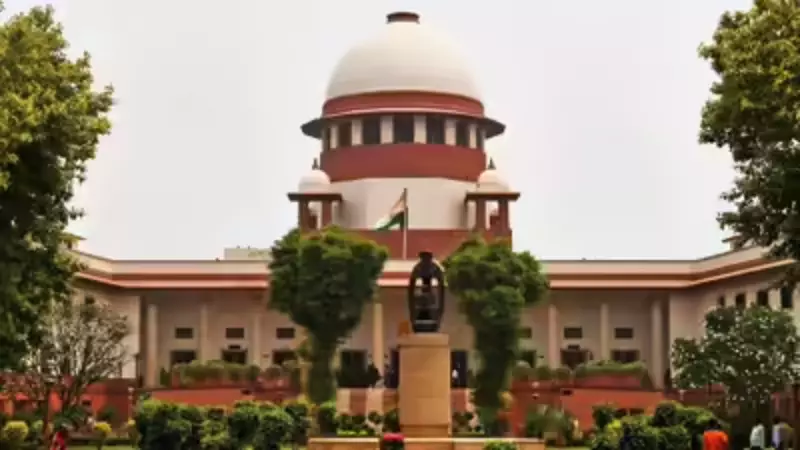
The Supreme Court of India delivered a firm verdict on Monday, quashing the appointment of a young man from Uttar Pradesh who failed to disclose pending criminal cases during his recruitment for a government position. While expressing sympathy for the individual who will lose his job, the court stressed that legal principles must prevail over emotional considerations.
Law Is Harsh But Must Be Followed
A bench comprising Justices Sanjay Karol and N K Singh invoked the Latin maxim dura lex, sed lex, meaning "the law may be harsh, but the law is law." They overturned an Allahabad High Court order that had described the non-disclosure as trivial and reinstated the man's appointment.
The bench stated clearly that sympathy cannot replace established legal standards. They acknowledged that losing a government job represents a significant personal setback. However, they emphasized that individuals must understand the consequences of their actions when applying for public service roles.

Disclosure Requirements Are Fundamental, Not Procedural
The court explained that complete disclosure in government job applications serves as a basic requirement rather than a mere formality. This requirement supports fairness, integrity, and public trust in the selection process.
Government positions typically attract hundreds or even thousands of applicants for each vacancy. All candidates compete under identical conditions. Thorough vetting of every applicant becomes essential to maintain a level playing field and protect the credibility of the selection system.
When an applicant withholds information about criminal antecedents, this action undermines the entire process. It prevents the appointing authority from making a fully informed assessment of the candidate's suitability for public service.
Repeated Non-Disclosure Shows Deliberate Concealment
While the law recognizes that non-disclosure might not always prove fatal to a candidature depending on circumstances, it remains a serious lapse. The gravity increases substantially when non-disclosure occurs repeatedly.
Repeated failure to disclose ceases to appear accidental or inadvertent. Instead, it reflects deliberate concealment. Such behavior strikes at the core of trust placed in candidates for public service positions, where honesty and transparency represent indispensable qualities.
This justifies authorities taking a stricter view when candidates demonstrate such concealment patterns.
Case Background and Judicial Journey
The individual in question secured appointment as Sahayak Samiksha Adhikari. Authorities later discovered two pending criminal cases against him that he had not disclosed in his application form. Consequently, his services were terminated.
The man approached the Allahabad High Court, where both a single judge and a division bench quashed his termination order. Following these rulings, the state government appealed to the Supreme Court, leading to Monday's decisive verdict that reinstated the termination.