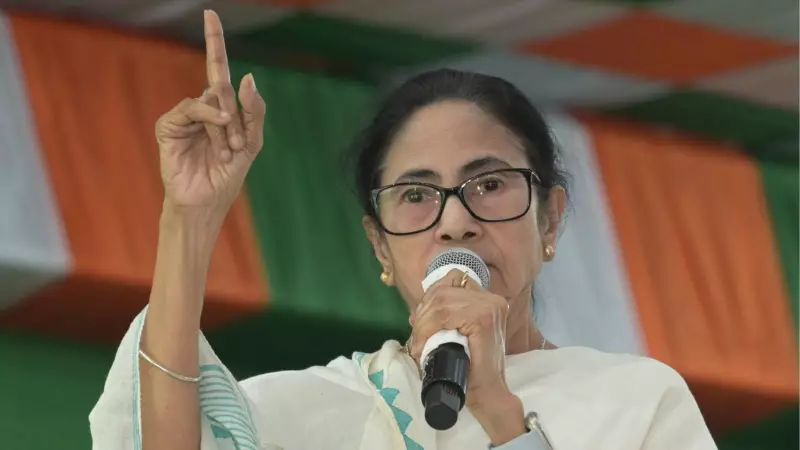
West Bengal Chief Minister Mamata Banerjee has escalated her concerns over the ongoing Special Intensive Revision (SIR) of electoral rolls, penning her fourth letter to Chief Election Commissioner (CEC) Gyanesh Kumar. In her communication dated Monday, January 12, 2026, Banerjee accused the Election Commission of India (ECI) of disowning its own actions of the last 23 years and implementing a flawed process that harasses citizens and threatens their constitutional voting rights.
Core Grievances: No Receipts & AI Translation Blunders
The Chief Minister highlighted two systemic failures. First, she pointed out a critical lapse in procedure: voters submitting documents during SIR hearings are often not given any proper acknowledgement or receipt. Subsequently, these documents are reported as 'not found', leading to the deletion of voters' names based on internal record-keeping deficiencies. She termed this process fundamentally flawed and untenable.
Second, Banerjee detailed a major source of data errors. She explained that in the absence of a digitised database from the last SIR, manual voter lists from 2002—including those in vernacular scripts—were scanned and translated into English using Artificial Intelligence (AI) tools. This AI-driven transliteration caused serious errors in elector details like name, age, sex, and guardian's name. These mismatches have led to numerous genuine voters being wrongly flagged as having logical discrepancies.

Arbitrary Reversal of Two Decades of Corrections
Banerjee argued that the Commission's current approach arbitrarily disregards established procedures followed for over two decades. She noted that over the past 23 years, many voters had already submitted Form-8 with valid documents, and their details were corrected after quasi-judicial hearings by Electoral Registration Officers (EROs). These corrected entries are part of the current 2025 electoral roll.
Why is the process reverting to 2002? Banerjee questioned in her letter, asking if this implied all revisions conducted in the intervening years were illegal. She called this approach arbitrary, illogical, and contrary to the Constitution's spirit, as it forces voters to repeatedly prove their identity and eligibility.
Mechanical Process & Human Cost
The Chief Minister criticized the hearing process as being largely mechanical, driven purely by technical data without sensitivity or a human touch. She also flagged that minor variations in names (like 'Kr' vs 'Kumar') or age—common errors—should be resolved by officials without calling electors for hearings. However, the system currently mandates hearing notices for disposal.
In her previous letter on Saturday, Banerjee had alleged that the SIR drive had turned into an exclusion exercise, linking it to 77 deaths, four suicide attempts, and 17 hospitalisations. In her latest appeal, she urged the CEC to intervene immediately to end the harassment of citizens and protect their democratic rights.
This ongoing dispute between the West Bengal government and the Election Commission underscores the significant challenges in balancing technological modernization of voter lists with the protection of genuine voters' rights, especially in a politically sensitive state.