

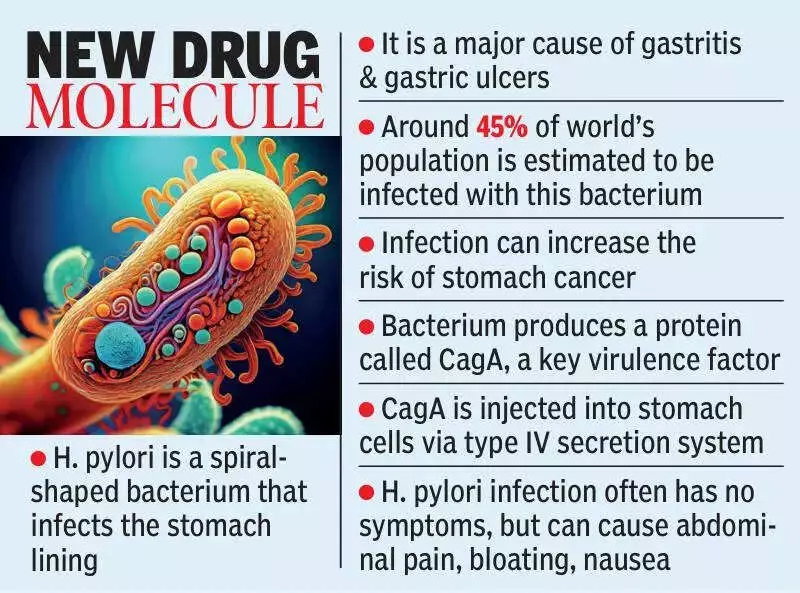
In a significant medical breakthrough, scientists from Visakhapatnam have secured a patent for a novel drug molecule designed to combat a widespread bacterial infection. The innovation comes from the Centre for Advanced-Applied Biological Sciences and Entrepreneurship (TCABS-E), an incubator at Andhra University.
A Targeted Strike Against a Global Pathogen
The newly patented molecule, coded MA01027, is engineered to specifically target the Helicobacter pylori bacterium. This pathogen is a major global health concern, implicated in conditions like chronic gastritis, gastric ulcers, and is a known risk factor for gastric cancer. The research team, led by Dr. Ravikiran Yedidi, founder of TCABS-E, and his student Madhumita Aggunna, emphasized that a precise, targeted solution for this infection has been lacking worldwide.
The core innovation lies in the drug's mechanism. Unlike conventional broad-spectrum antibiotics that disrupt the entire gut microbiome, MA01027 is designed to act selectively on the CagA protein, a key virulence factor of H. pylori. "The CagA protein plays an important role in bacterial pathogenicity by disrupting host cell signalling and contributing to inflammation and disease progression," explained Dr. Yedidi. By inhibiting this specific protein, the molecule cripples the bacterium's ability to cause infection and tissue damage while sparing beneficial gut bacteria like Lactobacillus.

From Computer Design to Lab Success
The development journey began with computer-aided design methods to create a molecule that would precisely bind to the CagA protein. Researchers initially screened 30 chemical compounds before identifying MA01027 as the most promising candidate. The project was a collaborative effort between TCABS-E Laboratories and the department of gastroenterology at King George Hospital/Andhra Medical College (KGH/AMC).
A crucial aspect of the research was the use of real patient samples. The clinical team at KGH/AMC provided biopsy samples from patients diagnosed with H. pylori infection, allowing for evaluation in a clinically relevant context. Laboratory studies yielded impressive results, showing the molecule exhibited over 99% inhibitory activity against H. pylori growth under experimental conditions. Further tests confirmed it did not harm other bacteria, including E. coli or probiotic strains.
The Road Ahead: Trials and Potential Impact
The researchers are now planning advanced studies, including animal testing and human clinical trials, with plans for continued collaboration with KGH/AMC. Following successful clinical evaluation and necessary regulatory approvals, the team aims to move towards commercialisation of the drug.
The potential impact is substantial, given that nearly 45% of the world's population is estimated to be infected with H. pylori. The CagA protein is specifically linked to more severe outcomes, including an increased risk of gastric cancer. By offering a targeted therapeutic approach, MA01027 could potentially reduce treatment-related side effects and help curb the growing problem of antibiotic resistance associated with current non-specific therapies.






