

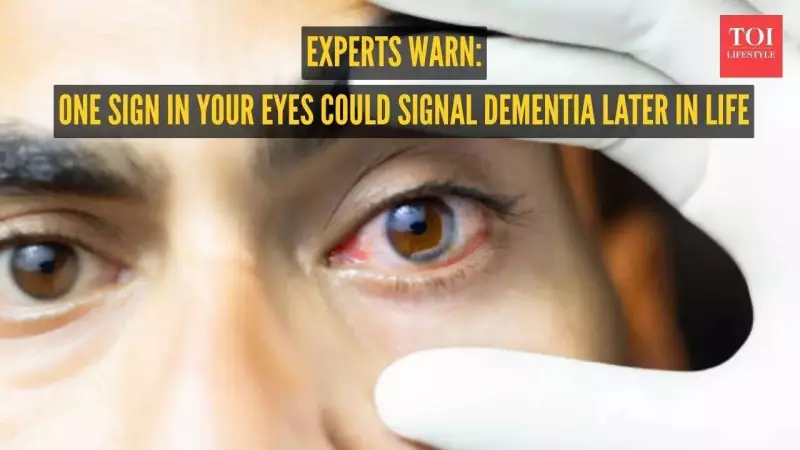
In a medical breakthrough that could change early diagnosis, scientists have discovered a surprising link between the human eye and the future risk of developing dementia. A simple, non-invasive scan of the retina may now hold the key to predicting whether a person is likely to suffer from this debilitating cognitive disorder later in life.
The Retina: A Window to Brain Health
Dementia, a progressive condition that erodes memory, cognitive function, and personality, affects over 6 million Americans and is linked to more than 100,000 deaths annually, according to the National Institutes of Health. While memory loss is a well-known symptom, researchers from China have identified a novel early warning sign located in the eye.
Published in the respected journal Frontiers in Aging Neuroscience, the study focused on the retina. This light-sensitive tissue at the back of the eye is responsible for capturing images and sending visual signals to the brain. The research team analysed data from a massive pool of 30,000 adults, tracking their health over nearly a decade.

The central finding was startling: individuals with a thinner retina faced a significantly higher risk of eventually being diagnosed with Alzheimer's disease. The retina, it appears, acts as a mirror reflecting the brain's neurological health.
Shocking Numbers: How Thickness Translates to Risk
The participants underwent a precise imaging procedure known as retinal optical coherence tomography (OCT). The data revealed a clear and concerning pattern. For every single unit of decrease in retinal thickness, the overall risk of dementia increased by three per cent.
The risk was even more pronounced for specific types of dementia. The study found that people with a thinner retina in the central area were a staggering 41 per cent more likely to develop frontotemporal dementia (FTD) compared to those with thicker retinal layers.
The scientific rationale behind this link is compelling. The optic nerve is an extension of the central nervous system. Therefore, degenerative changes in the brain, such as those seen in Alzheimer's, may manifest simultaneously in the connected retinal tissue, causing it to thin over time.
Study Validation and Recognising Dementia Symptoms
The long-term follow-up provided concrete validation for the initial observations. Nine years later, from the study cohort, 148 individuals were diagnosed with Alzheimer's disease, and 8 were diagnosed with FTD, confirming the predictive power of the earlier retinal scans.
Dementia results from damaging changes in brain regions, causing nerve cells and their connections to fail. While rare genetic causes exist, the National Institute on Aging and the UK's NHS list common symptoms beyond memory loss, including:
- Slowed thinking and reduced mental sharpness.
- Difficulty with language and understanding.
- Impaired judgement and mood changes.
- Problems with movement and daily activities.
Although there is no guaranteed method to prevent dementia, medical experts universally recommend a healthy lifestyle as the best strategy to potentially reduce risk. This groundbreaking eye research opens a new frontier for early, pre-symptomatic detection, allowing for earlier intervention and planning.
Disclaimer: This information is for educational purposes and is not a substitute for professional medical advice. Always consult a qualified healthcare provider for diagnosis and treatment.






