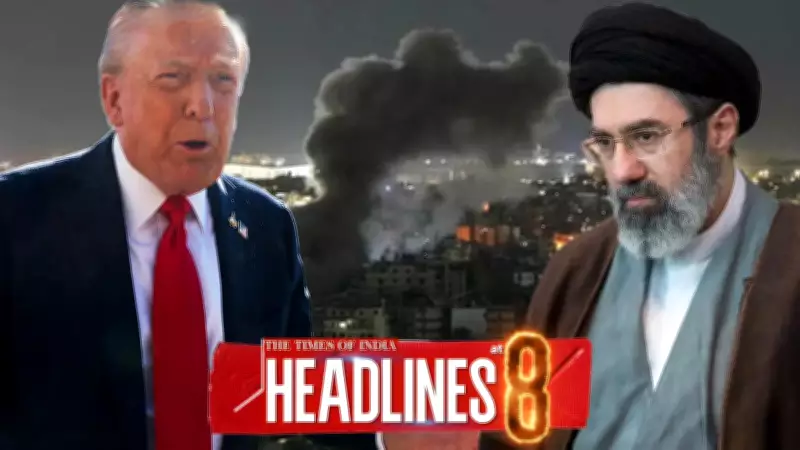
Trump Issues Stark Warning to Iran Over Strait of Hormuz Closure
In a significant escalation of tensions, former US President Donald Trump has issued a direct threat to Iran, warning that failure to reopen the strategically vital Strait of Hormuz could lead to devastating military strikes on the country's critical infrastructure. Trump emphasized that "serious talks" are currently in progress, but time is rapidly running out for Tehran to comply.
Specific Targets Identified in Potential US Strikes
The former president explicitly mentioned several key Iranian assets that could be targeted in any military action. These include:
- Power grids that supply electricity across the nation
- Oil wells that form the backbone of Iran's petroleum industry
- Kharg Island, which serves as Iran's primary oil export terminal
Trump's statement represents one of the most specific and dire warnings issued to Iran in recent years regarding the Strait of Hormuz, through which approximately one-fifth of the world's oil passes.

Tehran Firmly Rejects Pakistan's Mediation Claims
Simultaneously, Iranian officials have categorically rejected claims from Pakistan that Islamabad is hosting or facilitating any dialogue between the United States and Iran. Tehran's Consulate issued a statement clarifying that no direct talks are occurring between the two nations, with any communication being limited to messages passed through intermediaries.
The Iranian government characterized Pakistan's diplomatic outreach as "their own affair" with no connection to official Iranian participation. This dismissal represents a significant setback for regional diplomatic efforts aimed at de-escalating tensions between Washington and Tehran.
Iranian Parliament Considers Nuclear Treaty Exit
Amid these heightened tensions, Iran's Parliament has begun reviewing a possible exit from the Nuclear Non-Proliferation Treaty (NPT). This development comes as Tehran faces increasing international pressure over its nuclear program and represents a potential major shift in Iran's nuclear policy stance.
The parliamentary review signals Iran's willingness to consider more drastic measures in response to external pressures, potentially unraveling decades of nuclear diplomacy and creating new challenges for global non-proliferation efforts.
Regional Implications and Diplomatic Standoff
The combined developments create a complex diplomatic landscape in the Middle East. Trump's threats against Iranian infrastructure, coupled with Tehran's rejection of Pakistani mediation and potential NPT withdrawal, suggest escalating tensions with limited diplomatic channels for resolution.
Observers note that the situation represents a dangerous standoff with implications for global energy security, regional stability, and international nuclear non-proliferation frameworks. The coming weeks are likely to prove critical in determining whether diplomatic solutions can be found or whether military confrontation becomes more likely.