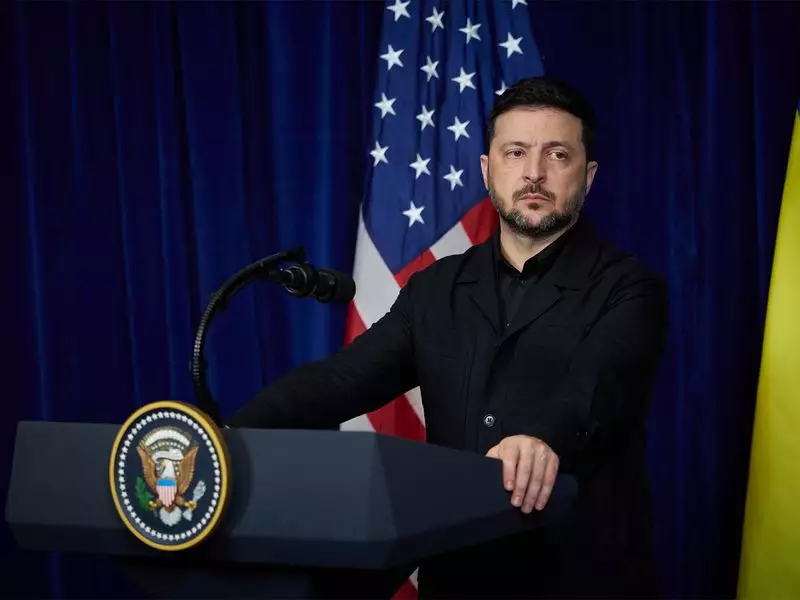
Ukrainian President Volodymyr Zelenskyy has issued a strong rebuttal to recent claims from Moscow, dismissing allegations that Kyiv attempted a drone strike on Russian President Vladimir Putin's official residence as a complete "fabrication." The denial comes amidst a fresh wave of accusations from the Kremlin, further intensifying the information war that parallels the physical conflict on the ground.
Kremlin's Accusation and Zelenskyy's Firm Rebuttal
The controversy erupted after Russian state media, citing security services, reported that Ukrainian forces had tried to target the Kremlin residence of President Putin using unmanned aerial vehicles. The reports, which surfaced recently, were presented as evidence of Kyiv's aggressive intentions against Russian leadership.
President Zelenskyy, while on an official visit to Finland, categorically denied any involvement. "We don't attack Putin or Moscow. We fight on our territory," he stated emphatically. He framed the Russian allegation as a predictable tactic, suggesting it was manufactured to justify further escalation or brutal attacks on Ukrainian soil. Zelenskyy positioned the claim as part of a broader Russian strategy of deception aimed at its domestic population and the international community.

The Context of Escalating Rhetoric and Military Action
This exchange of accusations occurs at a critical juncture in the prolonged conflict. Both sides are preparing for anticipated spring offensives, and the information battlefield is as active as the front lines. Analysts suggest that such allegations from Russia could be intended to rally domestic support, frame Ukraine as a direct threat to Russian sovereignty, and potentially set the stage for more severe retaliatory measures.
Ukrainian officials have consistently maintained that their military objectives are focused on liberating occupied Ukrainian territories, not conducting symbolic attacks on Russian leadership inside Russia. The Ukrainian presidency has previously labeled similar Russian claims as "provocations" designed to stoke fear and justify mobilization efforts within Russia.
Implications for the War and International Perception
The immediate consequence of this incident is a further deepening of the trust deficit between the warring nations and their allies. For global observers and diplomatic channels, disentangling fact from fabrication becomes increasingly challenging. Such allegations complicate the already fragile geopolitical landscape and can influence public opinion and policy decisions in capitals worldwide.
Furthermore, Zelenskyy's firm denial serves to reinforce Ukraine's stated position of fighting a defensive war within its internationally recognized borders. By publicly and swiftly countering the Kremlin's narrative, Ukraine aims to maintain its moral and strategic high ground, seeking to ensure that the international community's focus remains on Russian aggression rather than unverified accusations against Kyiv.
The war, now extending beyond its first year, continues to be fought with missiles, drones, and disinformation. This latest episode underscores how narratives and perceptions are powerful weapons, with both sides vigorously contesting the truth to shape the course of the conflict and secure crucial international support.