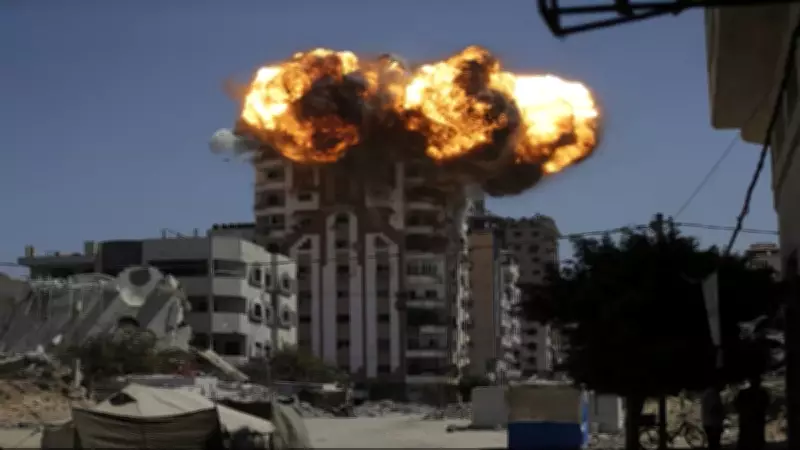
Israel Intensifies Military Operations with Heavy Strikes in Gaza City
In a significant escalation of military activities, Israel launched a series of heavy airstrikes in Gaza City on April 16, 2026, resulting in the deaths of at least three individuals. Among the casualties was a high-ranking Hamas communication commander, whose elimination marks a critical blow to the militant group's operational capabilities. The strikes targeted specific locations believed to house key Hamas infrastructure, including communication hubs and command centers.
Details of the Airstrikes and Casualties
The Israeli Defense Forces (IDF) confirmed the operation, stating that it was a precision strike aimed at disrupting Hamas's communication networks, which are vital for coordinating attacks and propaganda efforts. The Hamas communication commander, whose identity has not been publicly disclosed, was reportedly killed along with two other militants during the assault. The strikes caused substantial damage to buildings in the area, with local sources reporting widespread destruction and power outages.
This incident underscores the ongoing volatility in the region, as tensions between Israel and Hamas have been simmering for months. The IDF emphasized that the operation was a defensive measure, citing intelligence that indicated imminent threats from Hamas. However, Hamas has condemned the strikes as an act of aggression, vowing retaliation and accusing Israel of targeting civilians, though the IDF denies these claims, asserting that all targets were military in nature.

Regional Implications and International Reactions
The heavy strikes in Gaza City have drawn immediate attention from the international community, with several countries expressing concern over the potential for further escalation. The United Nations has called for restraint from both sides, urging a de-escalation of hostilities to prevent a full-scale conflict. Analysts suggest that this operation could signal a shift in Israel's strategy, focusing more on preemptive strikes against Hamas's leadership and infrastructure.
In response to the airstrikes, Hamas has mobilized its forces and issued statements warning of severe consequences. The group's spokesperson highlighted the loss of the communication commander as a significant setback, but reaffirmed their commitment to resisting Israeli actions. Meanwhile, Israeli officials have defended the strikes as necessary for national security, pointing to recent rocket attacks from Gaza as justification.
- The airstrikes targeted Hamas communication networks, disrupting their operational efficiency.
- At least three people were killed, including a senior Hamas commander.
- The IDF claims the strikes were based on credible intelligence about imminent threats.
- International bodies have urged both parties to avoid further escalation.
As the situation develops, residents in Gaza City are facing increased uncertainty, with many fearing more military actions in the coming days. The heavy strikes have not only impacted militant targets but also exacerbated the humanitarian crisis in the region, where access to basic services is already limited. This event highlights the fragile nature of the Israeli-Palestinian conflict and the challenges in achieving lasting peace.