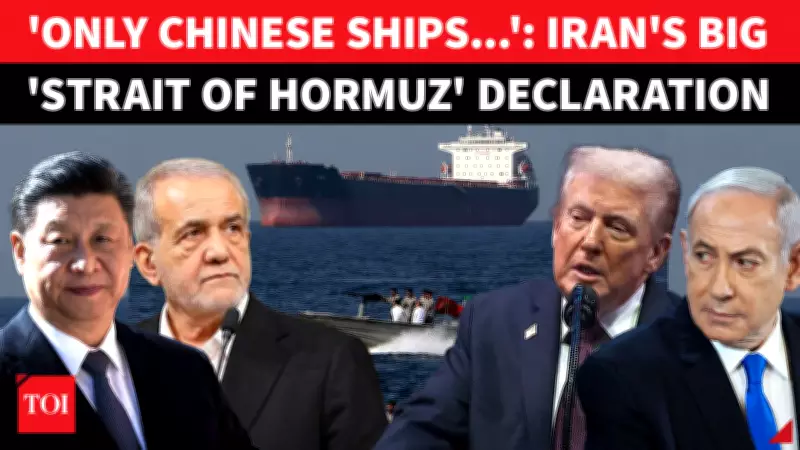
Iran's Strait of Hormuz Restrictions Escalate Geopolitical Tensions, Involving China
The Strait of Hormuz, a critical global energy corridor, is once again at the heart of escalating geopolitical tensions as Iran reportedly restricts passage through this strategic waterway. According to recent reports, Iran is allegedly allowing only Chinese vessels to navigate the strait amid a growing conflict, a move that could have significant implications for international markets and diplomatic relations.
Strategic Importance of the Strait of Hormuz
The Strait of Hormuz is one of the world's most vital maritime chokepoints, handling nearly 20 percent of global oil shipments. Any disruption in this area poses a major concern for energy security worldwide, as it directly impacts oil prices, shipping routes, and the stability of international trade. The strait's significance cannot be overstated, with millions of barrels of oil passing through daily, making it a focal point for geopolitical maneuvering.
Iran's Claims and Actions
Tehran has asserted control over the Strait of Hormuz, citing its strategic location and historical claims. In a shocking announcement, Iran is now restricting passage, with indications that ships from Beijing are being given preferential treatment. This action raises questions about Iran's motives and its alignment with China, potentially dragging Beijing into a broader conflict. The move is seen as a provocative step that could exacerbate existing tensions in the region.

International Response and U.S. Stance
In response to Iran's actions, Washington has signaled that the U.S. Navy stands ready to escort commercial tankers if necessary. This readiness underscores the high stakes involved, as any military intervention could lead to a wider confrontation. The U.S. stance highlights the global concern over maintaining free navigation in the strait, with implications for:
- Oil Prices: Potential spikes due to supply disruptions.
- Shipping Routes: Rerouting could increase costs and delays.
- Diplomatic Relations: Strain between Iran, China, the U.S., and other nations.
Broader Implications for Global Energy Security
With global energy security hanging in the balance, this developing situation could have far-reaching consequences. The involvement of China adds a complex layer to the conflict, as Beijing's economic and political interests intersect with Iran's actions. Analysts warn that if tensions escalate, it could lead to:
- Increased military presence in the region.
- Heightened risks for commercial shipping.
- Potential diplomatic crises affecting international alliances.
The situation remains fluid, with stakeholders closely monitoring Iran's next moves and the international community's response. As the world watches, the Strait of Hormuz continues to be a flashpoint that could reshape geopolitical dynamics and energy markets in the coming months.