Himalayan Snow Drought: A Growing Climate Crisis
Climate Change and You is a fortnightly newsletter authored by Bibek Bhattacharya and Sayantan Bera. Subscribers receive it directly in their inbox, offering critical insights into environmental issues.
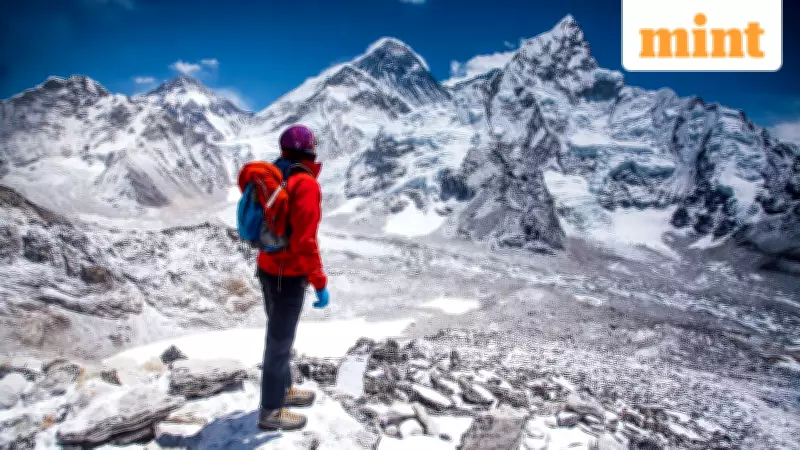
In late January, parts of the Indian Himalaya experienced sustained snowfall, sparking excitement among tourists. Social media was flooded with selfies and Instagram Reels from Palampur in Himachal Pradesh, showcasing gently drifting snowflakes. However, beneath this picturesque scene lies a harsh reality: the entire mountain range is grappling with an acute "snow drought."
Precipitation Deficits Reach Alarming Levels
Himalayan ecosystems and agriculture rely heavily on winter precipitation, primarily snowfall. According to the Indian Meteorological Department's seasonal rainfall data, a crisis is unfolding. In December, Uttarakhand recorded no winter precipitation, while Himachal Pradesh faced a 99% deficit, Jammu & Kashmir a 78% deficit, and Ladakh a 63% deficit. The first half of January showed similar trends: Uttarakhand at -100%, Himachal at -90%, Jammu & Kashmir at -96%, and Ladakh at -63%.

This is not an isolated event. Snow drought has become an annual phenomenon, exacerbating issues like reduced groundwater recharge. Consequently, later in the year, the region faces avalanches in the high Himalaya, melting glaciers, forest fires, and drying freshwater streams. Climate change is rendering the Himalaya increasingly unstable each year, with grave implications for the 50 million residents of the Indian Himalaya and nearly 650 million people in the Gangetic and Brahmaputra valleys.
Rising Temperatures and Glacier Loss
The Himalaya is part of the Hindu Kush Himalaya region in high mountain Asia, which includes neighboring ranges like the Karakoram and Hindu Kush. A recent study on climate change impacts in India reveals that the mean temperature of this region has been rising at 0.28 degrees Celsius per decade from 1951 to 2020. At altitudes above 4,000 meters, warming is even more pronounced at 0.34 degrees Celsius per decade.
Projections indicate that with low carbon emissions, the Hindu Kush Himalaya could heat up by about 2.5 degrees Celsius by 2100. At current warming rates, this could skyrocket to an unimaginable 5.5 degrees Celsius. Such warming has severe freshwater implications: if global temperatures rise by 1.5-2 degrees Celsius, Himalayan glaciers may lose up to 50% of their volume. With the world on track for nearly 3 degrees Celsius of warming by 2100, glaciers could lose up to 80% of their volume, threatening the "Abode of Snow" with a future devoid of snow and ice.
Global Heat Crisis and Water Bankruptcy
A study published in Nature Sustainability in January analyzed heating data and climate models, warning that if global heating reaches 2 degrees Celsius, the number of people living in extreme heat will double by 2050. The past three years have already seen global temperatures consistently breach 1.5 degrees Celsius of warming, signaling dangerous heat levels in our lifetimes.
Extreme heat will affect the world broadly, but tropical regions and the southern hemisphere, including India, Pakistan, and Bangladesh, will bear the brunt. Estimates suggest that by 2050, the population exposed to extreme heat could rise from 1.54 billion (23% of the global population in 2010) to 3.79 billion (41% of the projected world population in 2050). The worst impacts are expected once the 1.5 degrees Celsius barrier is permanently breached, likely by 2030.
Water Cycle Disruption and Conflicts
Climate change is disrupting the planet's water cycle, leading to rising sea levels, oceanic heatwaves, freshwater loss, floods, and droughts. A January United Nations report warns of approaching global "water bankruptcy," which could cause widespread ecosystem collapse and trigger water conflicts within and between nations.
The report, Global Water Bankruptcy: Living Beyond Our Hydrological Means In The Post-Crisis Era, highlights that increasing Artificial Intelligence use strains already-stressed freshwater resources. Many river basins and aquifers are failing to return to their historical norms, with droughts and water shortages becoming chronic rather than temporary.

South Asian countries like India face very high water risks across parameters such as pollution, access to safe sanitation, rising sea levels, declining water tables, and melting glaciers. The report urges countries to acknowledge the crisis, change patterns of misuse, and collaborate multilaterally to prevent water conflicts.
Scientific Calls for Stringent Climate Action
Many scientists studying climate tipping points are advocating for more rigorous international action, arguing that the current goal of limiting global warming to below 1.5 degrees Celsius by 2100 is insufficient. They propose a stricter target of keeping warming below 1 degree Celsius by 2100, noting that even a 1.5-degree rise could doom vital systems like coral reefs and polar ice.
Over the past 12,000 years, global temperatures rarely exceeded plus or minus one degree. With current warming at about 1.2-1.3 degrees Celsius, as shown in the Global Tipping Points Report 2025, many Earth systems are already under fatal threat.
UK Report Warns of Himalayan Collapse
A suppressed UK government report on biodiversity and security, titled Global Biodiversity Loss, Ecosystem Collapse And National Security, warns that ecosystems are collapsing globally, leading to crop failures, disease outbreaks, and intensified natural disasters. If unchecked, this could result in international collapse and even nuclear war.
The report identifies the Himalaya as a critical ecosystem at risk, with a "realistic possibility of collapse starting from 2030." It classifies the Himalaya as a Level 4 episode, where every critical ecosystem is on a path to irreversible collapse. Preventing this requires reducing human impacts and restoring ecosystems, though restoration is more feasible for some, like tropical forests, than others, such as coral reefs or the Himalayas.
As climate change accelerates, the need for urgent action becomes ever more critical to safeguard our planet's future.