Dehradun Road Widening Project Ignites Fresh Environmental Protests
For the second consecutive year, the ambitious New Cantt road widening initiative in Dehradun has become a flashpoint for public discontent and environmental activism. The controversy centers on fears of extensive tree removal, prompting the Public Works Department (PWD) to issue a firm reassurance that no trees will be felled during the construction process.
PWD's Clarification and Project Phases
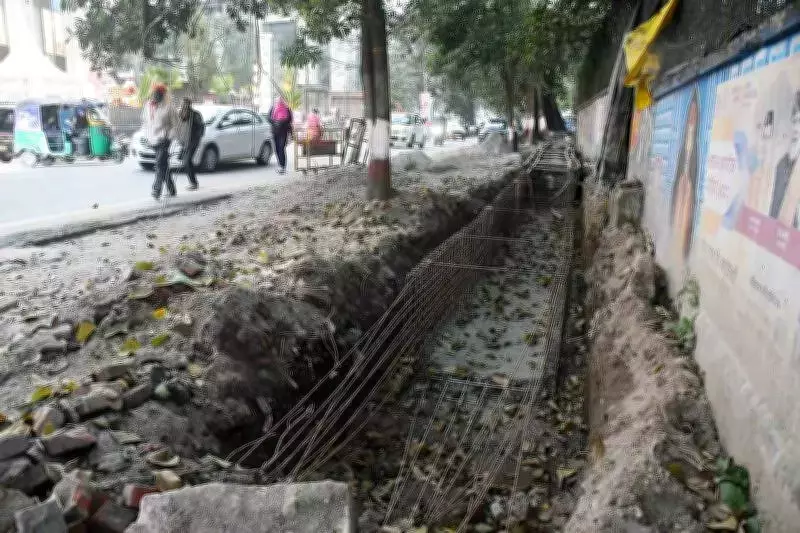
Following a "promise reminder" rally organized by activists on Sunday, the PWD released a detailed clarification late Monday. The department emphasized that the ongoing first phase of the project, stretching from Salawala bridge to Vijay Colony bridge, is proceeding without any damage to trees. Furthermore, the proposed second phase—from Dilaram Chowk to Salawala bridge—has been meticulously designed to completely avoid tree loss.
Superintending engineer Ompal Singh confirmed that a comprehensive site inspection has been conducted, with strict directives issued to ensure full compliance with the approved action plan that prioritizes environmental preservation. The PWD maintains that the project's design inherently safeguards the ecological balance of the area.

Environmental Activists Voice Skepticism and Concerns
Despite these official assurances, environmental groups and local activists remain deeply unconvinced. Ira Chauhan, representing Citizens for Green Doon, pointed to a precedent of broken promises. She recalled that similar guarantees were provided during the construction of a foot overbridge near the President's Estate last year, yet trees were ultimately lost.
Chauhan highlighted several areas of ambiguity in the current plan, questioning the lack of public access to detailed engineering designs. "Initially, land acquisition notices described it as a four-lane widening project. Now, authorities are calling it a three-lane endeavor. The ongoing drain work is already damaging tree roots, which may later be concretized. This weakens the trees structurally and could lead to their eventual removal on safety grounds," she argued.
Adding weight to her concerns, Chauhan cited information obtained through a Right to Information (RTI) application, indicating that approximately 30 trees on private land are slated for removal once the government acquires those properties.
Call for Stakeholder Involvement and Transparent Planning
Environmentalists are unanimously stressing the critical need for inclusive stakeholder consultation in infrastructure projects to minimize ecological damage. Ashish Garg from the Eco Group Society asserted that better engineering solutions and transparent, participatory planning can effectively balance the imperatives of urban development with robust environmental protection.
Historical Context and Revised Project Timeline
The project has a contentious history. It faced vehement opposition in June 2024 when initial plans proposed felling around 250 trees. Following public outcry, Chief Minister Pushkar Singh Dhami intervened, assuring that no trees would be cut and temporarily pausing the project. Subsequent revised plans indicated the potential loss of 17 trees, but current authorities now assert a commitment to zero tree felling. The entire project is scheduled for completion by April 2027.