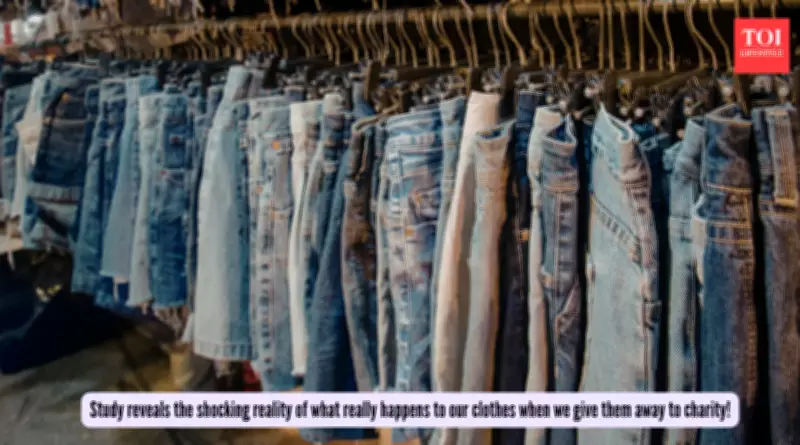
The Dark Side of Donating Clothes: What Really Happens to Your Charity Bin Items
Dropping off old clothes at a charity bin feels like a virtuous act—a simple, feel-good way to help others while decluttering your wardrobe. This habit, ingrained in many of us from childhood, seems like an easy solution to support those in need. However, recent revelations are casting doubt on this seemingly altruistic practice, exposing a hidden flipside that questions its true impact.
The Fast Fashion Overload and Charity's Limitations
In today's rapidly evolving world, where quick-changing wardrobes and lightning-fast trends dominate, donating clothes has become a popular fix for fast fashion overload. Yet, as awareness grows, people are pausing to ask: Does this really solve the problem, or does it merely shuffle it out of sight? A groundbreaking study published in Nature Cities has uncovered the shocking reality of what happens to our donated garments.
When you donate clothes to a charity shop, only the highest-quality items typically make it to local thrift store shelves. The vast majority overwhelm these organizations, creating a surplus that charities cannot manage. This excess is often baled and exported overseas, shifting the burden to other countries.

Global Study Reveals Consistent Export Patterns
The Nature Cities study examined donation patterns across nine affluent cities, including Austin, Toronto, Melbourne, and Oslo. It revealed a consistent and troubling trend: donations far exceed local purchases, leading to substantial exports. In Norway, nearly all used clothing is shipped out, while the United States and Australia also send large volumes abroad. Charities are simply not equipped to handle this scale of textile influx.
Dr. Yassie Samie of RMIT University in Melbourne explained, "We're used to charities doing the heavy lifting, but they've been unable to fully handle the volume of donated clothes for a long time now. Charities are driven by social welfare values and need to raise funds for their programs. However, their operations are ill-equipped to deal with the volume of used textiles that need to be reused and recycled."
Overconsumption: The Root Cause of the Problem
Global textile waste reaches tens of millions of tons annually, primarily originating from wealthy cities where affordable fast fashion encourages frequent purchases and rapid disposal. These low-quality garments wear out quickly, limiting their reuse potential and overwhelming overseas secondhand markets. The study highlights that overconsumption is the fundamental driver behind this crisis.
Researchers advocate for "sufficiency"—consuming and using less—as the essential approach to addressing the issue. They caution that relying solely on recycling is akin to "bailing water out of a boat without fixing the hole." This metaphor underscores the need for systemic change rather than temporary fixes.
Key Findings and Implications
- Most donated clothing does not stay locally but is exported, creating waste in other regions.
- Charities lack the infrastructure to manage the overwhelming volume of textile donations.
- Fast fashion's low-quality items contribute significantly to the problem, as they have limited reuse potential.
- The solution lies in reducing consumption, not just increasing recycling efforts.
This revelation challenges the traditional view of clothing donations as a purely positive act, urging consumers to rethink their habits and consider the broader environmental and social impacts. As the world grapples with sustainability, understanding the full lifecycle of our garments becomes crucial in making informed decisions.