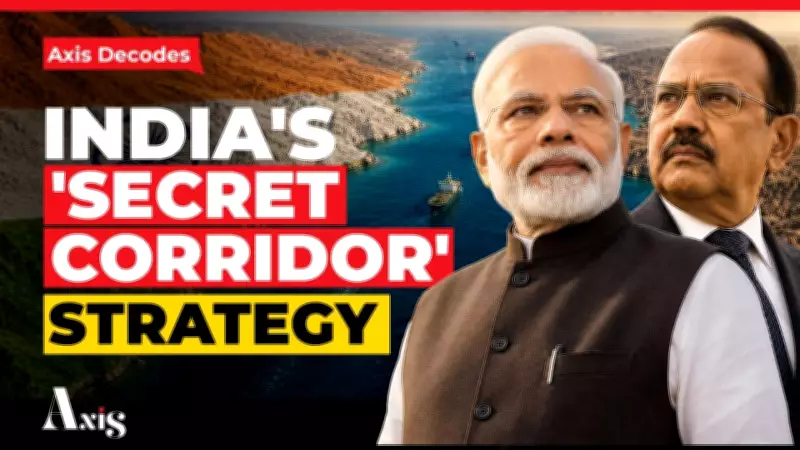
As tensions escalate around the Strait of Hormuz, one of the world's most critical oil chokepoints, India confronts a harsh reality: distant conflicts can impact the nation more rapidly than ever before. In response, New Delhi is quietly rewriting its global trade strategy through a multifaceted approach that includes diversifying oil imports, boosting domestic production, and constructing alternative trade corridors. This explainer delves into India's biggest vulnerabilities—from Hormuz and Suez to Malacca—and outlines the ambitious plan to diminish reliance on these risky chokepoints.
India's Vulnerabilities at Global Chokepoints
India's energy security and trade are heavily dependent on three major maritime chokepoints: the Strait of Hormuz, the Suez Canal, and the Strait of Malacca. Approximately 80% of India's crude oil imports pass through Hormuz, making any disruption there a direct threat to the economy. Similarly, the Suez Canal is a vital artery for India's trade with Europe, while the Malacca Strait handles nearly 40% of global trade and a significant portion of India's trade with East Asia. Any blockage or conflict in these narrow passages can lead to skyrocketing shipping costs, delays, and supply shortages.
The Grand Plan: Multiple Routes, No Single Point of Failure
India's strategy is built on redundancy and diversification. The government is actively developing several alternative corridors to bypass these chokepoints, ensuring that no single route becomes a critical failure point.

INSTC: Bypassing the Suez Canal
The International North-South Transport Corridor (INSTC) is a 7,200-km multi-modal network connecting India to Russia and Europe via Iran and Central Asia. By using rail and sea routes, the INSTC reduces transit time by 30-40% compared to the Suez Canal route, while also avoiding potential disruptions in the Middle East.
IMEC: Bypassing Hormuz
The India-Middle East-Europe Corridor (IMEC) is a proposed network of railways, ports, and energy pipelines that would connect India to Europe via the UAE, Saudi Arabia, Jordan, and Israel. This corridor bypasses the Strait of Hormuz entirely, providing an alternative for energy imports and trade with Europe.
Chennai-Vladivostok Route: Bypassing Malacca
The Chennai-Vladivostok maritime route is a direct sea lane connecting India's east coast to Russia's Far East, bypassing the Malacca Strait. This route reduces dependence on the congested and piracy-prone Malacca Strait, while opening up new trade opportunities with Russia and East Asia.
India-Myanmar-Thailand Highway: Bypassing Maritime Routes
This land-based highway project aims to connect India's northeastern states to Myanmar and Thailand, creating a direct overland route to Southeast Asia. By bypassing maritime routes entirely, it reduces vulnerability to naval blockades and piracy, while also boosting economic integration in the region.
Strategic Assets: Andaman Islands and Chabahar
India is also leveraging its strategic geography. The Andaman and Nicobar Islands, located near the western mouth of the Malacca Strait, are being developed as a naval and surveillance hub to monitor and secure this vital waterway. Meanwhile, the Chabahar port in Iran serves as India's gateway to Central Asia, bypassing Pakistan and providing access to landlocked countries like Afghanistan and Uzbekistan.
Domestic Production and Diversification
Beyond corridors, India is increasing domestic oil and gas production to reduce import dependence. The government has opened up new exploration blocks and is promoting renewable energy sources. Additionally, India is diversifying its oil imports by sourcing from countries like the United States, Brazil, and Africa, reducing reliance on the Middle East.
For a rising power like India, this is no longer just about trade—it is about economic security. By building multiple redundancies and eliminating single points of failure, India is future-proofing its economy against global disruptions. The strategy is clear: no one chokepoint should be able to cripple India's growth.