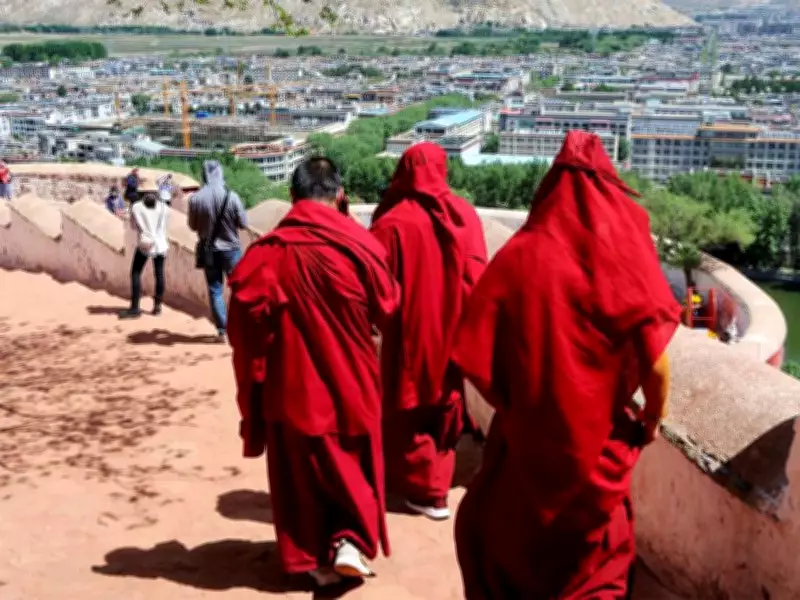
On the occasion of World Press Freedom Day, Tibetan journalists living in exile have raised urgent concerns about the gradual erosion of the Tibetan language and the broader implications of China's assimilation policies in the Tibet Autonomous Region. The journalists, who operate from various countries including India, Nepal, and the United States, emphasized that the preservation of their mother tongue is intrinsically linked to the survival of Tibetan culture and identity.
Language Under Threat
The journalists highlighted that the use of Tibetan language in education, media, and daily life is declining rapidly. They pointed to policies that prioritize Mandarin Chinese in schools and government institutions, which they argue are designed to assimilate Tibetans into the Han Chinese majority. According to reports, many Tibetan children are now educated primarily in Mandarin, with Tibetan language classes reduced to a secondary subject. This shift, the journalists warn, could lead to the eventual disappearance of the Tibetan language within a few generations.
Alarming Statistics
Recent studies cited by the journalists indicate that the number of Tibetan speakers has decreased significantly over the past few decades. In urban areas, younger Tibetans are increasingly fluent in Mandarin but struggle with their native language. The journalists also noted that Tibetan-language media outlets face severe restrictions in Tibet, with many forced to operate underground or from exile. They called for international attention to these issues, urging global media and human rights organizations to document and report on the situation.

Assimilation Policies Under Scrutiny
The journalists argued that China's policies in Tibet amount to a systematic effort to erase Tibetan culture. They cited examples such as the promotion of Mandarin in all official communications, the reduction of Tibetan-language publications, and the suppression of religious and cultural practices. These measures, they claim, are part of a broader strategy to integrate Tibet fully into China, undermining its unique identity.
Call for Global Solidarity
On World Press Freedom Day, the journalists urged the international community to stand in solidarity with Tibetan journalists and activists. They called for stronger advocacy for press freedom in Tibet and for the protection of linguistic and cultural rights. The event also featured testimonies from journalists who have faced persecution, imprisonment, or exile for their work. They stressed that without a free press, the voices of marginalized communities like the Tibetans cannot be heard, and their struggles remain invisible to the world.
Conclusion
The observance of World Press Freedom Day by Tibetan journalists in exile serves as a stark reminder of the ongoing challenges faced by minority languages and cultures in the face of assimilation policies. Their message is clear: the fight for press freedom is inseparable from the fight for cultural survival. As they continue to report from afar, they hope to keep the Tibetan language and identity alive until they can one day return to a free Tibet.