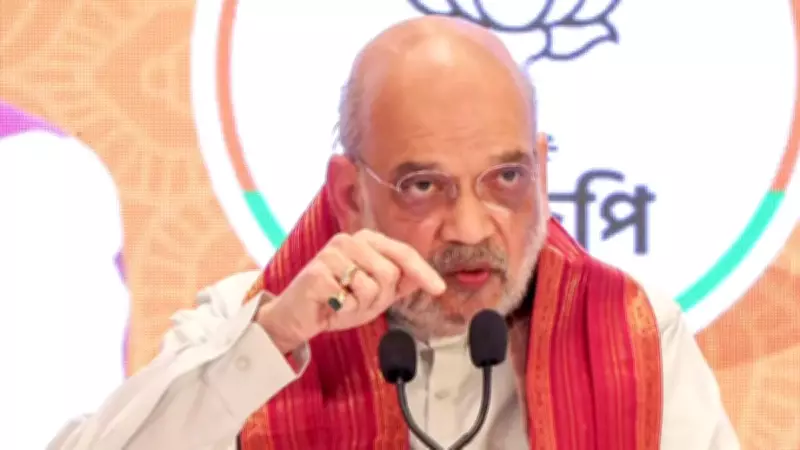
Amit Shah Escalates Attack on TMC Over Siliguri Corridor Security Concerns
Union Home Minister Amit Shah has launched a scathing critique against the Trinamool Congress (TMC) government in West Bengal, asserting that its political maneuvers aimed at securing vote banks are directly endangering the security of the Siliguri Corridor. This narrow stretch of land, often referred to as the "Chicken's Neck," serves as a crucial geographical connector between mainland India and its northeastern states.
Allegations of Compromised National Security
In a strongly worded statement, Shah accused the TMC administration of prioritizing electoral gains over national security imperatives. He highlighted that the corridor's strategic importance cannot be overstated, as it is the primary terrestrial route for military and civilian movement to the northeastern region. Any vulnerability in this area could have severe implications for India's territorial integrity and internal stability.
The Home Minister emphasized that the central government remains deeply concerned about potential security lapses facilitated by what he described as the state government's appeasement policies. These policies, according to Shah, are designed to cultivate specific voter demographics but inadvertently create security loopholes that could be exploited by adversarial elements.

Political Context and Broader Implications
This accusation comes amid ongoing political tensions between the Bharatiya Janata Party (BJP) and the TMC in West Bengal. The Siliguri Corridor has long been a focal point of security discussions due to its proximity to international borders and its susceptibility to disruptions. Shah's remarks are seen as a significant escalation in the political discourse, potentially framing the upcoming electoral battles around themes of national security versus regional governance.
Analysts suggest that this move is strategically timed to underscore the BJP's narrative of strong, security-focused leadership at the national level, contrasting it with what they portray as the TMC's parochial and risky political strategies. The corridor's security is not just a state issue but a matter of paramount national interest, affecting defense logistics, economic connectivity, and communal harmony in the sensitive northeastern states.
Response and Future Outlook
While the TMC has yet to issue an official rebuttal to these specific allegations, the party has historically dismissed such claims as politically motivated attempts to undermine its governance in West Bengal. The state government has previously pointed to its own initiatives aimed at enhancing security and infrastructure in the region.
Looking ahead, this development is likely to intensify debates on federalism, security coordination between center and state, and the ethical boundaries of vote bank politics. Stakeholders, including security agencies and local communities, will be closely monitoring any policy shifts or increased security measures in the Siliguri Corridor area to preempt potential threats.