Indian Army Rejects Punjab Milkfed Powder Over Quality Standards, Sparks Political Row
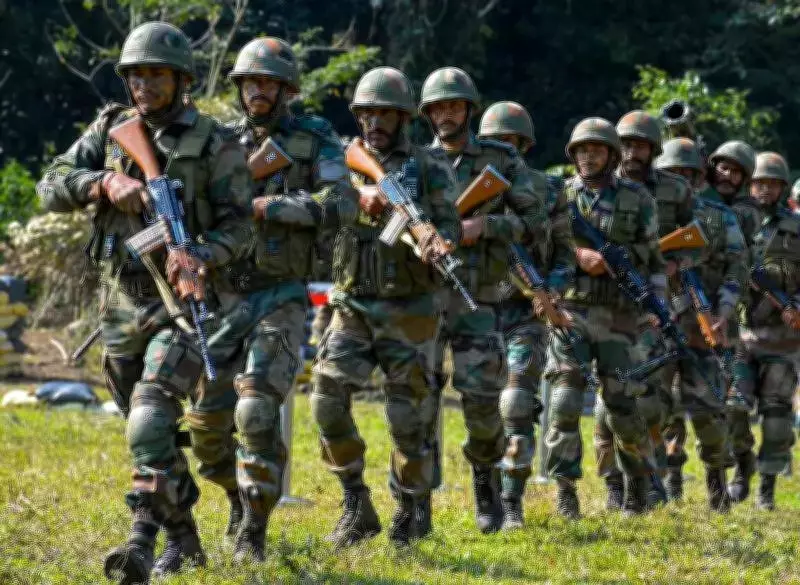
The Indian Army has formally rejected a substantial consignment of whole milk powder supplied by Milkfed's Ludhiana unit, citing non-compliance with prescribed quality benchmarks. This decision has ignited a political firestorm in Punjab, with opposition parties sharply criticizing the state government over alleged lapses in quality control within its flagship dairy cooperative.
Details of the Rejected Consignment
According to official documents, the Army Service Corps (ASC) unit based in Jammu communicated the rejection of nearly 125 metric tonnes of whole milk powder to the Ludhiana District Cooperative Milk Producers Union. The specific batches in question include one weighing 58.338 metric tonnes and another of 66.654 metric tonnes. These batches allegedly failed to meet the stringent quality standards set by the Indian Army.
The rejection letter, which was also marked to the chief director of purchase and the Food Inspection Organisation under the Ministry of Defence, stated that samples from these batches were "not free from other extraneous matter." Notably, a white thread was reportedly discovered in the samples, raising immediate red flags about contamination and adherence to hygiene protocols.

Political Fallout and Public Health Concerns
The issue rapidly escalated into a significant political controversy. Shiromani Akali Dal (SAD) leader Bikram Singh Majithia launched a direct attack on the Aam Aadmi Party (AAP) government, calling the rejection a serious reflection on governance and administrative oversight. He emphasized that such incidents undermine public trust in state-run enterprises.
Congress MP from Gurdaspur, Sukhjinder Singh Randhawa, echoed these concerns, highlighting broader public health implications. He argued that if a product fails to meet the rigorous standards of the Indian Army, its distribution among the general public could pose a "serious public health concern." Randhawa has demanded a high-level independent probe into the matter and urged authorities to make the quality inspection report publicly available to ensure transparency and accountability.
Milkfed's Response and Quality Assurance Measures
In response to the controversy, Milkfed Managing Director Rahul Gupta defended the cooperative's commitment to quality control. He stated that Milkfed maintains the highest standards during production and packaging processes and has been a trusted supplier to the Indian Army for several decades. Gupta clarified that supplies to the Army are continuing uninterrupted and suggested that the rejection might be an isolated issue related to a specific lot.
"The Indian Army is our esteemed customer, and Milkfed has been catering to it for several decades. Supplies are continuing, and there might have been some issue with a specific lot. The rejection was not necessarily a reflection of the product's inherent quality," Gupta explained.
To address the alleged lapse, Milkfed has constituted a fact-finding committee to ascertain the exact cause of the rejection. Additionally, Gupta revealed that the milk powder consignment had already undergone testing by a third-party NABL-accredited laboratory prior to dispatch. As a precautionary measure, samples from the rejected batches will now be sent for a second round of testing at the NABL-certified CALF (Centre for Analysis and Learning in Livestock and Food) laboratory in Gujarat.
Broader Implications and Ongoing Supply
Gupta further noted that Milkfed supplies a range of products to the Indian Army, including lassi, cheese, and tetra-packed milk, with no reported quality-related issues in these categories. This underscores the cooperative's generally reliable track record, even as the current incident raises questions about specific operational protocols.
The rejection has put the spotlight on quality assurance mechanisms within state-owned dairy cooperatives, particularly in the context of supplies to critical institutions like the armed forces. It also highlights the intersection of public health, governance, and political accountability, with stakeholders calling for rigorous inspections and transparent reporting to prevent future occurrences.

As investigations proceed, the outcome of the second round of testing at the CALF laboratory will be closely watched, potentially influencing both Milkfed's operational practices and the political discourse surrounding food safety and government oversight in Punjab.