Karnataka Minister's Archaeological Digging Remark Ignites Political and Historical Debate
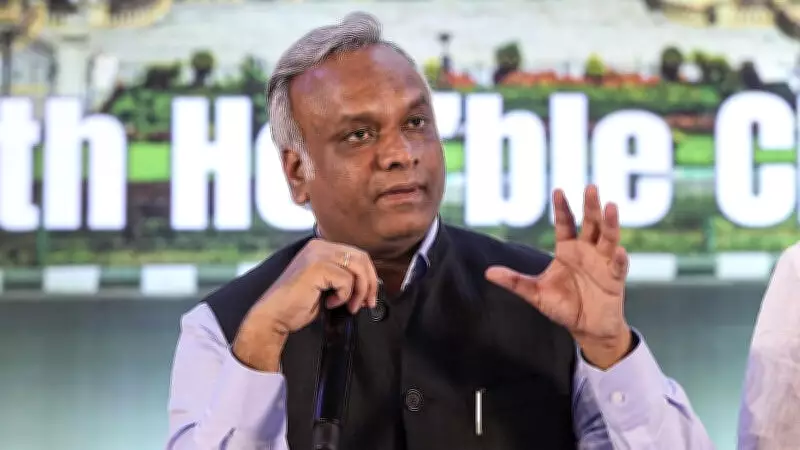
In a statement that has stirred significant controversy and discussion, Karnataka Minister Priyank Kharge recently commented on the potential outcomes of archaeological excavations at religious sites in India. His remarks have sparked a wide-ranging debate involving political, historical, and cultural dimensions across the nation.
The Core Statement and Its Implications
Minister Kharge, a prominent figure in Karnataka politics, suggested that if one were to dig at the site of a masjid (mosque), it might uncover the remains of a temple beneath it. Furthermore, he extended this idea by stating that digging at a temple site could potentially reveal a stupa, an ancient Buddhist structure. This observation touches on the complex and layered history of India, where multiple civilizations and religions have left their marks over millennia.
The historical context of such findings is not unprecedented in India. Archaeological discoveries have often revealed sites where one religious structure was built over another, reflecting the region's dynamic and sometimes tumultuous past. For instance, excavations at various locations have uncovered Hindu temples beneath mosques and Buddhist stupas beneath Hindu temples, highlighting the country's rich and intertwined heritage.

Political Reactions and Public Discourse
Kharge's comments have elicited strong reactions from various political quarters. Supporters argue that his statement is a factual reflection of India's archaeological history and should be viewed through a scholarly lens. They emphasize the importance of understanding historical layers without politicizing them, as such discoveries can offer valuable insights into the subcontinent's evolution.
On the other hand, critics have accused the minister of making provocative statements that could inflame religious sentiments. They contend that in a country as diverse as India, remarks about religious sites require careful consideration to avoid communal tensions. Some opposition leaders have called for a more measured approach, urging politicians to focus on governance rather than historical speculation.
The debate has also spilled over into public discourse, with historians, archaeologists, and citizens weighing in on social media and other platforms. Many experts point out that archaeological evidence should be interpreted objectively, without letting contemporary political biases cloud historical analysis. They stress that India's past is a tapestry of multiple influences, and uncovering it requires scientific rigor and sensitivity.
Broader Implications for Karnataka and India
This incident underscores the ongoing challenges in balancing historical inquiry with modern political realities in India. As a state with a rich cultural heritage, Karnataka has been at the center of several archaeological and religious disputes in the past. Minister Kharge's remarks bring attention to how such issues are perceived and discussed in the public sphere.
From a policy perspective, the controversy highlights the need for clear guidelines on archaeological excavations and the presentation of findings. Ensuring that historical discoveries are communicated in a way that respects all communities is crucial for maintaining social harmony. Additionally, it raises questions about the role of politicians in historical debates and whether they should engage in such discussions publicly.
In conclusion, Priyank Kharge's statement on digging at religious sites has opened up a multifaceted debate in Karnataka and beyond. While it reflects the complex layers of India's history, it also serves as a reminder of the delicate balance required when discussing topics that intersect religion, history, and politics. As the conversation continues, it will be important to approach these issues with both scholarly integrity and social responsibility.