CPI(M) Leader Condemns TMC and BJP for Divisive Campaign Tactics in West Bengal
In a sharp political critique, the Communist Party of India (Marxist) has launched accusations against both the Trinamool Congress (TMC) and the Bharatiya Janata Party (BJP) for engaging in what it describes as divisive politics in the lead-up to the West Bengal elections. The allegations come as the state prepares for crucial polls, with political tensions escalating.
Salim's Scathing Remarks on Mamata Banerjee's Governance
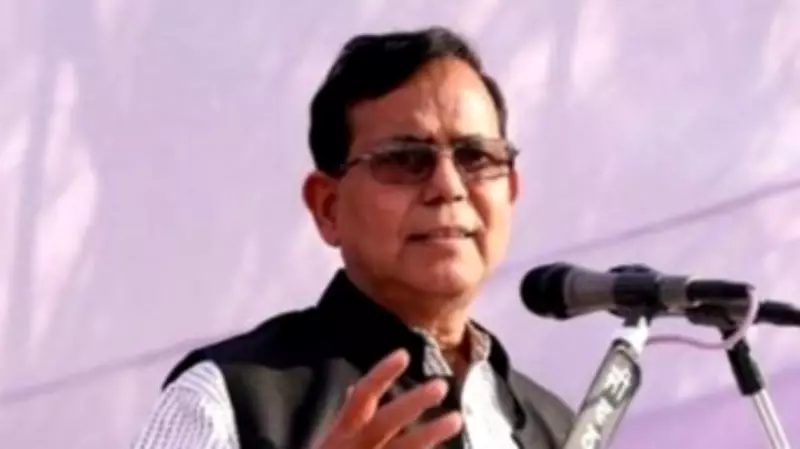
CPI(M) leader Mohammed Salim specifically targeted West Bengal Chief Minister Mamata Banerjee, alleging that her administration has failed to deliver good governance to the people of the state. Instead, Salim claimed, Banerjee has resorted to religious gimmicks, diverting attention from pressing issues such as development, employment, and public welfare.
"Rather than focusing on providing essential services and improving the lives of citizens, Mamata Banerjee is playing with religious sentiments for political gain," Salim stated, emphasizing the CPI(M)'s stance against what it perceives as a dangerous trend in state politics.

Accusations of Polarization and Electoral Manipulation
The CPI(M) has accused both the TMC and BJP of employing tactics that polarize communities along religious and social lines, thereby undermining the democratic process in West Bengal. According to party sources, this divisive approach is aimed at consolidating vote banks rather than addressing the real needs of the electorate.
- TMC's alleged use of religious symbolism in campaigns.
- BJP's nationalistic rhetoric influencing local politics.
- Impact on social harmony and electoral fairness.
Salim further argued that such strategies not only harm the fabric of society but also distract from critical governance failures, including economic stagnation and infrastructure deficits in the state.
Context of West Bengal's Political Landscape
West Bengal has been a battleground for intense political rivalry, with the TMC, BJP, and Left Front, including CPI(M), vying for dominance. The upcoming elections are seen as a pivotal moment, with each party attempting to sway voters through various means. The CPI(M)'s accusations highlight the growing concerns over the use of divisive politics as a tool for electoral success.
Political analysts note that the CPI(M), once a dominant force in the state, is striving to regain relevance by positioning itself as a voice against polarization, contrasting with the TMC's populist measures and the BJP's Hindutva agenda.
Broader Implications for Indian Democracy
The CPI(M)'s statements underscore a broader debate in Indian politics about the ethics of campaign strategies. As elections approach, the focus on divisive issues versus substantive governance has become a central theme, with implications for democratic integrity nationwide.
Salim called for a return to issue-based politics, urging all parties to prioritize development and public service over communal and religious manipulations. "The people of West Bengal deserve better than this circus of divisiveness," he asserted, reflecting the CPI(M)'s commitment to a more principled political discourse.
As the election date nears, these accusations are likely to fuel further political clashes, shaping the narrative in one of India's most politically vibrant states.