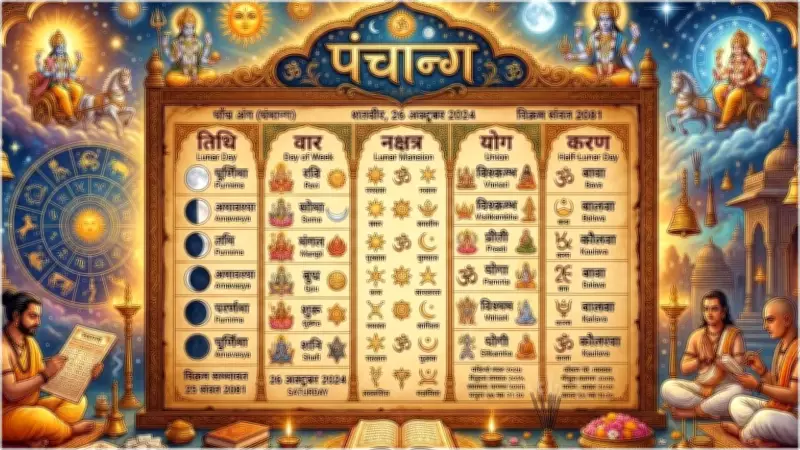
Panchang Today: Your Essential Daily Guide to Cosmic Rhythms
In the fast-paced rhythm of modern Indian life, the ancient wisdom of Panchang offers a grounding daily practice. Much like checking the weather before stepping out, consulting the Panchang provides spiritual and practical guidance rooted in the Hindu calendar system. This traditional almanac considers the Moon's phases, stellar influences, and planetary positions to help individuals make mindful decisions about everything from business meetings to family gatherings and spiritual practices.
Date and Astronomical Details for March 30, 2026
Monday, March 30, 2026 carries particularly auspicious energy as it falls during Shukla Paksha (the waxing moon phase). The dominant Tithi is Shukla Paksh 12 (Dvadasi), which concludes at 07:09:45, followed by Shukla Paksh 13 (Trayodasi). Dvadasi represents a period for cleansing and correction—ideal for completing pending tasks, adopting disciplined routines, and making sustainable decisions. The early Tithi transition creates a morning atmosphere perfect for wrapping up loose ends before the more action-oriented energy of Trayodasi takes over.
The Nakshatra transitions from Magha to P.Phalguni at 14:47:55. Magha's influence connects strongly with ancestral traditions and family responsibilities, making this period favorable for leadership tasks, honoring commitments, and respecting elders. After 14:47:55, P.Phalguni introduces warmer, more sociable energy ideal for harmonious conversations and domestic peace.

With the Moon positioned in Leo 8.26 throughout the day (transitioning to Virgo on March 31 at 21:32:45), emotions may run more direct and proud. This lunar placement encourages clear communication and presenting work confidently while avoiding unnecessary drama. The Yoga sequence shifts from Shula (ending at 16:51:19) to Ganda, suggesting productive but careful action is favored.
Auspicious Timings (Shubh Muhurat) for Optimal Planning
Strategic timing can significantly enhance the outcomes of important activities. The most favorable periods for March 30, 2026 include:
- Brahma Muhurta (04:18:59 to 05:05:27): This pre-dawn window offers exceptional clarity for meditation, study, or setting positive intentions.
- Abhijit Muhurta (11:38:11 to 12:27:39): Ideal for crucial communications, submitting applications, obtaining approvals, and initiating important projects.
- Amrit Kalam (12:23:06 to 13:59:42): Particularly supportive for healing activities, reconciliation discussions, and beginning positive habits.
- Vijay Muhurta (14:06:35 to 14:56:03): Excellent for competitive situations, negotiations, interviews, and scenarios requiring strategic advantage.
- Godhuli Muhurta (18:13:28 to 18:36:42): Perfect for evening rituals, family prayers, and creating peaceful home environments.
Additionally, Ravi Yoga spans from 14:49:00 on March 30 to 05:50:52 on March 31, providing extended support for visible progress and confidence-building work.
Inauspicious Periods Requiring Caution
Certain timeframes on March 30, 2026 are traditionally considered less favorable for new beginnings:
- Rahu Kaal (07:25 to 08:57): Avoid initiating ventures, signing contracts, major purchases, or financial risks during this period. Instead, focus on routine tasks, organization, or revisions.
- Yamaganda (10:29:59 to 12:02:41): Postpone travel plans, official approvals, and new partnerships. Use this time for maintenance and detail-oriented work.
- Gulkai Kaal (13:35:23 to 15:08:04): Exercise restraint regarding financial decisions, impulsive purchases, or emotionally charged communications.
- Varjyam (23:00:00 to 00:34:30 on March 31): Late-night promises and serious discussions are best postponed.
The day also features Dur Muhurtam periods (12:27:39-13:16:39 and 14:56:03-15:45:03) better suited for low-stakes activities, and various challenging Yogas (Mrityu, Vidaal, and Aadal) that recommend patience over haste.
Regional Rahu Kaal Variations Across India
Since Rahu Kaal calculations depend on local sunrise times, this inauspicious period varies significantly across different Indian cities:

- Mumbai: 08:07 - 09:39
- Delhi (NCR): 07:47 - 09:20
- Bengaluru: 07:49 - 09:21
- Kolkata: 07:04 - 08:36
- Chennai: 07:38 - 09:10
- Hyderabad: 07:45 - 09:17
- Ahmedabad: 08:07 - 09:39
Residents should consult their specific local timings rather than relying on generalized schedules for accurate planning.
Sun, Moon, and Daily Cycle Insights
Sunrise occurs at 05:52:38, representing a daily reset opportunity—perfect for establishing health routines or work disciplines. Sunset at 18:13:38 signals a time to slow down, complete tasks, and focus on home life. Moonrise at 15:46:46 (3:46 PM) with the Moon in Leo may amplify emotional clarity, making evenings ideal for connection rather than control. Moonset follows at 04:41:38 AM on March 31.
Spiritual and Practical Recommendations
While no major Vrat or festival occurs on March 30, 2026, the Hindu month of Chaitra supports new beginnings and lighter living. The early Dvadasi completion suggests using mornings to finish pending responsibilities, while the subsequent Trayodasi energy favors confident action.
Relationship guidance: With Leo Moon influence, minimize ego in interactions. After 14:47:55, P.Phalguni's softer energy facilitates reconciliation and harmonious communication.
Career advice: Shula Yoga supports decisive action but requires factual preparation over emotional responses. Schedule important meetings during Abhijit Muhurta or Amrit Kalam for optimal results.
Spiritual practice: Simple consistency yields rewards. Evening rituals during Godhuli Muhurta or Sayahana Sandhya (18:13:28-19:23:10) provide grounding, while late-night decisions during Varjyam should be avoided.
The day's energy resembles a promising mango tree in early summer—full of potential but requiring careful nurturing. Complete one overdue responsibility before noon, avoid significant financial decisions during Rahu Kaal, and conclude the evening with a calming ritual and thoughtful connection with loved ones.