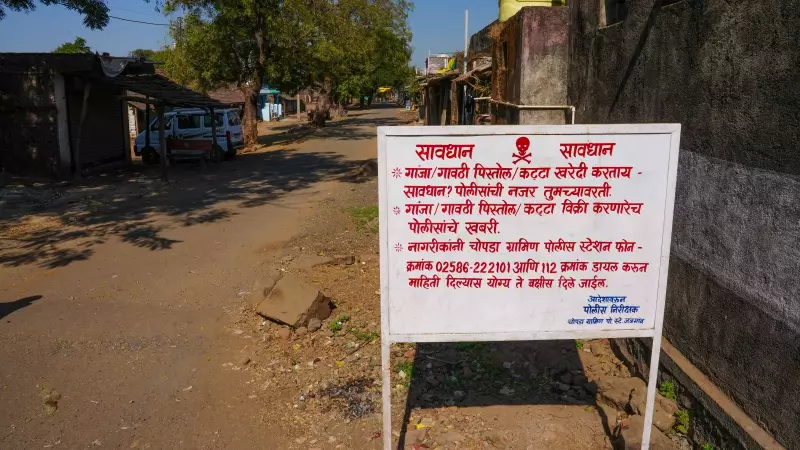
On a road leading towards a village named Umarti, a stark warning sign stands: ‘Purchasing country-made pistols? Beware. Police are watching you’. While the board is physically located in Maharashtra's Jalgaon district, its intended audience lies just across a small bridge over the Aner river, in the identically named Umarti village of Madhya Pradesh's Barwani district. This settlement has earned notoriety as a prolific hub for illegal weapons, branded unofficially as 'Umarti Sikligar Arms' or 'USA'.
A Village's Legacy and a Modern-Day Scourge
Home to roughly 300 families and a population of 2,000, Umarti is primarily inhabited by the Sikligars, a Sikh sub-community with a centuries-old tradition in metallurgy, and tribal Barela and Bhil communities. Historically, Sikligars are known to have supplied weapons to the Sixth Sikh Guru Hargobind Singh's Khalsa Army and later to princely states and freedom fighters. According to police, this traditional skill has, for some, morphed into a thriving illegal firearms trade, with other Sikligar settlements in MP also under scrutiny.
The village's name kept emerging during Pune Police investigations into sensational gang-war murders and seizures of country-made pistols. The trigger for a decisive action came in November 2025, after the arrest of six minor boys in Pune's Pimpri Chinchwad for a murder revealed they had procured two pistols and cartridges from an Umarti dealer for Rs 50,000.

The High-Tech Raid: Drones, Bodycams, and a Pre-Dawn Strike
In the early hours of November 22, 2025, a massive police contingent undertook a meticulously planned operation. Led by Deputy Commissioner of Police Somay Munde, a Shaurya Chakra awardee, 105 personnel from Pune, Jalgaon, and Barwani police descended on Umarti. The pre-dawn timing was critical, informed by a past incident where Jalgaon police were attacked and a constable abducted after arresting a dealer.
The preparation was military-grade. "We started the raid at 4 am, and carried arms, ammunition and bullet-proof jackets. A temporary wireless network was set up, and the men wore body cameras linked to a live-feed monitoring system in Pune. Drones were deployed for aerial surveillance," DCP Munde explained.
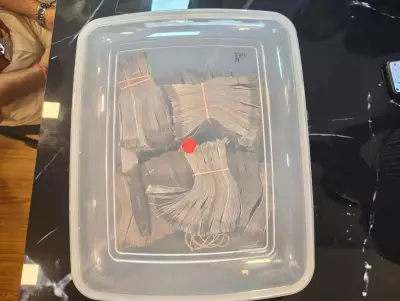
The results were substantial. Police destroyed 50 kilns used for moulding weapons across four illegal units. The haul included country-made pistols, cartridges, magazines, over a hundred barrels, grinding machines, pistol bodies, sharp weapons, and firearm parts buried underground. Forty-seven people, all Sikligars, were detained, though only ten were held subsequently.
The Scale of the Trade and the Challenge of Change
The operations, often run from rudimentary household setups, are deceptively efficient. A trained Sikligar can reportedly manufacture a pistol in two to three days, often keeping spare parts ready for assembly as per orders. Inspector Kaveri Kamlakar noted the evolution: "Not just desi kattas costing a few thousand rupees, we have recovered fine-quality pistols sold for up to Rs 1 lakh each." Police are probing possible links to inter-state racketeering and the use of high-quality materials from Gujarat.
Social media has become a key tool for dealers to expand their clientele beyond traditional states like Punjab, Haryana, Rajasthan, and Maharashtra. In May 2025, MP police arrested three men who had come to buy guns after hearing about Umarti online.
However, the village leadership and many residents plead for nuance. Sarpanch Ramesh Tarole, a Barela tribal, insists the illegal activities of a few tarnish the entire community. Villagers point to success stories: an Army Commando, an MBA graduate, a budding cricketer in Mumbai, and over 200 children studying in English-medium schools. "Many are into farming, some have other businesses, nothing to do with firearms. It is wrong to blame all…" said Rajpal Singh Juneja.

Following the raid, a community delegation submitted a letter to the Barwani SP acknowledging their ancestral link to weapon-making but stressing that most families have quit to join the mainstream. They requested targeted action and rehabilitation. Barwani SP Jagdish Dawar agreed, urging community cooperation to identify racketeers.
Authorities admit efforts like 'Operation 360' and job fairs have had limited success in providing alternative livelihoods. District Collector Jayanti Singh conceded, "while we are trying to wean the Sikligars away from their traditional profession, success is limited." One villager summed up the despair: "The initiative generated no employment for us. We sought minor loans for starting our business, but no banks came forward."
The story of Umarti remains a complex tapestry of historical skill, contemporary crime, policing challenges, and a community's desperate search for a legitimate path forward, all under the long shadow of the gun.