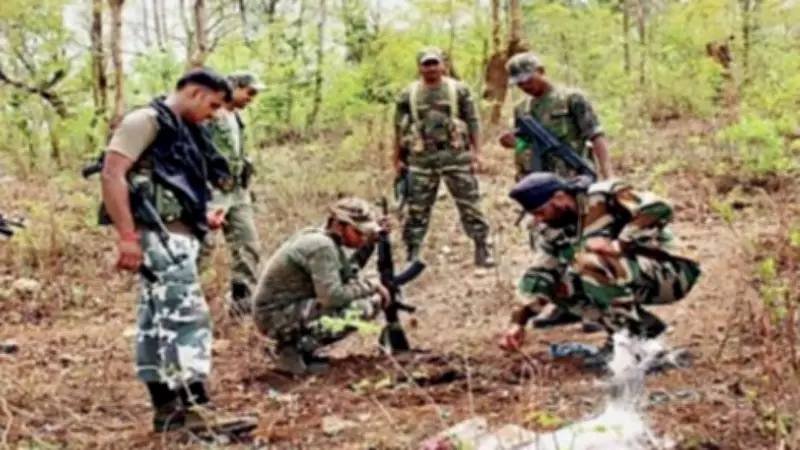
Odisha Police Nears Complete Elimination of Naxal Insurgency Through Coordinated Strategy
In a significant development for India's internal security landscape, Odisha police have successfully weakened left-wing extremism to near-elimination levels through a comprehensive operational strategy. Additional Director General (ADG) for anti-Naxal operations Sanjeeb Panda detailed the remarkable progress in an exclusive interview, highlighting how synchronized efforts have transformed the state's security situation.
Synchronized Operations with Central Timeline
The Odisha police meticulously aligned their counter-insurgency operations with the Union home ministry's deadline to eliminate left-wing extremism by March 31. This synchronization involved intensifying joint operations with central forces including the Central Reserve Police Force (CRPF) and Border Security Force (BSF), alongside specialized state units like the Special Operations Group (SOG) and district voluntary force (DVF).
The special intelligence wing played a pivotal role in developing precise Naxal-related intelligence, while advanced surveillance tools including drones and satellite imagery were scaled up significantly to locate and neutralize Maoist leadership positions across difficult terrain.

Remarkable Reduction in Affected Areas
Since January, Odisha police have declared seven districts completely free from Naxal influence: Nuapada, Nabarangpur, Malkangiri, Koraput, Boudh, Balangir and Bargarh. This represents a dramatic reduction in the geographical footprint of extremist activities that once plagued multiple regions of the state.
The number of active Maoists has plummeted to single digits following the recent surrender of key leaders including Sukru. Currently, Maoist presence is confined to just a few pockets within Kandhamal district, marking what officials describe as the final phase of the decades-long insurgency in Odisha.
Effective Strategies That Delivered Results
Several specific strategies proved particularly effective in reducing extremist activity:
- Revised surrender and rehabilitation policy: The state government's November revision of this policy played a crucial role in encouraging defections from Maoist ranks.
- Intelligence-based targeted strikes: Coordinated raids on leadership hideouts disrupted command structures and operational capabilities.
- Financial network disruption: Crackdowns on illegal trade networks, particularly ganja cultivation that reportedly funded extremist groups, severed crucial revenue streams.
Comprehensive Rehabilitation Framework
The state government offers substantial financial assistance and vocational training to surrendered cadres through its rehabilitation programs. Counseling and education initiatives help reintegrate former extremists into mainstream society, addressing both practical and psychological barriers to normalcy.
To prevent recidivism, authorities continuously monitor surrendered Naxals while facilitating community-based support systems to reduce their isolation. Incentives are directly tied to compliance with rehabilitation programs, and areas previously affected by left-wing extremism remain under strict vigilance to prevent any relapse into extremist activities.
Community Engagement as Cornerstone
Development initiatives including road construction, school establishment, and healthcare improvements have systematically undermined extremist propaganda by demonstrating tangible government commitment to regional development. Trust-building through police-community dialogues has further encouraged voluntary surrenders, creating a virtuous cycle of security and development.
The Odisha model demonstrates how coordinated security operations, intelligent policy revisions, and community-focused development can collectively address complex insurgency challenges. With only Kandhamal district remaining as the final frontier, complete elimination of left-wing extremism in Odisha appears increasingly achievable within the established timeline.