Allahabad High Court Upholds Widow's Right to Maintenance from Father-in-Law
The Allahabad High Court has delivered a significant ruling, affirming that a husband's legal obligation to provide maintenance for his wife does not terminate upon his death. In a landmark judgment, the court declared that a widow retains the right to claim financial support from her father-in-law under specific conditions outlined in Hindu law.
Legal Basis for the Ruling
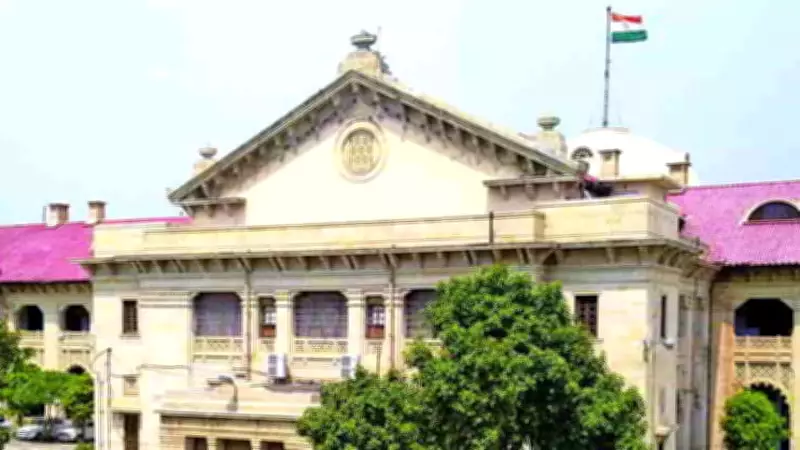
Dismissing an appeal filed by Akul Rastogi, a resident of Rampur, a division bench comprising Justice Arindam Sinha and Justice Satya Veer Singh emphasized in its March 17 order that the husband's duty to maintain his wife is a well-established principle. This obligation, traditionally applied in cases of separation where wives seek maintenance through criminal proceedings or under Hindu law provisions, extends beyond the husband's lifetime.
The bench clarified, "This obligation of the man to maintain the wife attaches even after his death as the law allows the widow to claim maintenance from her father-in-law." This interpretation reinforces the protective measures embedded in family law to safeguard the economic security of widows.

Provisions Under the Hindu Adoptions and Maintenance Act, 1956
According to Section 19 of the Hindu Adoptions and Maintenance Act, 1956, a widowed daughter-in-law is entitled to claim maintenance from her father-in-law if she is unable to support herself through her own earnings or property. However, this claim is subject to several conditions:
- The woman must first demonstrate that she cannot obtain maintenance from the estate of her deceased husband.
- She must also be unable to secure support from the estate of her own parents or from her children and their estates.
- The obligation becomes unenforceable if the father-in-law lacks the financial means to pay, particularly from coparcenary or ancestral property that the daughter-in-law has not already received a share of.
- Critically, this maintenance right ceases immediately upon the remarriage of the daughter-in-law.
Additionally, Section 21 (viii) of the Act provides further scope, allowing a woman who becomes a widow before or after the death of her father-in-law to claim maintenance from his estate, provided she remains unmarried. This ensures continuous protection for widows in varying familial circumstances.
Implications and Expert Insights
Legal experts highlight that this ruling underscores the judiciary's commitment to upholding the rights of widows within the framework of Hindu personal law. By affirming the father-in-law's responsibility, the court addresses potential gaps in financial support that may arise after a husband's death, particularly in cases where the widow has no independent income or assets.
The decision serves as a reminder of the nuanced provisions in the Hindu Adoptions and Maintenance Act, which aim to balance familial duties with practical economic realities. It reinforces that maintenance claims are not absolute but are contingent on the availability of resources and the personal status of the claimant.
This judgment is expected to influence future cases involving maintenance disputes, providing clearer guidelines for widows seeking financial assistance from their in-laws. It also aligns with broader legal trends that prioritize the welfare of vulnerable family members in post-death scenarios.