India's Attack Helicopter Fleet Expansion: A Critical Need for Enhanced Capabilities
The Indian Army is actively pursuing a comprehensive modernization drive, with a significant emphasis on bolstering its aerial combat capabilities through the induction of advanced attack helicopters. This strategic initiative aims to enhance the nation's defense preparedness and operational effectiveness in diverse combat scenarios.
Current Fleet and Future Inductions
To date, the Indian Army has successfully integrated six AH-64E Apache attack helicopters of US origin and five indigenously developed Light Combat Helicopters (LCH), known as Prachand, into its arsenal. The army is eagerly anticipating the delivery of an additional 90 Prachand helicopters, which will substantially augment its aerial striking power. Recently, Army Chief General Upendra Dwivedi conducted a flight in the LCH at the Hindustan Aeronautics Limited facility in Bengaluru, underscoring the military's commitment to this modernization effort.
Upon completion of these deliveries, the combined fleet of Apache and Prachand attack helicopters in the army will reach a total of 101 aircraft. Concurrently, the Indian Air Force operates ten LCH helicopters and has placed an order for 66 more, bringing its total to 76. The air force also maintains a fleet of 22 Apache helicopters. Collectively, both services plan to operate a dedicated total of 199 attack helicopters, marking a significant enhancement in India's aerial combat capabilities.

Complementary Armed Helicopters
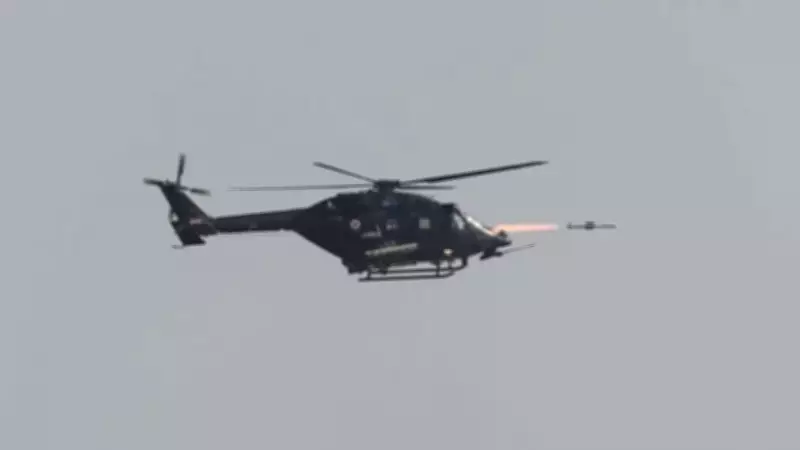
In addition to the dedicated attack helicopters, both the army and air force operate nearly 90 Rudra armed helicopters. These platforms share similar armament configurations with the Prachand, including a 20mm automatic cannon and rocket pods. The Prachand and Rudra helicopters are designed to deploy advanced missiles such as the Dhruvastra for the air force and Helina for the army, both of which are variants of the indigenously developed third-generation Nag Anti-tank Guided Missiles (ATGM). These weapons are carried externally on stubs, with the Defence Acquisition Council recently approving 200 Dhruvastra missiles for the air force's Rudra helicopters.
Emerging Role in Air Defense
Recent global conflicts have highlighted the innovative use of attack helicopters as effective air defense platforms against drones and loitering munitions. Defense ministries in Israel and the United Arab Emirates have released videos demonstrating their attack helicopters successfully engaging Iranian drones, while Ukraine has employed similar tactics against Russian drones. Helicopters excel in this role due to their ability to operate at low altitudes and slow speeds, which aligns with the flight regimes of many drones.
Loitering munitions, such as the Geran and Shahed series drones, typically fly at speeds around 300 km/h, making them challenging targets for faster fighter aircraft using guns. While air-to-air missiles could be employed, their high cost—often exceeding $400,000 compared to a $20,000 drone—renders this option economically unfeasible in many scenarios.
Capability Gaps and Future Requirements
Despite their potential, Indian attack helicopters currently lack dedicated air-to-air missiles to effectively counter drones and loitering munitions. Although the Prachand and Rudra were initially intended to carry French-origin Mistral missiles, this capability has not yet been realized. The Indian Army is now seeking a heat-seeking air-to-air missile with a range of 7 km, capable of engaging not only drones but also fighter aircraft and other helicopters. This missile must feature fire-and-forget technology with a single-shot kill probability of at least 90%.
Furthermore, to address drone saturation attacks, the missile should support salvo firing to engage multiple targets simultaneously. As the army and air force prepare to receive 156 additional LCH Prachand helicopters from next year through 2033, it is imperative that the expansion of the fleet is accompanied by a corresponding enhancement in platform capabilities.

Strategic Implications
The planned induction of these helicopters represents a major component of India's aerial arsenal, significantly boosting the nation's defense posture. However, to maximize their effectiveness, the armed forces must prioritize the integration of advanced air-to-air missile systems. This will ensure that India's attack helicopter fleet remains capable of addressing evolving threats, from conventional combat to asymmetric warfare involving drones and loitering munitions.
In conclusion, as India advances its attack helicopter modernization, a focused shift toward expanding capabilities—particularly in air-to-air engagement—is essential for maintaining a robust and responsive defense infrastructure in an increasingly complex security environment.