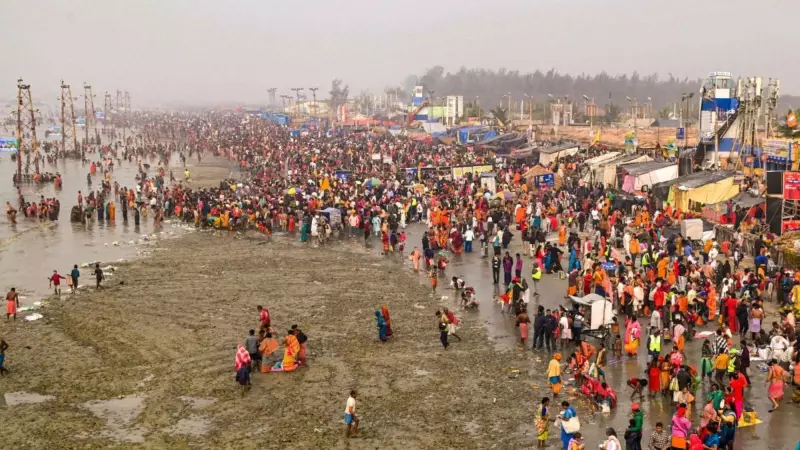
The West Bengal government has announced a groundbreaking, technology-infused blueprint for the upcoming Gangasagar Mela in 2026, aiming to transform the massive pilgrimage into a model of safety, sustainability, and spiritual harmony. The mela, held at the sacred confluence of the Ganga River and the Bay of Bengal on Sagar Island, is scheduled to run from January 10 to 17, 2026, with the main holy bath on Makar Sankranti, January 14 or 15.
A "Smart" Security Blanket for Millions
At the core of the 2026 plan is a massive upgrade to security and crowd management, designed to handle the millions of devotees expected to attend. Officials have described the new system as operating at a "smart" level, centered around a high-tech control room equipped with 62 monitors for real-time surveillance. This nerve center will keep a watchful eye on every movement across the mela grounds.
The surveillance network will be vast, with over 1,300 cameras actively monitoring key areas, including Babughat and the Lock Gate. To manage the colossal crowds, the administration will deploy a human force of 15,000 police officers and 2,500 civil defence volunteers, who have been instructed to maintain a "gentle presence" focused on service and assistance.

Digital Safeguards and Pilgrim Convenience
Addressing a common fear at such large gatherings—losing family members in the crowd—the 2026 mela introduces innovative digital solutions. QR-coded wristbands will be provided to vulnerable groups like children and older adults. A simple scan by an official or volunteer can instantly identify the individual and facilitate a quick reunion with their family.
Further enhancing pilgrim convenience, multilingual digital guides will be placed throughout the venue. By scanning QR codes, devotees can access information in Bengali, Hindi, or English to easily locate essential amenities like drinking water points, toilets, and transport facilities.
Robust Health and Sanitation Infrastructure
The administration has significantly bolstered its medical and civic response capabilities. In a major safety net, every pilgrim, official, and volunteer will be covered by an accidental insurance policy of Rs 5 lakh. A fleet of over 100 ambulances, backed by specialized air and water ambulances, will be on standby for emergencies, supported by 540 dedicated hospital beds for immediate care.
To ensure hygiene and comfort, the government has arranged for a staggering 12,100 toilets and will provide 1 crore (10 million) water pouches to pilgrims.
The "Green Mela" Vision for Sustainability
Sustainability is a cornerstone of the 2026 event, officially designated as a "green mela." The focus is on preserving the pristine environment that hosts the sacred dip. An official emphasized, "The 2026 mela is a tribute to the environment. The sanctity of the earth is as important as the sanctity of the water."
Key green initiatives include powering all streetlights across the venue with solar energy. To combat plastic pollution, local cooperatives will supply biodegradable bags, aiming to eliminate plastic waste from the island.
For devotees unable to undertake the journey, the government will continue its "holy eater" initiative, delivering Ganga water and prasad to their doorsteps. As the sun sets, the mela will come alive with the chants of Sagar Katha and the spectacle of the Maha Sagar Arati, blending ancient faith with modern, efficient management for a truly transformative pilgrimage experience.