

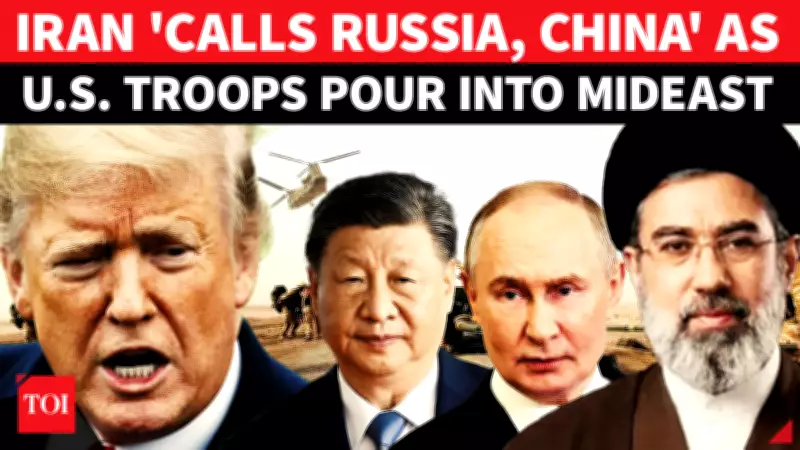
Iran's Geopolitical Gambit: Bringing Russia and China into War Negotiations
In a bold strategic maneuver, Iran is fundamentally reshaping the geopolitical landscape of the ongoing conflict by actively engaging global powers Russia and China. This development unfolds even as United States President Donald Trump asserts that Tehran is nearing acceptance of a ceasefire agreement with Washington. The Iranian initiative represents a calculated masterstroke aimed at broadening the negotiation framework and introducing powerful counterweights to American diplomatic pressure.
Countering Perceived American Deception
According to detailed reports from Israeli media sources, Iran's primary motivation for involving Moscow and Beijing is to safeguard against what it perceives as a potential strategic trap within the proposed United States ceasefire. Iranian officials are reportedly pushing for formal Russian and Chinese participation to ensure transparency and prevent any deceptive clauses that could undermine Tehran's long-term security interests. This move introduces a significant multilateral dimension to talks that have traditionally been dominated by Gulf region players and Western powers.
Trump's Ceasefire Proposal and Iranian Delays
The involvement of Russia and China has emerged as a crucial factor behind Iran's deliberate delay in providing a formal response to President Trump's comprehensive 15-point peace proposal. In a recent interview with the Financial Times, President Trump revealed that Iran has already agreed to "most" of the terms presented through indirect diplomatic channels facilitated by Pakistan. However, the American leader notably hinted that additional demands might still be introduced, adding further complexity to an already tense negotiation process.

This diplomatic expansion means the conflict's resolution is no longer a binary US-Iran matter, but rather a complex geopolitical equation involving multiple global stakeholders with competing interests in the Middle East. The Russian and Chinese governments bring substantial economic, military, and diplomatic leverage that could fundamentally alter negotiation dynamics and potential outcomes.
Strategic Implications and Regional Power Balance
Iran's strategic outreach to Moscow and Beijing demonstrates a sophisticated understanding of contemporary power politics. By incorporating these permanent United Nations Security Council members into the negotiation framework, Tehran effectively creates a counterbalance to American influence while simultaneously validating its own regional standing. This tripartite coordination between Iran, Russia, and China represents a significant evolution in alliance structures within the conflict zone, potentially establishing new precedents for how regional disputes are mediated by global powers.
The development occurs against a backdrop of escalating military engagements and retaliatory strikes across the Middle East, with recent incidents including drone confrontations, aircraft shootdowns, and missile attacks causing substantial casualties and infrastructure damage. Iran's diplomatic maneuver suggests a parallel strategy combining military posturing with sophisticated geopolitical alignment, aiming to secure favorable terms while minimizing strategic vulnerabilities.
As negotiations continue through indirect channels, the inclusion of Russia and China introduces new variables that could either facilitate breakthrough agreements or create additional layers of diplomatic complexity. The coming weeks will reveal whether this expanded framework leads to genuine conflict resolution or becomes another dimension of the protracted geopolitical struggle reshaping the Middle Eastern order.






