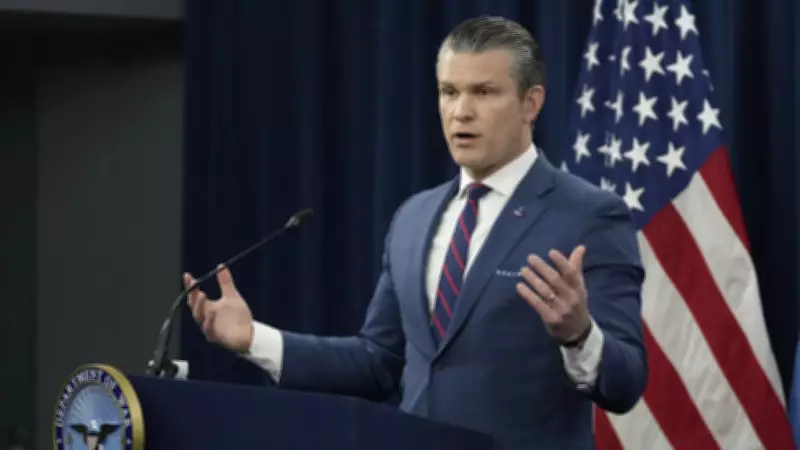
US Officials Admit No Intelligence of Planned Iran Attack Before Military Strikes
In a series of closed-door briefings with congressional staff on Sunday, Trump administration officials acknowledged that there was no intelligence suggesting Iran planned to attack US forces first, according to two people familiar with the matter. This revelation appears to undercut one of the key arguments presented by senior administration officials for the recent military actions against Iran.
Background of the Conflict
The United States and Israel launched their most ambitious attacks on Iran in decades on Saturday. Officials report that these strikes resulted in the death of Supreme Leader Ayatollah Ali Khamenei, the sinking of Iranian warships, and hits on more than 1,000 targets so far. The conflict has escalated rapidly, with reports of Israel bombing Hezbollah targets in Beirut and Gulf nations vowing to defend themselves.
Contradictory Statements from Administration
Prior to the briefings, administration officials had told reporters that President Donald Trump decided to launch the attacks partly due to indicators that Iran might strike US forces in West Asia "perhaps pre-emptively." One official emphasized that Trump was not going to "sit back and allow American forces in the region to absorb attacks." However, during the congressional briefings, which lasted over 90 minutes and were attended by Democratic and Republican staff from several national security committees, officials clarified that while Iran's ballistic missiles and proxy forces pose an imminent threat, there was no specific intelligence about Tehran attacking US forces first.

Trump's Justifications and Criticisms
President Trump has stated that the attack, expected to continue for weeks, aims to prevent Iran from obtaining nuclear weapons, contain its missile program, and eliminate threats to the US and its allies. He has also urged Iranians to rise up and topple their government. Despite these claims, Democrats have accused Trump of waging a war of choice and criticized his abandonment of peace talks, which mediator Oman indicated still held promise.
Trump has argued, without presenting evidence, that Iran was on track to soon secure the ability to strike the US with a ballistic missile. Sources familiar with US intelligence reports have said this claim is not backed by the reports and appears exaggerated.
Casualties and Military Operations
Questions about the war's justification come as the US military revealed the first American casualties on Sunday. US Central Command reported that three US troops were killed and five seriously wounded. Since Trump ordered the start of major combat operations, US aircraft and warships have struck more than 1,000 Iranian targets, according to military statements.
The situation remains fluid, with ongoing developments such as Iranian state media claiming a US fighter jet was downed in Kuwait—sharing video of a jet engulfed in flames and pilots ejecting—and reports of explosions in Bahrain, Dubai, and Doha. These incidents highlight the broader regional tensions and the complex dynamics at play in this escalating conflict.