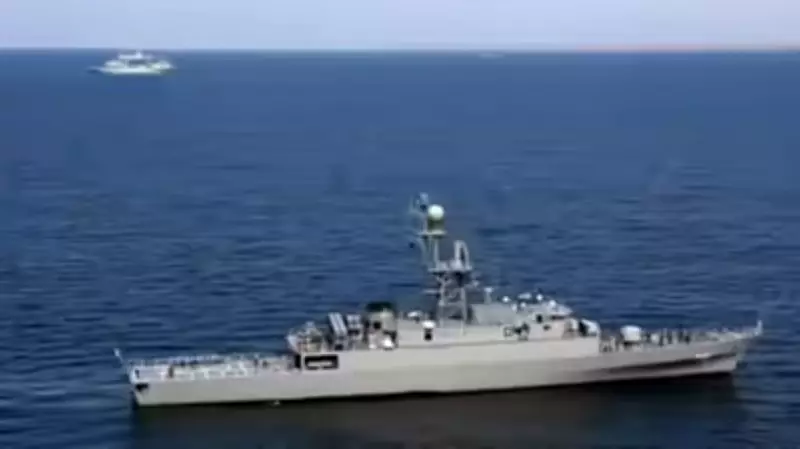
Sri Lanka Navigates Complex Diplomatic Waters as Second Iranian Warship Seeks Safe Haven
In a televised address, President Anura Kumara Dissanayake of Sri Lanka has publicly confirmed that the country has received a formal request from the Iranian government. The request concerns the IRINS Bushehr, a second Iranian naval vessel, seeking permission to dock at one of Sri Lanka's strategic ports. This development places the island nation in a precarious position, caught between maintaining its sovereign neutrality and navigating the intricate web of international diplomatic pressures.
Official Confirmation and Regional Implications
President Dissanayake's announcement marks a significant moment in Sri Lanka's foreign policy landscape. The IRINS Bushehr, following in the wake of previous Iranian naval visits, has formally asked for safe harbor, highlighting ongoing maritime engagements between the two nations. This request comes at a time of heightened geopolitical tensions in the Indian Ocean region, where naval movements are closely monitored by global powers.
Sri Lanka's response will be closely watched by international observers, as the country has historically balanced relations with various global actors, including Western nations, India, China, and Middle Eastern countries like Iran. The decision could have far-reaching consequences for Sri Lanka's diplomatic standing and economic partnerships.

Historical Context and Strategic Considerations
Sri Lanka's ports, notably Colombo and Hambantota, are of significant strategic importance due to their location along key shipping lanes. The country has previously hosted vessels from multiple nations, including China and India, as part of its policy of engagement with diverse international partners. However, Iranian naval visits often attract particular scrutiny due to the complex international sanctions regime and regional rivalries involving Iran.
The timing of this request is especially delicate, given ongoing global discussions about maritime security and freedom of navigation. Sri Lankan authorities must weigh several factors:
- Maintaining positive bilateral relations with Iran, which has been a historical partner.
- Adhering to international laws and potential sanctions implications.
- Considering the reactions of neighboring countries and major global powers.
- Protecting Sri Lanka's reputation as a neutral and stable maritime hub.
Potential Outcomes and Diplomatic Balancing Act
As President Dissanayake and his administration deliberate on the Iranian request, they face a classic diplomatic challenge. Granting access could strengthen ties with Iran but might strain relations with other nations. Denying the request, while possibly avoiding diplomatic friction elsewhere, could impact bilateral relations with Tehran.
The situation underscores the broader challenges small nations face in multipolar world politics, where every decision carries significant weight. Sri Lanka's handling of this matter will likely set a precedent for how it manages similar requests in the future, influencing its role in regional security architectures.
Ultimately, the IRINS Bushehr's request is more than a simple logistical matter; it is a test of Sri Lanka's diplomatic agility and its ability to navigate the competing interests of global powers while safeguarding its national sovereignty and economic interests.