

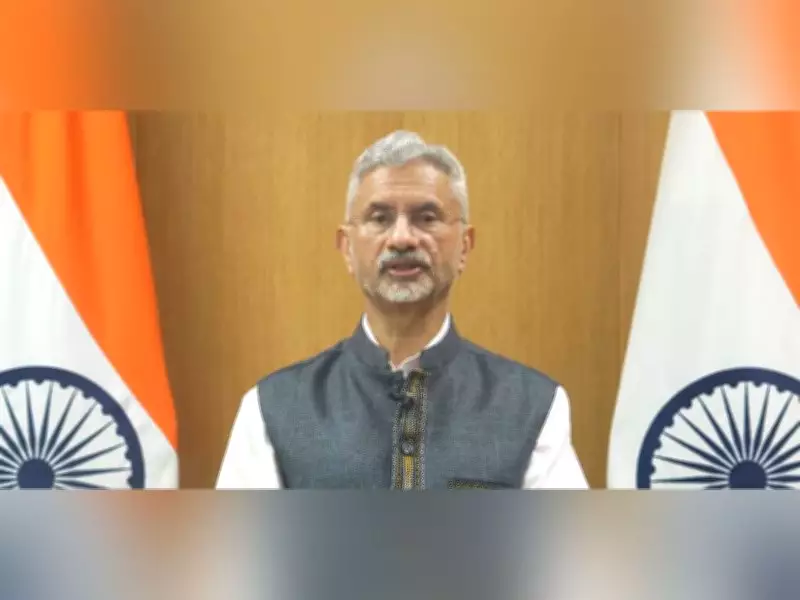
India and Russia Set Ambitious $100 Billion Trade Goal by 2030
External Affairs Minister S Jaishankar has reaffirmed the strong and enduring relationship between India and Russia, emphasizing a shared commitment to elevate bilateral trade to USD 100 billion by the year 2030. This announcement was made during a virtual address at the 'India and Russia: Towards a new bilateral agenda' conference held on March 23, 2026.
Strengthening Economic and Strategic Cooperation
In his remarks, Jaishankar highlighted that both nations are dedicated to increasing their current annual trade volume from USD 68.7 billion to USD 100 billion in a balanced and sustainable manner. To achieve this target, efforts are actively underway to address non-tariff barriers and regulatory impediments that may hinder trade growth. The minister praised the Russian International Affairs Council and the Indian Embassy in Moscow for organizing this significant conference for the second consecutive year.
A Special and Privileged Strategic Partnership
Jaishankar underscored the Special and Privileged Strategic Partnership between India and Russia, which is deeply rooted in trust and mutual respect. He noted that over decades, this partnership has significantly contributed to regional and global peace, stability, and progress. In today's evolving geopolitical landscape, the engagement between the two countries continues to deepen, driven by frequent high-level exchanges.

The last visit of Russian President Vladimir Putin to India in December 2025 was particularly impactful, breaking new ground in diverse areas such as:
- Mobility of skilled professionals
- Health and food safety initiatives
- Maritime cooperation
- Fertilizers and agricultural products
- Customs and commerce facilitation
- Academic and media cooperation
Nuclear Energy and People-to-People Ties
Highlighting Russia's pivotal role in India's civil nuclear energy sector, Jaishankar pointed to the Kudankulam nuclear project as a stellar example of this collaboration. As India aims to expand its nuclear energy generation capacity to 100 gigawatts by 2047, Russia is expected to remain a trusted and reliable partner for peaceful nuclear uses.
Beyond economic and strategic ties, Jaishankar recalled the depth of people-to-people connections based on shared appreciation for art, Yoga, Ayurveda, and culture. He expressed confidence that the new consulates in Kazan and Ekaterinburg will further strengthen these bonds, enhancing economic, cultural, and social interactions between the two nations.
Multipolar World and International Cooperation
With India serving as the BRICS chairperson this year, Jaishankar emphasized the necessity for greater cooperation in the evolving multipolar world order. He highlighted platforms such as BRICS, SCO, G20, and the United Nations as crucial for addressing shared challenges. India's chairmanship of BRICS will adopt a humanity-first and people-centric approach, with a focus on working closely with Russia to promote balanced and inclusive solutions.
The conference in Moscow, organized by the Russian International Affairs Council and the Embassy of India in Russia, brought together senior diplomats, policymakers, and experts to discuss key thematic areas, including the role of Russia and India in shaping a multipolar world, engagement with third countries, and expanding economic cooperation.






